



Custom electrode pads
With over 20 years of experience in custom electrode fabrication, we offer CDMO services and are ISO 13485, FDA RX, FDA OTC, MDSAP, and CE certified. Our expert team specializes in tailored electrode pad solutions that meet each client's specific needs and applications.

-
![Holter ECG Monitoring Electrodes]() Holter ECG Monitoring ElectrodesThe web passes into an automated punching bay where central sensor eyelet openings are pierced. Precision pneumatic indexing heads feed solid 304 stainless steel 4.0mm studs and vacuum-sputteredread more
Holter ECG Monitoring ElectrodesThe web passes into an automated punching bay where central sensor eyelet openings are pierced. Precision pneumatic indexing heads feed solid 304 stainless steel 4.0mm studs and vacuum-sputteredread more -
![Cloth ECG Electrodes]() Cloth ECG ElectrodesThe web enters synchronized rotary punching stations where central sensor wells are cut. Heavy-tonnage pneumatic presses mechanically swage solid 304 stainless steel 4.0mm snap studs ontoread more
Cloth ECG ElectrodesThe web enters synchronized rotary punching stations where central sensor wells are cut. Heavy-tonnage pneumatic presses mechanically swage solid 304 stainless steel 4.0mm snap studs ontoread more -
![Resting ECG Tab Electrodes]() Resting ECG Tab ElectrodesThe web passes into multi-station rotary screen or precision rotogravure printing decks. A conductive ink compounded with sub-micron silver flake and stoichiometric silver chloride particles in aread more
Resting ECG Tab ElectrodesThe web passes into multi-station rotary screen or precision rotogravure printing decks. A conductive ink compounded with sub-micron silver flake and stoichiometric silver chloride particles in aread more -
![Stress Test ECG Electrodes]() Stress Test ECG ElectrodesThe web passes into synchronized rotary punching stations that cut central gel chambers. Heavy-tonnage pneumatic presses swage a solid stainless-steel 4.0mm snap stud onto a micro-porous ABS eyeletread more
Stress Test ECG ElectrodesThe web passes into synchronized rotary punching stations that cut central gel chambers. Heavy-tonnage pneumatic presses swage a solid stainless-steel 4.0mm snap stud onto a micro-porous ABS eyeletread more -
![Radiotranslucent ECG Electrodes]() Radiotranslucent ECG ElectrodesThe compounded pellets are feed into multi-cavity precision injection molding tooling to form 4.0mm snap studs and conductive eyelets with micro-tolerances under ± 0.02mm. The molded eyelet headsread more
Radiotranslucent ECG ElectrodesThe compounded pellets are feed into multi-cavity precision injection molding tooling to form 4.0mm snap studs and conductive eyelets with micro-tolerances under ± 0.02mm. The molded eyelet headsread more -
![Foam ECG Electrodes]() Foam ECG ElectrodesThe web passes through synchronized rotary punching stations that pierce the central aperture. Precision pick-and-place fixtures feed ABS plastic eyelets micro-coated with a stoichiometricread more
Foam ECG ElectrodesThe web passes through synchronized rotary punching stations that pierce the central aperture. Precision pick-and-place fixtures feed ABS plastic eyelets micro-coated with a stoichiometricread more -
![Pigtail TENS Electrodes]() Pigtail TENS ElectrodesIndustrial manufacturing of pigtail TENS electrodes combines multi-strand wire processing, high-tonnage terminal staking, tension-controlled lamination, and precision rotary die-cutting insideread more
Pigtail TENS ElectrodesIndustrial manufacturing of pigtail TENS electrodes combines multi-strand wire processing, high-tonnage terminal staking, tension-controlled lamination, and precision rotary die-cutting insideread more -
![Neonatal Pre-Wired ECG Electrodes]() Neonatal Pre-Wired ECG ElectrodesIndustrial manufacturing of neonatal pre-wired ECG electrodes requires ultra-clean handling, micro-crimping automation, and low-tension rotary converting inside ISO 13485 cleanroom suites. A carrierread more
Neonatal Pre-Wired ECG ElectrodesIndustrial manufacturing of neonatal pre-wired ECG electrodes requires ultra-clean handling, micro-crimping automation, and low-tension rotary converting inside ISO 13485 cleanroom suites. A carrierread more -
![Conductive Carbon Rubber Electrodes]() Conductive Carbon Rubber ElectrodesThe industrial synthesis of conductive carbon rubber electrodes combines high-shear internal compounding, continuous roll calendering, precision insert positioning, and high-tonnage hydraulicread more
Conductive Carbon Rubber ElectrodesThe industrial synthesis of conductive carbon rubber electrodes combines high-shear internal compounding, continuous roll calendering, precision insert positioning, and high-tonnage hydraulicread more -
![Holter Monitoring ECG Electrodes]() Holter Monitoring ECG ElectrodesThe industrial fabrication of Holter monitoring ECG electrodes integrates roll-to-roll (R2R) web converting, offset mechanical eyelet staking, conductive bridge printing, and cleanroom hydrogelread more
Holter Monitoring ECG ElectrodesThe industrial fabrication of Holter monitoring ECG electrodes integrates roll-to-roll (R2R) web converting, offset mechanical eyelet staking, conductive bridge printing, and cleanroom hydrogelread more -
![Dysphagia Treatment Electrodes]() Dysphagia Treatment ElectrodesThe industrial fabrication of dysphagia treatment electrodes combines high-precision rotary screen printing, automated dual-zone dielectric passivating, high-cohesion hydrogel slot-die extrusion, andread more
Dysphagia Treatment ElectrodesThe industrial fabrication of dysphagia treatment electrodes combines high-precision rotary screen printing, automated dual-zone dielectric passivating, high-cohesion hydrogel slot-die extrusion, andread more -
![Non-Woven ECG Electrodes]() Non-Woven ECG ElectrodesThe industrial fabrication of non-woven ECG electrodes combines high-speed roll-to-roll (R2R) web converting, breathable pattern adhesive coating, sensor eyelet staking, and cleanroom hydrogelread more
Non-Woven ECG ElectrodesThe industrial fabrication of non-woven ECG electrodes combines high-speed roll-to-roll (R2R) web converting, breathable pattern adhesive coating, sensor eyelet staking, and cleanroom hydrogelread more


An electrode pad is a sticky patch that contains conductive gel and is used in electrotherapy to deliver electrical impulses to the muscles or nerves of the body. It is typically a square-shaped pad made of adhesive material with a metal or carbon conductive layer. Electrode pads are often used in TENS (transcutaneous electrical nerve stimulation) or EMS (electrical muscle stimulation) therapy to relieve pain, improve circulation, promote muscle relaxation, and strengthen muscles. They are placed on the skin in the area of treatment and connected to a device that sends electrical signals through the pad.
Features of Electrode Pad

Varied Shapes and Sizes
Electrode Pad offer a diverse range of shapes and sizes to accommodate different body areas and treatment requirements. Whether we need pads for larger muscle groups or more targeted areas, Electrode Pad has options that cater to our specific needs. The availability of various shapes, such as square, rectangular, and circular pads, ensures optimal coverage and precise stimulation for different body contours.

Enhanced Adhesive Properties
One of the distinguishing features of Electrode Pad is its excellent adhesive properties. These pads are designed with a strong and reliable grip, ensuring they adhere securely to the skin. Electrode Pad's improved adhesion allows for extended use without the worry of frequent reapplication or premature pad peeling. This feature enhances mother's convenience and provides uninterrupted pain relief or muscle stimulation.

Innovative Gel Technology
Electrode Pad incorporates advanced gel technology into their electrode pads, further distinguishing them from traditional pads. This gel layer acts as a conductive medium between the electrodes and the skin, facilitating the transfer of electrical impulses at maximum efficiency. The gel also helps distribute the stimulation evenly across the pad surface, preventing hot spots or uneven sensations. Moreover, the gel is hypoallergenic and designed to be gentle on the skin, reducing the likelihood of irritation or discomfort.

Compatibility and Versatility
Electrode Pad are compatible with a wide range of TENS and EMS devices, allowing mothers to enjoy the benefits of these pads with their preferred units. This compatibility ensures that individuals can leverage the advantages of Electrode Pad without the need for additional equipment purchases.
Types of Electrode Pad
Self-Adhesive Electrode Pads
Self-adhesive electrode pads are the most common type of electrode pads. They are easy to use and do not require any adhesive. These pads are made of conductive gel that adheres directly to the skin. They usually come in various sizes and shapes to fit different parts of the body.
Reusable Electrode Pads
Reusable electrode pads are another popular type of electrode pads. They are more cost-effective than self-adhesive pads because they can be reused multiple times. These pads are made of conductive material, such as carbon, and can be easily cleaned after use.
Disposable Electrode Pads
Disposable electrode pads are for single use only. These pads are typically used in clinical settings to ensure the highest level of hygiene. They are made of conductive gel encapsulated in a plastic casing. Once the mat is used, discard it.
Special Electrode Pads
Specialty electrode pads are designed for specific uses. For example, pediatric electrodes are designed specifically for children, while breastfeeding electrodes are designed for nursing mothers. Specialty electrode pads are generally more expensive than other types of electrode pads, but they provide better fit and performance for their specific uses.
Electrode Pads With Built-in Electrodes
Electrode pads with built-in electrodes are designed for convenience. They have built-in electrodes and require no external electrodes. These pads are generally more expensive than other types of pads, but they offer better fit and performance.
Materials of Electrode Pad
Hydrogels
Hydrogel is one of the most commonly used materials in electrode pads. The material is soft and stretchy, making it comfortable for patients to wear for long periods of time. It is also biocompatible, which means it does not cause any harm to the skin. The hydrogel has good adhesive properties, ensuring the electrode pads stay in place during treatment.
Polyurethane
Polyurethane electrode pads are another popular choice. This material is durable and can withstand repeated use. It is also flexible and comfortable for patients to wear. Polyurethane has good adhesive properties, ensuring the electrode pads stay in place during treatment.
Silica Gel
Silicone electrode pads are known for their durability and ease of cleaning. Silicone can be cleaned with soap and water, making it easy to maintain hygiene. It is also biocompatible and does not cause any harm to the skin. Silicone is moderately flexible, making it comfortable for patients to wear.
Cloth
Cloth electrode pads are made of soft, breathable material and are comfortable for patients to wear. Cloth electrode pads are reusable and can usually be washed in the washing machine. They have good adhesive properties, ensuring the electrode pads stay in place during treatment.

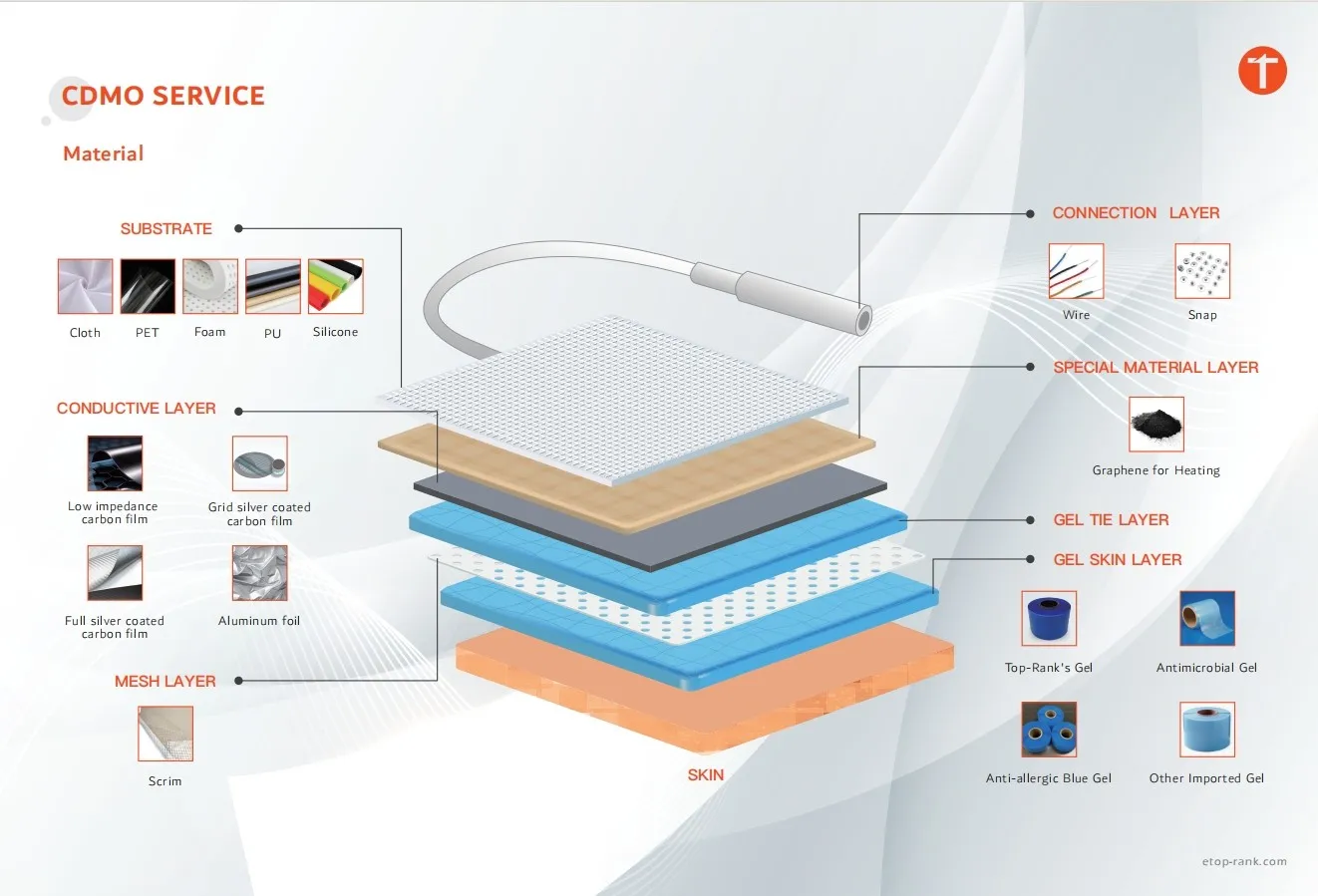
Parts of Electrode Pad
Adhesive Layer
The adhesive layer enables the electrode pads to adhere to the skin. This layer contains a gel substance that helps transmit the electrical impulses from the EMS device through the skin and into the muscles. It is important that the adhesive layer is strong enough to hold the pad in place during use, but gentle enough so that it does not cause discomfort or skin irritation when removed.
Conductor
Conductors are the materials that allow electrical current to flow between the EMS device and the muscles. Most electrode pads use silver or carbon conductors, which are highly conductive and can transmit electricity efficiently. The conductors must be securely connected to the adhesive layer to ensure proper electrical contact with the skin.
Backing Material
The electrode pad's backing material provides support and stability to the pad. It is usually made from a flexible material, such as foam or plastic, which allows the pad to conform to the shape of the body and move with muscles during use. The backing material also helps protect the conductor from damage or abrasion during use.
Connector
The connector is the part of the electrode pad that connects to the EMS device. It must be compatible with the device and securely connected to ensure proper electrical contact and smooth transmission of electrical current. Most electrode pads use snap or clip connectors, which are easy to use and reliable.
Shape and Size
The shape and size of the electrode pads can vary depending on the area of the body being stimulated and the specific EMS device being used. Some pads are larger and more rectangular, suitable for larger muscle groups, while others are smaller and more rounded, suitable for smaller areas. It is important to choose the correct electrode pad size and shape to ensure maximum effectiveness and comfortable use.
How to Choose Electrode Pad
Size and Shape
The size and shape of the electrode patch should be consistent with the target area. If the electrode patch is too large, there will be problems with leakage or inability to conduct electricity. If it is too small, it may cause skin allergies or easily cause current concentration, causing pain or burns.
Thickness
The thickness of the electrode patch is important for both comfort and conductivity. If the thickness is too thin, it will easily break, while if it is too thick, it may affect the conduction of current and affect the treatment effect.
Material
Electrode patches generally use conductive materials. Some common materials include carbon, copper, and metal alloys. The material can affect the efficiency of electrode patch conduction. In addition, the material of the electrode patch should also consider the allergic reaction of human skin.
Viscosity
The stickiness of the electrode patch is very important for the stability of electric shock and the conductivity of current. Some high-quality electrode patches use strong gel adhesives that can maintain good stickiness for a long time.
Repeatability
Whether electrode patches can be reused is also an important consideration when selecting electrode patches. Some electrode patches can be reused multiple times, making it more cost-effective and conducive to continuous treatment.

How to Wear it Correctly
Find Your Pain Area
First, it is necessary to identify the specific location of the pain. Sometimes the pain radiates outward, but for effective treatment, you need to find the most concentrated, painful source of pain and place electrode pads around that area.
The Distance Between Electrode Pads
The distance between pads can vary. However, in general, electrode pads should not touch each other and should be spaced at least 1 inch apart.
Placement of Electrode Pads
If you have a dual channel TENS unit, this means you can have 2 small electrode pads per channel, and up to 4 small electrode pads can be placed. This is especially useful if you need to cover a larger area of pain. We do not recommend placing electrode pads directly on joints such as knees, elbows, or ankles. Movement of the joint changes the adhesion of the pad.
Electrode Sheet Direction
The orientation of pad placement can also vary. You may have effective pad placement in one of three directions: vertical, horizontal, or diagonal. If your pain is widespread, using more pads and possibly diagonal placement will definitely help. For example, if you feel pain between your shoulders just below your neck, try placing two pads vertically on the left side of your spine and two pads on the right side of your spine. If your pain extends further above or below your shoulder, the pads can be angled to surround the area of discomfort.
Applications of Electrode Pad
Relieve Muscle Soreness
The electrode patch stimulates the nervous system through electrical current to improve muscle pain. This method creates an electrical current that interrupts the transmission of pain messages, thereby reducing symptoms such as soreness, inflammation, and discomfort.
Enhance Muscle Vitality
Electrode patches can also be used to enhance muscle strength and force tolerance. This highly regarded instant effect works by using a special electrical current to stimulate the muscles, causing them to contract and relax.
Increase Blood Flow
While relieving muscle soreness and enhancing muscle vitality, the electrode patch can also increase blood flow to muscles and skin. Increased blood flow helps relieve muscle soreness and promotes the delivery of nutrients, providing optimal conditions for muscle recovery.
Reduce Muscle Atrophy
Electrode patches can also reduce muscle atrophy in relieving pain and increasing muscle strength. In cases of muscle atrophy, electrode patches can restore muscle function and vitality by applying electrical stimulation to the muscles.
TOP-RANK HEALTH CARE:Your Trustworthy Electrode Pad Supplier!
Our company was established in 2000 in Zhejiang Province, China. Our company specializes in the production of pain management products, including electrodes, TENS/EMS equipment, conductive clothing, and other ancillary products such as grounding mats, conductive gel, etc.
Rich Products
Our company mainly produces electrode pads, conductive gels, iontophoresis patches, grounding pads, hydrogels, etc. And our products are exported to Canada, the United States and other countries.
Quality Assurance
Our self-developed conductive hydrogel has been approved for marketing in the United States and has obtained FDA 510K certification. And we have also obtained MDSAP system certification and Health Canada medical device license. Finally, the factory is ISO13585/MDSAP/ISO14001 certified.
Customizable
We have more than 10 years of production experience, and all products can be customized OEM and ODM. It has a full set of modern production equipment, established a hydrogel laboratory in 2017, and successfully launched an independently developed hydrogel project.
Leading Service
We have many years of industry experience and a complete production management, quality supervision, sales service operation system. Whether you want to buy different specifications of production electrode pads, or conductive gel, you just need to send your requirements via email and we can customize the product for you. We also accept OEM customization.
Certificate


Frequently Asked Questions
Q: What is an electrode pad?
Q: How are electrode pads used?
Q: What are electrode pads made of?
Q: What is the purpose of electrode pads?
Q: Are electrode pads safe to use?
Q: Can electrode pads be reused?
Q: How long do electrode pads last?
Q: Do electrode pads have different sizes?
Q: Are electrode pads adjustable?
Q: What is the best way to store electrode pads?
Q: How often should you replace electrode pads?
Q: Can electrode pads be used on sensitive skin?
Q: Do electrode pads come with instructions?
Q: Are electrode pads compatible with all devices?
Q: How do you clean electrode pads?
Q: What is the difference between electrode pads and electrodes?
Q: Can you use multiple electrode pads at once?
Q: How do you know when to replace the battery in your device for electrode pads?
Q: Can electrode pads be used on pets?
Q: Are there any risks or side effects associated with using electrode pads?
Find professional electrode pad manufacturers and suppliers in China here. With abundant experience, our factory offers high quality electrode pad made in China with competitive price. Welcome to contact us for custom service and wholesale service.