Magnetic Snap TENS Electrodes | 45x64mm PU Pads | TOP-RANK
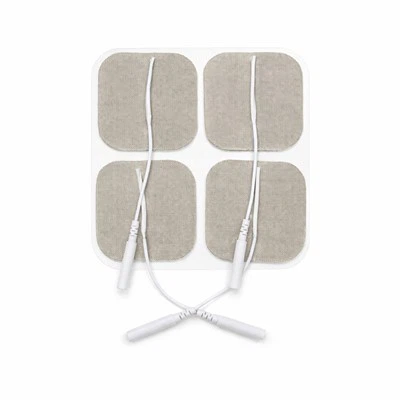
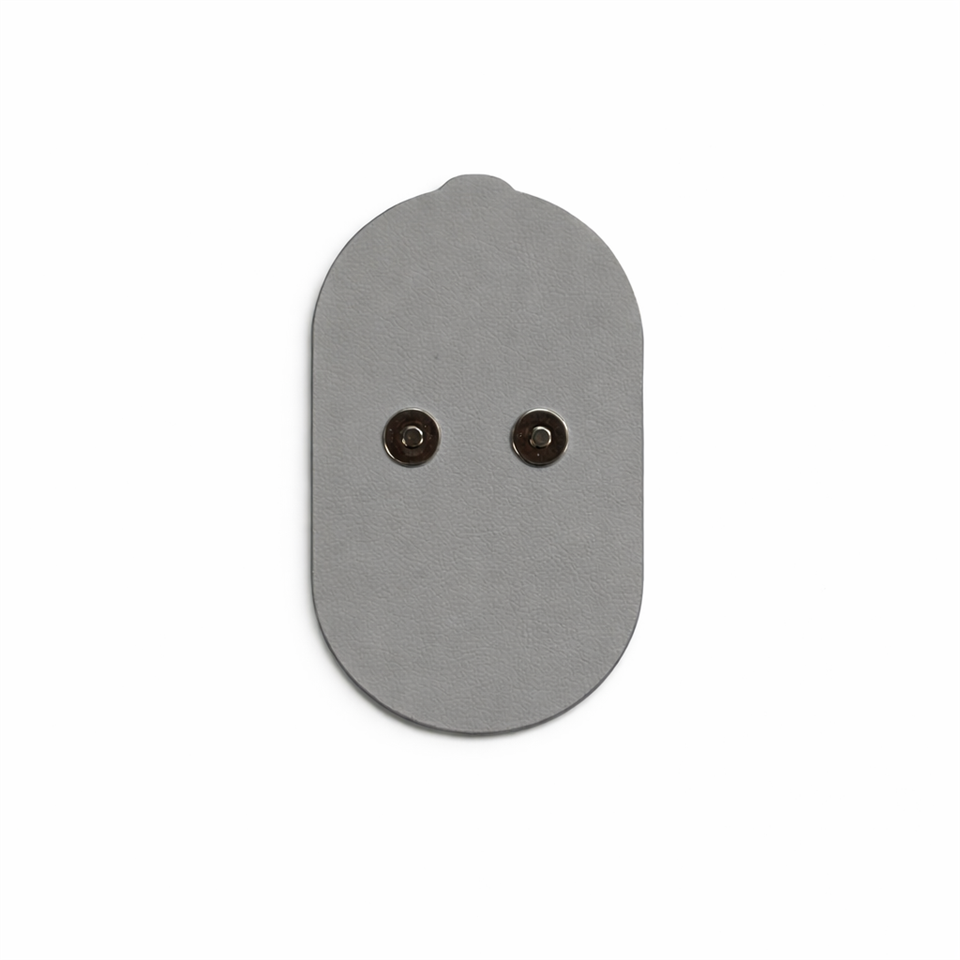
OEM magnetic snap electrodes for TENS/EMS. Features custom 0.8mm thick magnetic connectors, gray PU backing, and black Tyvek reinforcement. 4 pads per card.
Product Overview
These electrodes are hardware interfaces designed for wearable, wireless transcutaneous electrical nerve stimulation (TENS) devices. Unlike standard friction-based snaps, these pads utilize a custom magnetic connector to couple directly with the host pulse generator. The physical architecture employs a gray PU backing for multidirectional flexibility, reinforced with a Tyvek layer to handle the mechanical load of the magnetic docking process.
Key Features
-
Magnetic Coupling Mechanics
Traditional 3.5mm snaps require direct downward physical force to connect the lead wire, which causes discomfort to the underlying tissue. The custom 0.8mm thick magnetic snap allows the host device to self-align and dock via magnetic attraction. This eliminates the vertical shear stress on the hydrogel matrix during device attachment.
-
Tyvek Structural Reinforcement
Magnetic connectors exert significant localized pulling force when the user detaches the main unit. A standard PU backing would stretch and eventually tear around the rivet point. The manufacturing process laminates a layer of black Tyvek between the PU and the carbon film. The high tensile strength of the Tyvek fibers anchors the rivet, distributing the pull-force across the 45x64.1mm footprint.
-
Synchronous Rivet Matching
To maintain electrical continuity and magnetic alignment, the snaps are riveted manually. The assembly protocol dictates that rivet spacing checks and 100% magnetic matching tests are conducted at intervals of ≤100 pieces. This controls the physical seating of the hardware, preventing abnormal deformation or circuit failure.
Applications
Wireless TENS Units
Hardware interfaces for wearable stimulators where the PCBA module docks directly onto the electrodes.
Geriatric Rehabilitation
Zero-force magnetic connection for patients with osteoarthritis or compromised hand dexterity.
OEM & Private Label
-
Supply Chain Routing : Base lamination (PU/Tyvek/Carbon) operates via high-speed machinery in China. The labor-intensive hydrogel transfer and custom magnetic riveting are executed at our Vietnam hub for assembly cost efficiency and tariff optimization.
-
Custom Liner Printing: The PET transparent base board is laminated with an OPP tape layer. This OPP surface accommodates rotary printing for specific medical device brand logos.
Certifications
Systems : Assembly and manual riveting lines comply with ISO 13485:2016 and MDSAP regulatory audits.
QC Tracking: Electrodes are batch-tested to ensure the full-cut PET edges have no burrs and the non-woven adhesive face exhibits no slitting blade marks.
FAQ
Q: Why does this specific electrode use manual hydrogel die-cutting and transfer instead of rotary automation?
A: The rigid 0.8mm magnetic snap protrudes significantly above the substrate profile. Running this uneven topography through a high-pressure rotary hydrogel lamination press causes micro-fractures in the carbon circuit. Manual transfer bypasses the heavy compression rollers, preserving the electrical trace integrity.
Q: Does the magnetic field interfere with the TENS pulse output?
A: No. The magnetic field is static and utilized strictly for the physical coupling of the hardware housing. It does not alter the asymmetrical biphasic electrical pathway driven through the underlying carbon film.
CTA
B2B hardware developers can request die-cut dimensional files and physical pull-force testing data for the magnetic snap assemblies.
👉 [Request Magnetic Electrode Samples]
Hot Tags: snap-on wireless tens pads, China snap-on wireless tens pads manufacturers, suppliers, factory, TENS self adhesive electrodes, TENS therapy pads, best TENS pads, Neck Relax Electrode Pads, Muscle Stimulator Electrode Pads, TENS machine replacement pads
Specifications
| Parameter | Metric Value | Engineering Detail |
| Dimensions |
45±1mm x 64.1±1mm |
Oval profile with R13.5/R17 corners |
| Interface |
Ø 8.0mm Magnetic Snap |
0.8mm custom hardware thickness |
| Backing |
Gray PU |
High-flexibility polymer |
| Reinforcement |
Black Tyvek |
Prevents hardware tear-out |
| Layout |
4 Pads per Card |
Symmetrical die-cut |