

OEM Postnatal Rehabilitation Electrodes | Diastasis Recti Pads | TOP-RANK
Medical-grade self-adhesive electrodes for postpartum pelvic floor and abdominal recovery. Features hormonal-safe hydrogels, 4-way stretch tricot backings, and uniform sub-15 Ohm current dispersion.
Clinical & Biomechanical Profile
Restoring neuromuscular tone across the pelvic floor and abdominal wall following pregnancy involves delivering targeted stimulation (20 - 50Hz NMES) over hormonally sensitized, structurally altered maternal tissue. Postpartum recovery addresses two primary dysfunctions: pelvic floor weakness (triggering stress urinary incontinence and pelvic organ prolapse) and diastasis recti abdominis (separation of the rectus abdominis muscle bellies along the linea alba).
Applying conventional electrotherapy electrodes to postpartum patients introduces distinct physical and dermatological complications. Post-pregnancy skin experiences abrupt estrogen and progesterone withdrawal, leading to marked epidermal dehydration, reduced barrier lipids, and heightened cutaneous reactivity. Standard industrial adhesives aggressively tear at fragile striae gravidarum (stretch marks) and tug painfully on sensitive cesarean scar tissue. Mechanically, standard stiff rectangular pads lack the compliance required for abdominal rehabilitation: as the lax postpartum abdominal wall expands and contracts during diaphragmatic breathing, rigid backings buckle across the midline furrow, lifting at the edges and concentrating current into stinging focal points.
This specialized postnatal electrode platform matches postpartum biomechanics through a high-elongation, four-way stretch fabric backing laminated with a skin-protective, high-water hydrogel (>38% bound water phase). The formulation stabilizes contact impedance below 15 Ohms across complex pelvic and abdominal contours while keeping dynamic peel forces within a safe, non-traumatic threshold (2.5N to 3.8{N/25mm). We contract-manufacture these private-label consumable pads for maternal health clinics, pelvic rehabilitation specialists, and postpartum electrotherapy device OEMs worldwide.
Manufacturing Kinetics & Converting Workflow
Production begins on custom roll-to-roll (R2R) lamination lines engineered for low-tension handling of stretchable textiles. A multi-directional, bi-elastic knitted tricot or micro-perforated spunlace web (50g/m²) is unwound under closed-loop servo tension regulation to prevent localized fabric necking. A flexible, carbon-loaded conductive vinyl film is bonded to the carrier using a hypoallergenic, breathable acrylic adhesive layer.
The electrical terminal assembly integrates automatically into the web: multi-strand tinsel leadwires or stainless-steel snap studs are mechanically clinched into conductive carbon anchor zones. Each junction receives an overmolded elastomeric boot to isolate delicate lead connections from the mechanical strain of abdominal movement.
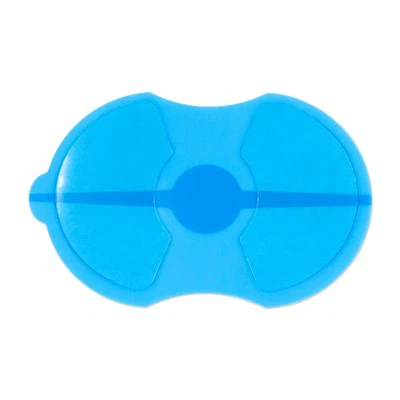
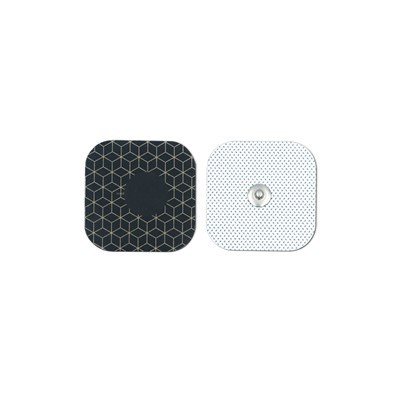
The active interface relies on an ultra-mild, bio-compatible polyacrylamide hydrogel compounded with high-purity humectants (pharmaceutical-grade glycerin and natural polysaccharide derivatives). The gel is slot-die extruded across the carbon conductor at a controlled caliper of 0.9mm to 1.1mm. The moving laminate passes through calibrated inline UV curing arrays, cross-linking the polymer into an elastic, high-cohesion 3D matrix with an skin-neutral pH buffer (5.8 ± 0.3). Precision rotary dies cut finished anatomical rectangles (50× 100mm or 50× 130mm) and curved butterfly geometries with rounded, stress-relieved radii. The finished pads are mounted on fluorosilicone-coated PET storage cards and sealed into airtight multi-layer barrier pouches inside an ISO 13485-certified cleanroom environment. The standard minimum OEM production threshold is 10,000 units.
Core Engineering Assets
-
4-Way Elastic Tricot Web (Anatomical Compliance Across the Linea Alba)
During diastasis recti rehabilitation, patients engage in active core bracing and diaphragmatic respiration while lying supine. Conventional electrotherapy pads made with rigid foam or single-axis paper backings cannot accommodate two-dimensional abdominal expansion; they crease down the center, tent over the softened linea alba, and peel away within minutes. We utilize a high-gauge, warp-knitted tricot carrier that delivers balanced multi-directional elasticity (>35% elongation). The pad stretches and recoils synchronously with the expanding abdominal wall, keeping the conductive gel in continuous planar contact across the rectus muscle bellies without mechanical edge-lift or loss of contact area.
-
Low-Shear Hypoallergenic Hydrogel Lattice (MARSI Prevention for Striae & C-Section Scars)
Pregnancy leaves the lower abdomen patterned with thinned, atrophic striae gravidarum and delicate surgical scars following cesarean delivery. Standard TENS hydrogels exhibit aggressive peel adhesion (>6.0N/25mm) that damages vulnerable dermal tissues, leading to Medical Adhesive-Related Skin Injury (MARSI) and painful follicular inflammation. Our postnatal formulation uses a hydrophilic polymer cross-linked with polyhydric humectants to maintain an controlled peel tack (2.5N to 3.8N/25mm). The gel flows into micro-folds to maintain uniform, low-impedance electrical contact, yet lifts cleanly without stripping epidermal layers, pulling fine hairs, or triggering hyperemic flares on sensitized scars.
-
Isotropic Silver-Carbon Dispersion (Uniform Charge Density for Muscle Activation)
Pelvic floor stimulation and abdominal toning require driving motor-level currents (20 - 40mA) through tissue to induce functional muscle contractions without triggering localized cutaneuous stinging. Cheap pads feature uneven carbon loading that forces current to discharge directly beneath the connector pin, creating high current-density hot spots. We calibrate our conductive layer with a micro-dispersed silver-carbon matrix that maintains flat surface conductivity (<75Ω/sq). Incoming biphasic electrical pulses disperse uniformly across the entire active footprint, keeping spatial current variance below 0.08 mA/cm². This enables deep motor-unit recruitment for pelvic and core rehabilitation without localized burning or stinging sensations.
Clinical & Commercial Deployments
Postpartum Rehabilitation & Pelvic Floor Physical Therapy
Standardized consumable electrode pads prescribed by physical therapists and midwives for transcutaneous pelvic floor neuromodulation (targeting the pudendal nerve via sacral S2–S4 dermatomes) and diastasis recti core electrotherapy protocols.
Postnatal Home-Care Device Bundling & Consumable Replenishment
Turnkey, private-label replacement sets (4-pack or 8-pack blister cards) customized for maternal wellness device OEMs as essential starter and replenishment consumables sold through consumer channels.
Obstetric Post-Cesarean & Lumbopelvic Pain Management
Non-traumatic self-adhesive pads utilized in obstetric wards to deliver gentle TENS for postpartum uterine involution cramping, sacroiliac joint instability, and postural lower back pain.
Packaging & Transnational Logistics Routing
-
Resealable Multi-Pack Hermetic Pouching : Postpartum rehabilitation protocols typically run for 10 to 20 daily sessions per patient. Finished pads are mounted in pairs onto double-sided fluorosilicone PET release cards and sealed into heavy multi-layer PET/AL/PE barrier foil pouches with integrated airtight zip-locks, keeping the hydrogel fresh, moist, and functional across a 36-month shelf life.
-
Transnational Logistics Resilience : Base stretchable tricot converting, conductive silver-carbon coating, and gentle hydrogel compounding execute natively inside our primary China facility. Custom shape rotary die-cutting, terminal wiring, private-label retail box converting, and master container packing route through our Vietnam hub, shielding international B2B buyers from regional medical consumable import tariffs.
Quality, Regulatory & Biocompatibility Systems
-
Maternal Dermal Biocompatibility Profile (ISO 10993) : Every compounded batch undergoes testing in certified independent testing laboratories against ISO 10993-5 (Cytotoxicity Grade 0), ISO 10993-10 (Sensitization: 0% allergic reaction), and ISO 10993-23 (Primary Dermal Irritation Index = 0.0). Formulations are completely free of phthalates, natural rubber latex, and harsh parabens.
-
MDSAP & ISO 13485 Manufacturing Controls : Automated lamination, hydrogel UV curing, and packaging cleanrooms operate strictly within facilities certified to ISO 13485:2016 and MDSAP regulatory frameworks, delivering unbroken lot-serialization from raw chemical inputs to outbound shipping cartons.
Technical FAQ
Q: Why do standard rectangular TENS pads cause stinging sensations and peel off during postpartum diastasis recti therapy?
A: Postpartum abdominal anatomy presents a loose, curved surface that flexes with every breath. Standard TENS pads use rigid, unyielding foam or single-axis spunlace backings. When the patient breathes or contracts the abdominal core, the stiff backing cannot stretch laterally; it creases across the softened linea alba, tenting the pad away from the skin. This loss of surface contact forces current through the few remaining connected spots, creating localized current crowding that feels like sharp pinpricks. Our postnatal pads feature a four-way stretch knitted tricot backing (>35% elongation) and low-impedance silver-carbon layers (<15Ω) that expand and contract with abdominal breathing, maintaining complete planar contact without edge lifting or localized stinging.
Q: How does the hydrogel formulation protect hyper-reactive maternal skin and newly healed cesarean incisions from chemical and mechanical trauma?
A: Due to sudden postpartum estrogen withdrawal, maternal skin suffers from compromised lipid barriers, making it vulnerable to Medical Adhesive-Related Skin Injury (MARSI) and contact dermatitis. Our hydrogel addresses this in two ways. Chemically, it maintains a skin-neutral pH buffer (5.8 ± 0.3) and utilizes high-molecular-weight polyols that retain moisture, avoiding the volatile chemical irritants found in industrial adhesives. Mechanically, the cross-linking density is calibrated to limit dynamic peel tack strictly to 2.5N to 3.8N/25mm. The gel provides sufficient tack to stay attached during treatment, yet releases smoothly upon vertical peel without stripping the fragile, thinned stratum corneum over stretch marks or tugging on healing surgical scar margins.
Maternal healthcare distributors, pelvic rehabilitation device OEMs, and postpartum clinical networks can request lot-specific Certificates of Analysis (COA), ISO 10993 dermal safety logs, and unbranded evaluation sample kits in multiple anatomical footprint formats.
👉 [Request Postnatal Rehabilitation Electrode Samples]
Hot Tags: Electrode Self Adhesive For Postnatal Rehabilitation, China Electrode Self Adhesive For Postnatal Rehabilitation manufacturers, suppliers, factory, TENS unit gel pads, TENS Unit Electrodes, Wireless Electrode Pads, Electrotherapy Replacement Pads, Back Stimulation Pads, TENS pads for sensitive skin
Specifications
| ITEM | SHAPE | SIZE(CM) | PACKAGING |
| 40*40 |
Square |
4.0*4.0 |
4pcs/pack |
| 45*45 | Square | 4.5*4.5 | 4pcs/pack |
| 50*50 | Square | 5.0*5.0 | 4pcs/pack |