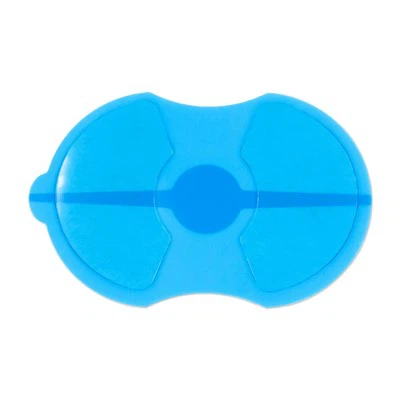

OEM Portable E Stim Machine | Pocket Electrotherapy Device | TOP-RANK
Professional B2B manufacturing for portable e-stim machines. Dual-channel constant-current output, microcurrent/TENS/EMS multi-waveforms, USB-C rechargeability, and sub-120g pocket form factor.
Clinical Rationale & Biomechanical Operating Profile
Migrating high-output electrotherapy from clinical desktop workstations to pocket-sized, patient-carried devices requires solving a severe power-density and biomechanical trade-off. Ambulatory patients utilize portable electro-stimulation (E-Stim) machines while walking, sitting at workstations, or completing functional rehabilitation drills. Under these dynamic conditions, shifting postures continuously flex the underlying muscle beds, driving electrode contact resistance through violent fluctuations between 300Ω and 1,800Ω.
Budget handheld units cut critical corners to achieve miniaturization: low-voltage battery rails without active boost compensation collapse when encountering high epidermal resistance, failing to deliver the current necessary to depolarize motor nerves. Conversely, simple constant-voltage platforms deliver painful current spikes whenever joint movement compresses the hydrogel against the skin. Compounding these electrical issues, flimsy plastic belt clips snap under field use, and mechanical potentiometer dials get bumped in pockets, accidentally dialing up current to dangerous levels.
This portable E-Stim hardware platform packages clinical-grade neuromuscular stimulation and sensory analgesia into an ultra-compact, drop-resistant enclosure weighing under 120 grams. Driven by an active synchronous step-up converter and a closed-loop constant-current output stage, the unit delivers up to 80mA peak current across an 80V compliance window from a rechargeable lithium cell. Microprocessor firmware switches between high-frequency sensory TENS (1 - 150Hz), motor-recruitment EMS (35 - 50Hz), and cellular-repair Microcurrent (0.5 - 10Hz at sub-milliampere levels) without waveform distortion. We contract-manufacture these mobile stimulators for physical therapy hardware brands, sports medicine supply networks, and clinical trial monitoring providers globally.
Manufacturing Kinetics & SMT Architecture
Manufacturing of the portable E-Stim machine combines high-density surface-mount technology (SMT), automated robotic optical testing, cleanroom micro-injection molding, and multi-stage electrical calibration under ISO 13485 oversight. The electronics assembly centers on an ultra-compact 4-layer High-Density Interconnect (HDI) printed circuit board incorporating blind and buried micro-vias. This multi-layer routing physically segregates the low-noise 32-bit ARM Cortex processing unit and high-precision analog-to-digital sampling channels from the high-voltage pulse-generation stage.
The power conversion module pairs an ultra-compact, high-frequency planar transformer with low-loss Gallium Nitride (GaN) or high-speed MOSFET switching arrays. This architecture steps up single-cell lithium voltage (3.0V to 4.2V) to an active 80V compliance ceiling with greater than 88% power conversion efficiency, curbing battery draw and thermal buildup in the sealed pocket-sized casing. High-precision passive feedback networks (0.1% tolerance resistors) maintain waveform symmetry on both sides of the H-bridge output, ensuring net-zero DC charge transfer to eliminate electrolytic skin irritation.
The external housing is injection-molded using high-impact polycarbonate/polybutylene terephthalate (PC/PBT) blends formulated to resist mechanical drops and hospital-grade disinfectant wipes. A co-molded thermoplastic elastomer (TPE) perimeter creates an impact-dampening bumper and provides tactile grip.
Following automated ultrasonic case fusion, finished units enter automated test bays where computerized load fixtures test output channels across stepped dynamic impedances (300Ω, 700Ω, and 1,500Ω). Automated spectrum analyzers and digital oscilloscopes record pulse risetimes (<0.8μs), frequency jitter (<0.5%), and current limiters before authorizing barcode packaging. The standard contract manufacturing threshold is 1,000 units.
Core Engineering Assets
-
Dynamic Impedance-Tracking Constant-Current Loop (Zero Amplitude Sag During Walking & Joint Motion)
When patients walk, exercise, or adjust posture while wearing a portable stimulator, movement stretches the skin and flexes underlying joints, shifting skin-electrode contact area and causing interface resistance to fluctuate rapidly. Unregulated constant-voltage stimulators suffer from extreme amplitude volatility: current dives when impedance rises (losing therapeutic efficacy), and spikes sharply when sweating or compression lowers resistance, shocking the user. Our hardware architecture integrates a sub-microsecond analog closed-loop monitoring circuit. By sampling real-time current at the leading edge of every pulse, the regulator adjusts internal compliance rail voltages dynamically across a 10V - 80V sweep. Target current stays flat at the patient's selected setting, delivering steady muscular recruitment or sensory pain gating through dynamic daily motion.
-
Tri-Modal Algorithmic Firmware Synthesis (Seamless Microcurrent, TENS & EMS Execution on a Single SoC)
Traditional ambulatory stimulators are single-purpose machines: clinicians must purchase dedicated units for chronic pain, separate units for muscle activation, and bulky specialist hardware for microcurrent cellular repair. Our multi-core ARM architecture houses three distinct electro-physiological firmware profiles within a single pocket device. In TENS mode, it fires high-rate (1 - 150Hz), narrow pulses (50 - 100μs) to activate the presynaptic pain gate; in EMS mode, it switches to wide-phase motor pulses (200 - 400μs) driven through 4-stage trapezoidal work-rest ramps; in Microcurrent (MENS) mode, the output shifts to biological-level currents (10μA to 800μA) at ultra-low frequencies (0.5 - 100Hz), stimulating local ATP synthesis and accelerating soft-tissue regeneration.
-
Millisecond-Level Lead-Off Interlock (Elimination of High-Voltage Spikes and Cutaneous Spark Burns)
The primary safety hazard of ambulatory electrotherapy occurs when a moving patient snags an electrode wire on a door handle or when sweat causes a pad to peel loose. As contact area shrinks down to a tiny corner, remaining current concentrates into a microscopic hot spot, causing high-voltage arcing that burns patient skin. We resolve this with a continuous, high-speed load-impedance sensing interlock. If loop impedance jumps beyond 8.0 kΩ-indicating lead dislodgement, wire fracture, or pad lift-the firmware triggers an automatic hardware shutdown, collapsing the high-voltage boost rail to zero within 50 milliseconds. The console enters a safe lockout state, emits an audible chime, and flashes an alert on the screen, preventing painful arcing or patient injury.
Clinical & Commercial Deployments
Sports Medicine Kits & Athletic Training Rooms
Essential lightweight recovery and pain titration tool packed into athletic trainers' sideline kits for field-side muscle spasm relief, post-game neuromuscular flush, and acute sprain pain management.
Home-Health Physical Therapy & Post-Op Discharge Kits
Prescribed portable devices supplied to post-surgical orthopedic patients (ACL reconstruction, total joint arthroplasty) for compliance-tracked muscle reactivation and non-opioid home analgesia.
Occupational Ergonomics & Workplace Injury Clinics
Compact, clip-on stimulators deployed in industrial occupational therapy programs to manage chronic neck, shoulder, and lower back postural pain among assembly-line workers and heavy equipment operators.
Packaging Configurations & Transnational Logistics
-
Turnkey Clinic & Retail Gift Box Packaging : Each production kit contains one portable E-Stim console, a removable 360-degree rotating belt holster, two dual-lead touch-proof cables (2.0mm female pin type), four medical-grade high-tack reusable hydrogel electrodes (50× 50mm), a braided USB-A to USB-C charging cable, a clinical guide, and an impact-absorbing zippered EVA carrying case. Electrodes are sealed within multi-layer zero-MVTR foil pouches with airtight zip-locks to maintain adhesive hydration over a 36-month shelf life.
-
Transnational Logistics Resilience : Multi-layer HDI PCB SMT assembly, firmware flashing, high-frequency transformer manufacturing, and automated board-level testing execute natively inside our primary China facility. Housing micro-injection, final electro-mechanical assembly, lithium battery integration, burn-in load testing, blister/retail carton kitting, and ocean container consolidation route through our Vietnam hub, shielding international B2B buyers from regional medical device tariffs.
Quality, Regulatory & Neurological Safety Systems
-
IEC 60601-1 & IEC 60601-2-10 Stringent Compliance : Consoles undergo batch validation in accredited independent testing laboratories confirming strict compliance with IEC 60601-1 (Medical electrical equipment safety), IEC 60601-1-2 (Electromagnetic compatibility), IEC 60601-1-11 (Home healthcare environment safety), and IEC 60601-2-10 (Nerve and muscle stimulators). Output current density is hard-coded below the maximum permissible 2.0 mA/cm² limit to prevent cutaneous burns.
-
Battery Safety & MDSAP Quality Frameworks : The internal lithium-polymer battery pack carries full UN38.3, IEC 62133, and UL1642 certifications with redundant safety ICs preventing thermal runaway, short-circuits, and overcharging. SMT lines and final assembly bays operate strictly under ISO 13485:2016 and MDSAP regulatory frameworks, providing unbroken electronic device history records (DHR) from bare copper reels to outbound master cartons.
Technical FAQ
Q: How does a battery-operated portable E-Stim unit deliver the high output currents (>70mA) typically associated with clinical desktop consoles without draining the battery in minutes?
A: Desktop clinical consoles use AC line power to drive massive linear transformers, a method that wastes energy as heat. Budget handheld stimulators try to use continuous DC-DC converters, which quickly drain small batteries (<2 hours runtime) and trigger thermal shutdowns. Our portable architecture utilizes a high-frequency, pulse-synchronized boost topology coupled with an energy-efficient ARM Cortex core. Instead of holding a constant high-voltage rail all the time, the power stage charges a micro-capacitive reservoir and pulses the step-up stage synchronously with the active stimulation phase (which only lasts 50μs to 400μs). During the rest interval between pulses (which accounts for >95% of the overall duty cycle), the high-voltage stage enters a low-power quiescent state. This intermittent pulsing delivers up to 80mA peak current into a 1,000Ω load while drawing minimal average power, extending the runtime of a single 1,200mAh charge to over 15–20 hours of clinical treatment.
Q: What is the physiological and clinical advantage of incorporating true Microcurrent (MENS) alongside conventional TENS and EMS in a portable device?
A: TENS and EMS rely on milliampere-range currents (1 - 80mA) to depolarize nerve and muscle membranes-treating symptoms by blocking pain gate pathways or mechanically contracting atrophied muscle fibers. However, milliampere currents do not accelerate cellular biochemical repair; in fact, excessive external current can inhibit cellular synthesis. Microcurrent Electrical Neuromuscular Stimulation (MENS) operates at sub-sensory levels (10μA to 800μA), which matches the endogenous electrical currents naturally generated by injured biological tissues. Physiological research indicates that currents below 500μA stimulate mitochondrial membrane potentials, driving intracellular adenosine triphosphate (ATP) production by up to 500% and accelerating amino acid uptake for protein synthesis. By offering Microcurrent alongside TENS and EMS in one pocket console, clinicians can first relieve acute pain and arrest muscular atrophy, then switch to microcurrent modes to accelerate tendon, ligament, and fascial tissue healing in ambulatory patients.
Rehabilitation hardware distributors, sports medicine supply directors, and digital electrotherapy brand managers can request IEC 60601-2-10 electrical compliance dossiers, multi-channel oscilloscope waveform captures, and unbranded evaluation hardware units with customized leadwire and electrode configurations.
👉 [Request Portable E Stim Machine Evaluation Samples]
Hot Tags: portable e stim machine, China portable e stim machine manufacturers, suppliers, factory
Specifications
|
Device name |
TENS-808 |
|
Power sources |
3.7 V Li-ion battery |
|
Power supply |
Input: 100-240V AC, 50/60Hz,0.2A; Output: 5V DC, 300mA |
|
Output channel |
Dual channel |
|
Waveform |
Bi-phase square-wave pulse |
|
Output current |
Max. 120mA (at 500ohm load) |
|
Output intensity |
0 to 40 levels, adjustable |
|
Treatment mode |
TENS, EMS and MASSAGE mode |
|
Number of programs |
26 program |
|
Pulse rate |
2Hz ~ 120Hz |
|
Pulse width |
50uS ~ 300uS |
|
Treatment time |
5 minutes ~ 90 minutes |
|
Operating condition |
5° C to 40° C with a relative humidity of 15%-93%, |
|
Storage condition |
-10° C to 55° C with a relative humidity of 10%- |
|
Dimension |
109*55*18mm (L x W x T) |
|
Weight |
About 73g |
|
Automatic shutof |
1 minute |
|
Classification |
BF type applied part, internal power equipment, IP22 |
|
Size of electrodes pad |
40x40mm, square |
|
Output precision |
±20% error is allowed for all the output parameters |