


Choosing an electrode pad manufacturer involves much more than comparing prices or requesting product samples.
For OEM brands, distributors, and medical device companies, certifications provide valuable insight into a manufacturer's quality management system, regulatory compliance, and production capabilities.
However, not every certification carries the same significance.
Some certifications are essential for market access, while others demonstrate manufacturing excellence or product safety.
This guide explains which certifications buyers should look for-and why they matter when selecting a reliable electrode pad manufacturing partner.
Quick Answer
When evaluating an electrode pad manufacturer, buyers should pay attention to certifications such as:
- ISO 13485
- CE (where applicable)
- FDA Registration & Device Listing (for the U.S. market)
- ISO 10993 Biocompatibility Testing
- ISO 14001 Environmental Management (optional but valuable)
Rather than looking for the largest number of certificates, buyers should understand what each certification actually demonstrates.

Why Certifications Matter
Medical electrode pads are used in applications where product quality, safety, and consistency are critical.
Certifications help buyers evaluate whether a manufacturer has established systems to:
- Maintain consistent quality
- Control production processes
- Meet regulatory requirements
- Support international markets
- Reduce supply chain risks
While certifications do not guarantee a perfect product, they provide confidence that manufacturing follows recognized standards.
Medical device certifications verify that a manufacturer follows recognized quality, safety, or regulatory standards relevant to product design and production.
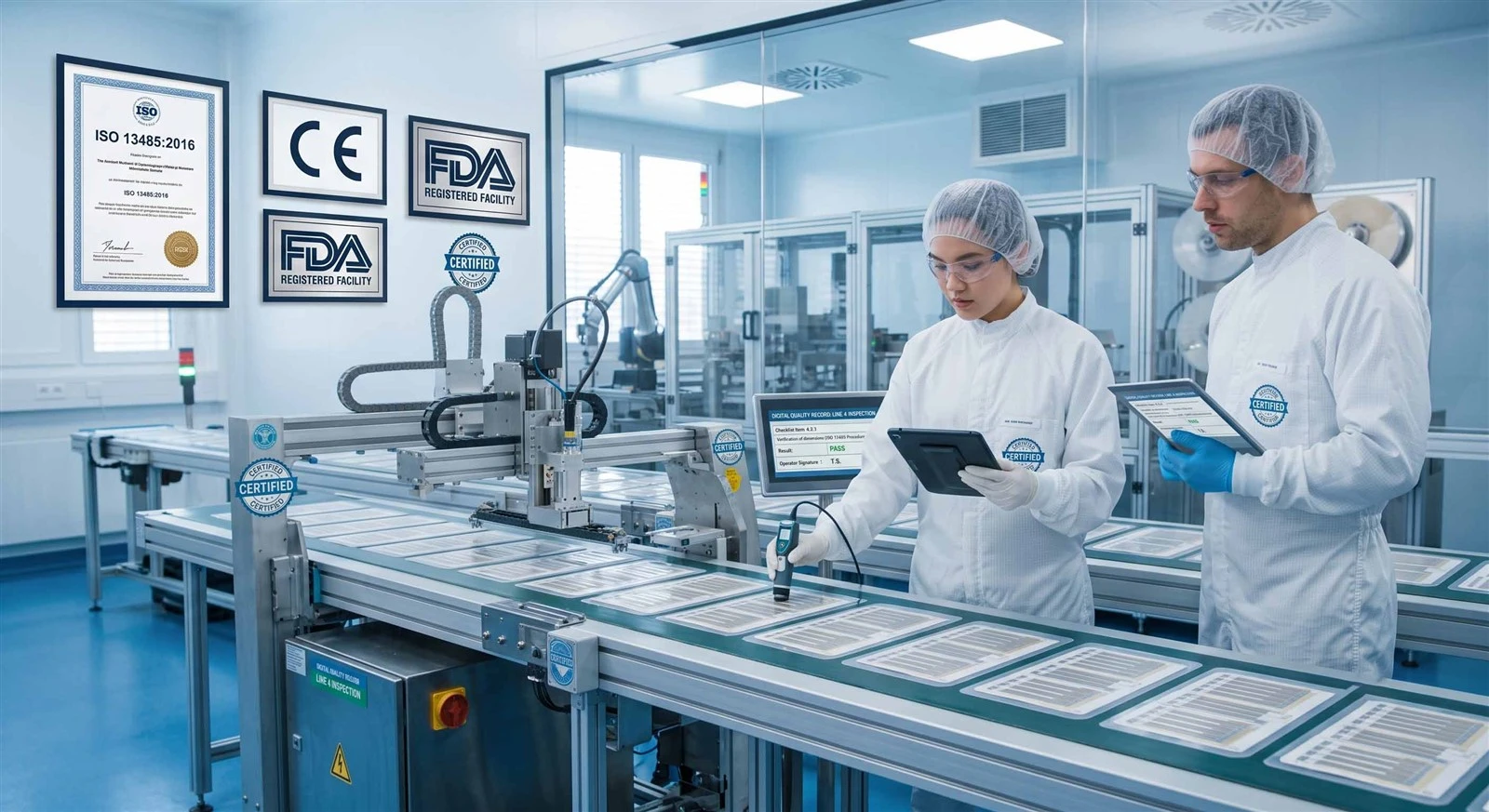
1. ISO 13485 - The Foundation of Medical Device Manufacturing
For most OEM buyers, ISO 13485 is the first certification to verify.
It is the internationally recognized quality management standard specifically developed for medical device manufacturers.
An ISO 13485-certified manufacturer typically operates under documented procedures covering:
- Design and development
- Supplier management
- Production control
- Traceability
- Corrective and preventive actions (CAPA)
- Risk management
Why It Matters
For buyers, ISO 13485 demonstrates that quality is managed systematically rather than relying solely on final product inspection.
ISO 13485 is widely recognized as the core quality management standard for medical device manufacturers.
2. CE Marking - Access to the European Market
If your products will be sold in Europe, CE compliance is an important consideration.
For medical devices, CE marking indicates that the product complies with applicable European regulatory requirements before being placed on the market.
Buyers Should Understand
Rather than simply asking whether a supplier has CE certification, buyers should verify:
- Which products are covered
- Which regulations apply
- Whether supporting technical documentation is available
CE compliance is an important requirement for medical devices intended for the European market.
3. FDA Registration - Important for the U.S. Market
For companies exporting to the United States, FDA-related compliance is often discussed.
However, buyers should understand an important distinction.
FDA registration and device listing indicate that a manufacturer and its devices have been properly registered with the U.S. FDA where required. This is not the same as FDA approval.
When evaluating a supplier, ask about:
- FDA establishment registration
- Device listing status (if applicable)
- Regulatory support for the U.S. market
FDA registration is different from FDA approval and should be understood accordingly when evaluating suppliers.
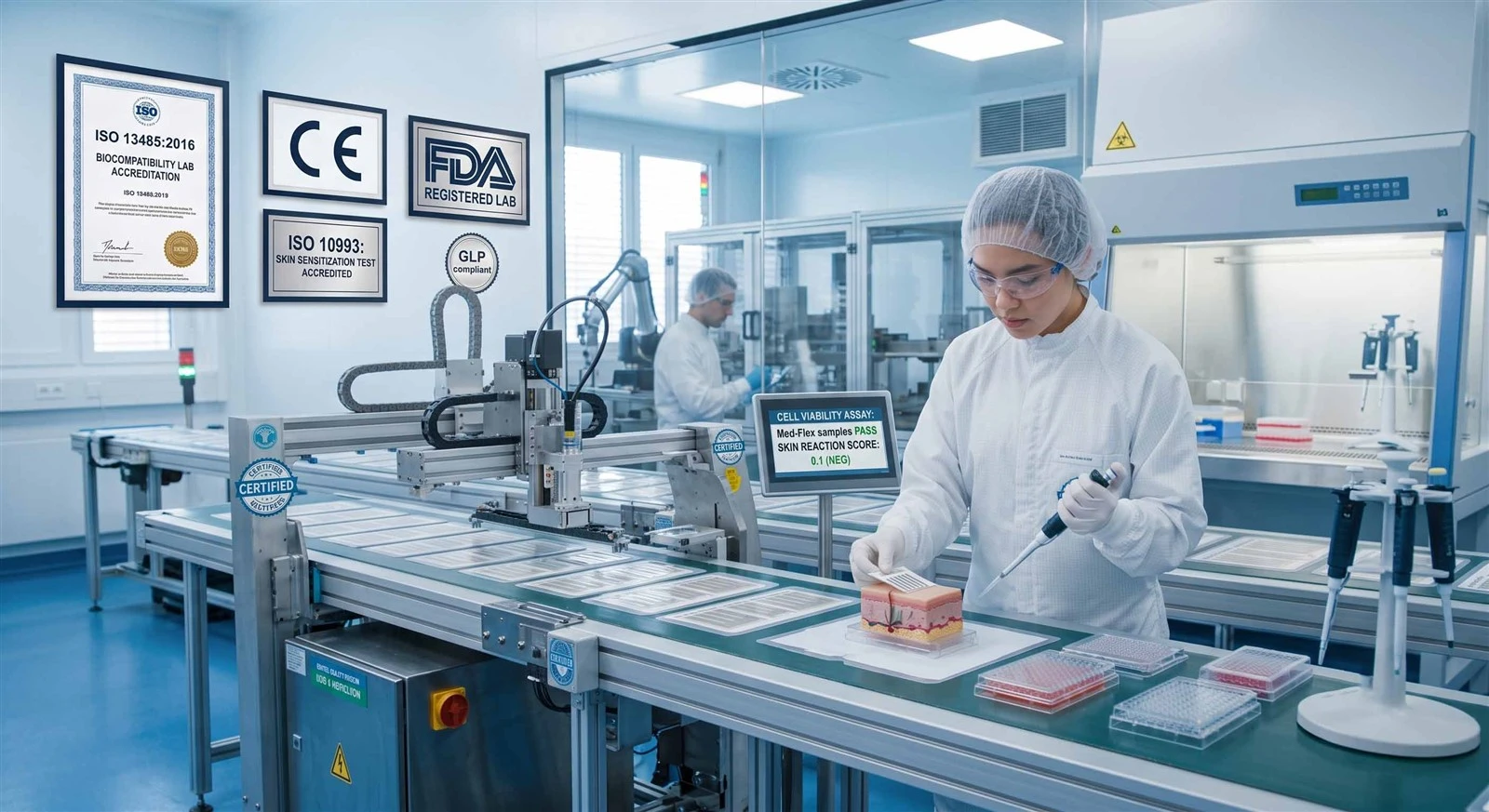
4. ISO 10993 - Biocompatibility Matters
Electrode pads come into direct contact with human skin.
Therefore, biocompatibility is an important consideration.
ISO 10993 provides a framework for evaluating the biological safety of medical device materials.
Testing may include assessments related to:
- Skin irritation
- Sensitization
- Cytotoxicity
Why Buyers Should Care
Products intended for repeated skin contact should be supported by appropriate biocompatibility evaluations where applicable.
5. ISO 14001 - A Sign of Sustainable Manufacturing
Although not a product certification, ISO 14001 demonstrates that a manufacturer has implemented an environmental management system.
For many global brands, environmental responsibility has become an increasingly important part of supplier selection.
Benefits include:
- Better environmental management
- Continuous improvement
- Sustainable manufacturing practices
While ISO 14001 may not be mandatory, it reflects a company's long-term operational commitment.
Certifications Are Important-But They Aren't Everything
Certificates should be viewed as part of the evaluation process, not the entire process.
Experienced OEM buyers also assess:
- Manufacturing consistency
- Quality control procedures
- Production capacity
- Technical support
- Customization capabilities
- Supply chain stability
A manufacturer with strong certifications and proven production performance is often a more reliable long-term partner.
Certifications should be evaluated alongside manufacturing capability, quality consistency, and technical support.
Questions Buyers Should Ask
Before choosing an electrode pad manufacturer, consider asking:
- Which certifications are currently valid?
- Are certifications applicable to the products being purchased?
- Can supporting documentation be provided?
- How are quality systems maintained?
- What testing is performed before shipment?
- How is product traceability managed?
These questions often provide more useful information than simply requesting a list of certificates.
Frequently Asked Questions
Is ISO 13485 mandatory?
Does FDA registration mean FDA approval?
Is CE required for every market?
Should buyers choose the supplier with the most certifications?