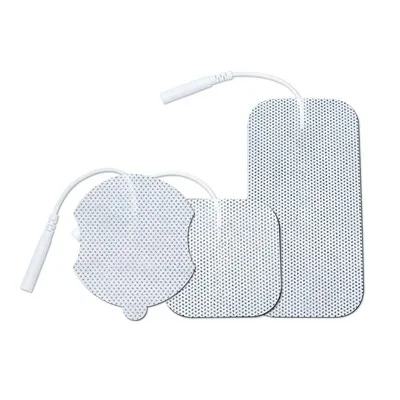
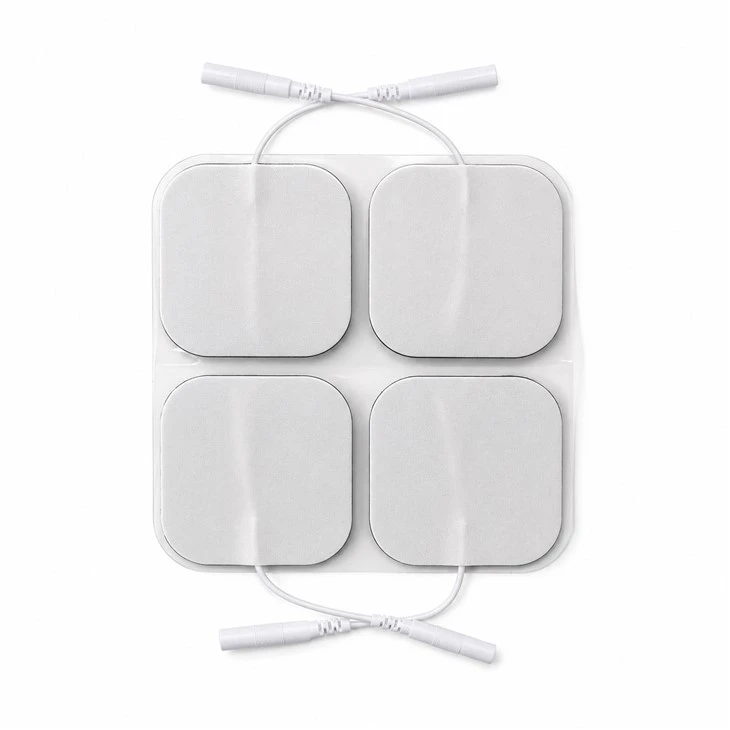
Volume Foam Backed TENS Electrodes | Fluid-Proof Base | TOP-RANK
Wholesaling closed-cell PE foam TENS electrodes designed to survive fluids. Built with dynamic compression rebound to block sweat degradation and ensure flat current density profiles.
Product Overview
This category of electrotherapy patches relies on an extruded 1.0mm cross-linked Polyethylene (PE) foam layer instead of conventional woven yarn. The mechanical design is optimized for environments where the physical link between the stimulator and the skin is exposed to clinical gels, spray sanitizers, or constant heavy clothing pressure. By embedding a uniform carbon-ink conductor underneath this hydrophobic backing, the patch blocks outer liquid ingress while maintaining a stable, unbroken transdermal vector path. We process these solid white blanks in high configurations for rehabilitation supply firms, durable medical equipment (DME) stockists, and global private brands.
Technical/Engineering Description
The assembly line paths a firm PE foam layer directly to an advanced carbon-conductive matrix using a synthetic heat-reactive bonding film. Standard porous cloth pads often act like a sponge, drawing water into the electrical grid. This closed-cell design acts as a complete physical seal. Because the backing prevents any upward vapor evaporation, we mix a highly stable polyacrylamide hydrogel with specialized polymer cross-linkers. This composition maintains its internal gel network even when trapped beneath the non-breathable foam for a 60-minute session. Rotary converting machines cut the shapes using custom steel-rule cylinders, controlling cutting pressure to eliminate ragged edges. The completed pieces are finished with either standard 2.0mm female lead wire socket crimps or 3.5mm nickel-coated brass studs. Wholesale OEM batches carry a minimum configuration of 20,000 packs.
Key Features
-
Isolation Against Clinical Fluids & Contamination
Outpatient facilities run continuous patient cycles where ultrasound couplants, water therapy mist, and skin prep prep liquids flow freely. Porous non-woven patches are easily compromised; one drop of surface fluid can soak through the fabric, breaking down the carbon layer and shorting the current. Our medical-grade PE base uses an enclosed cellular framework. It is fundamentally waterproof. This allows physical therapy staff to spray and wipe the dry outer face of the pad between quick rotations, keeping the internal electrics safe from washouts.
-
Static Dissipation via Dielectric Cushioning
Active TENS users often wear portable units under heavy synthetic fabrics like polyester fleeces or nylon uniforms. As the patient moves, clothes rub against the pad backing, building high frictional static voltage. If this static charge bleeds into the active circuit, it alters the pulse widths, creating sharp, random stinging sensations. The 1.0mm firm foam matrix offers a high dielectric insulation constant. It acts as a static shield, dampening the external friction noise so the target nerve path receives only the clean, programmed waveform.
-
Lateral Hydrogel Displacement Defense
When patients lie flat or lean heavily back against a chair during lumbar or pelvic conditioning, their entire body mass compresses the patch. Under this heavy mechanical load, flimsy backings crush completely, flattening the polymer gel and forcing it to squeeze out past the die-cut edges. This creates exposed carbon sections and intense skin edge-burns. Our PE foam features an engineered compression modulus that brings vertical spring-back resistance. It absorbs the downward force, confining the viscous gel matrix strictly inside its original stamped perimeter.
Applications
High-Throughput Clinical Lines
Dispersive substrates picked for busy departments where wipe-clean sanitize workflows are standard protocol to limit cross-contamination risks.
Ambulatory Under-Clothing Wear
The standard insulated choice for patients operating portable devices under office wear or tactical clothing during movement.
Moist-Environment Protocols
Ideal for hydrotherapy clinics or athletic training rooms where humidity and sweat break down standard paper or non-woven backings.
Customization & Tariff Engineering
-
Precision Profile Die-Cutting : We supply standard 50x50mm and 50x90mm layouts while offering custom shapes. The firm PE backing takes tight steel-rule toolings easily, making it simple to create specialized geometries with neat margins for your medical kit footprints.
-
High-Bond Chemical Branding : Labeling closed-cell surfaces is tough; cheap inks cannot bond and flake off under skin warmth. We deploy unique UV-stabilized elastomeric inks that etch into the top micro-pores of the PE base, creating a long-term mark that will not rub away during routine handling.
-
Tariff Shunting Logistics : Raw foam web compounding and multi-layer coating operate inside our main China production facility. Custom tool die-cutting, automated individual pack sealing, and final container kitting route straight through our Vietnam hub, protecting large B2B volume runs from specific consumer medical import trade barriers.
Certifications
-
Regulatory : Product files support CE (MDR) and FDA 510(k) registrations under the OEM client's brand.
-
Systems : Assembly lines operate within audited ISO 13485:2016 frameworks, ensuring traceability from raw foam block to sealed pouch.
-
Biocompatibility Logs : Extracted material samples (foam, hydrogel, and carbon) are verified against independent ISO 10993-5 (Cytotoxicity) and ISO 10993-10 (Sensitization) limits.
FAQ
Q: Does the PE foam backing cause skin maceration over extended periods?
A: Yes. Because the closed-cell foam blocks moisture vapor transmission, the patient's trapped sweat cannot naturally evaporate. These specific electrodes are engineered for short-term active therapy sessions (30 to 60 minutes) rather than continuous 24-hour diagnostic monitoring.
Q: Can we print a highly detailed, full-color logo directly on the foam?
A: High-resolution CMYK printing is limited by the textured, cellular surface of the PE foam. We utilize single-color or dual-color silk-screen printing to achieve proper ink adhesion and visual contrast.
Medical equipment distributors and clinical procurement teams can request unbranded foam prototypes and compression modulus logs.
👉 [Request PE Foam Pad Prototypes]
Hot Tags: foam backed tens electrodes, China foam backed tens electrodes manufacturers, suppliers, factory, Electronic Pulse Massager Pads, Neck Relax Electrode Pads, Replacement Gel Pads for TENS Machine, stimulation pads, TENS Gel Pads, TENS sticky pads
Specifications
| Component Parameter | Material Target | Engineering Reality |
| Volumetric Fluid Absorption | ≈0% | Gas-sealed cells block liquid transport |
| Breakdown Voltage | Exceeds 4.0 kV | High-density PE isolates external static |
| Gel Displacement Resistance | High Storage Modulus (G') | Polymer limits lateral ooze under load |
| Tooling Tolerance | Within ±0.2mm | Clean blade shears prevent foam stretching |
| Mechanical Grip | 4.0N - 5.5N / 25mm | Calibrated via standard peel tests |