


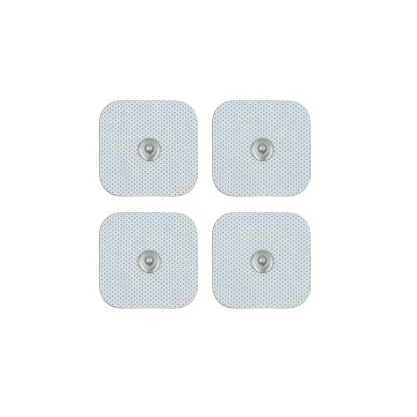


Electrode Self Adhesive | Multi-Size TENS/EMS Pads | TOP-RANK
Self-adhesive electrodes for TENS/EMS. Available in square, round, and rectangular profiles (e.g., 50x50mm, 50x90mm). Features carbon film and polyacrylamide hydrogel.
Product Overview
Self-adhesive electrodes are the primary hardware interfaces for transcutaneous electrical nerve stimulation (TENS) and neuromuscular electrical stimulation (NMES). The pads utilize a carbon film substrate coated with an ionic hydrogel to establish a reversible conductive bond with the epidermis. B2B clinical distributors utilize these consumables in physical therapy hardware deployments across various anatomical sites.
Key Features
-
Polyacrylamide Hydrogel Adhesion
-
Mechanical shear forces during patient movement dictate the failure rate of the pad. The polyacrylamide matrix is calibrated to a peel force of 3.0N - 5.0N. The cross-linking density restricts internal cohesive fracture, maintaining the polymer structure when peeling the pad away from the epidermis or the release liner.
-
Carbon Film Current Dispersion
High-impedance "hot spots" cause localized erythema, especially in smaller round configurations (e.g., Ø 25mm). The screen-printed carbon film functions as an electrical buffer between the metallic pin/snap and the gel layer. The carbon lattice disperses the electron flow laterally across the footprint, dropping the surface resistance below 50 Ohms.
-
Non-Woven Backing Stress Relief
Thermal insulation from thick backings accelerates gel desiccation. The 60g/m2 spunlace non-woven fabric allows passive vapor transmission. During dynamic joint flexion, the fabric accommodates mechanical strain without pulling the conductive film away from the underlying hydrogel.
Applications
Transcutaneous Electrical Nerve Stimulation (TENS)
Signal coupling for acute and chronic pain gating protocols.
Neuromuscular Electrical Stimulation (NMES)
Motor unit recruitment using large rectangular pads (50x90mm) for post-operative muscle atrophy prevention.
Functional Electrical Stimulation (FES)
Orthotic hardware interface for stroke rehabilitation.
OEM & Private Label
-
Supply Chain Routing: Base material die-cutting and carbon printing operate in our China facility. Final hydrogel lamination, connector assembly, and automated pouching are executed at our Vietnam hub for global tariff optimization.
-
Packaging Specs: 2 or 4 pads per PET/PE pouch depending on dimensions. Medical device brands utilize custom rotary printing on the pouch exterior and the PET release liner.
Certifications
Quality Systems: Assembly lines audited to ISO 13485:2016 and MDSAP. .
Regulatory : Supported documentation for FDA 510(k), CE (MDR), and UKCA clearances.
QC Tracking: Batch-level log files record pre-lamination gel viscosity, 180-degree peel force limits, and DC impedance mapping.
FAQ
Q: Why does the impedance spike after 15 cycles?
A: Stratum corneum debris and skin oils physically occlude the ionic matrix. This builds a dielectric barrier on the superficial layer of the hydrogel. Once the surface area is occluded, the stimulator must increase the voltage to maintain a constant current output.
Q: Can the 2.0mm pin pigtails handle high-mA outputs on larger pads?
A: Yes. The copper-core pigtail wire is insulated with PVC and mechanically crimped to the carbon film. The crimp junction sustains up to 100mA without localized thermal breakdown.
CTA
B2B procurement teams can request standard dimension die-cut files and ISO compliance testing reports.
👉 [Request Self-Adhesive Electrode Samples]
Hot Tags: electrode self adhesive, China electrode self adhesive manufacturers, suppliers, factory, TENS electrodes, TENS unit replacement pads, TENS Unit Pads, TENS therapy pads, Back Stimulation Pads, TENS Therapy Replacement Pads
Specifications
| Parameter | Metric Configurations | Engineering Detail |
| Square | 40x40mm, 50x50mm | Standard universal formats |
| Rectangular | 50x90mm, 50x100mm | Paraspinal & large muscle arrays |
| Round | Ø 25mm, Ø 32mm, Ø 50mm | Targeted joint & facial stimulation |
| Interface | 2.0mm/2.5mm Pin, 3.5mm/4.0mm Snap | PVC insulated pigtails or riveted snaps |
| Impedance | < 50 Ohms | Measured at 500Hz |


