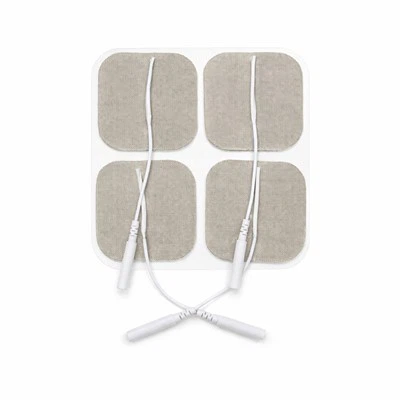
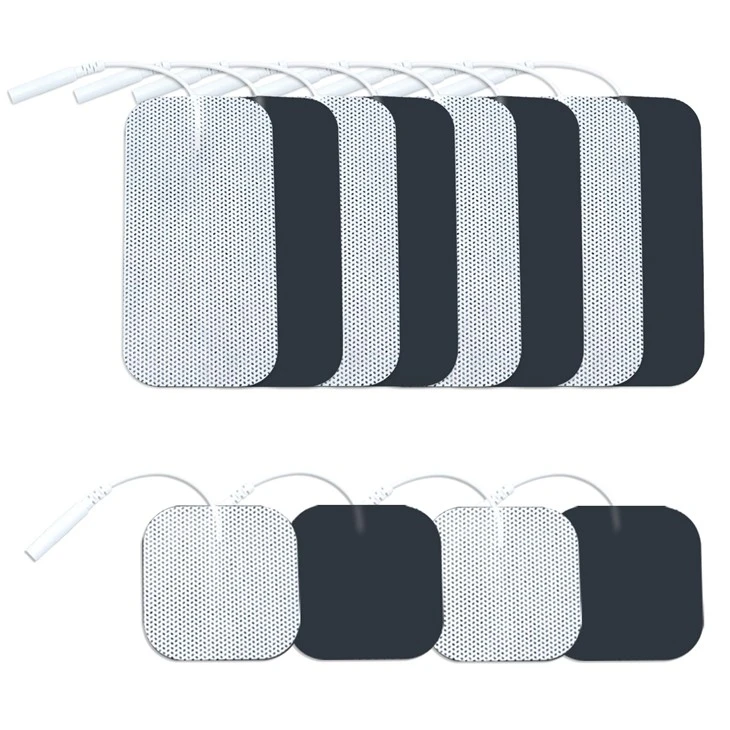
Universal TENS Replacement Electrodes | OEM Compatibility | TOP-RANK
Bulk universal TENS replacement electrodes designed for global medical distributors. Calibrated with backward-compatible mechanical tolerances and flat impedance profiles to prevent cross-platform open-circuit faults.
Product Overview
Universal TENS replacement electrodes function as the definitive aftermarket consumable layer engineered to restore electrical coupling across disparate nerve stimulator platforms. Instead of optimizing for a proprietary device footprint, the mechanical and electrical parameters of these substrates are adjusted to accommodate the voltage-current curves of over 95% of commercial and clinical pulse generators. We manufacture these bulk blanks for GPO hospital networks, durable medical equipment (DME) kitting facilities, and high-turnover pharmacy retail brands.
Technical/Engineering Description
The production of universal replacement substrates relies on a synchronized roll-to-roll calender lamination head. The non-woven textile or medical foam carrier is unified with a thickened conductive carbon film under precision web tension feedback. To ensure cross-brand waveform synchronization without signal attenuation, the sheet resistance of the carbon film is titrated to establish a flat impedance threshold across the entire matrix surface. The skin-facing polymer is a heavily cross-linked polyacrylamide gel embedded with a calibrated electrolyte density to facilitate instant ion mobilization upon pulse initialization. Final cutting splits the spools on multi-cavity rotary toolings with a hard edge-ooze restriction limit of <0.2mm. Bulk wholesale batches require an MOQ of 20,000 parks for private label configurations.
Key Features
-
Micro-Air Gap Elimination at Worn Lead Terminals
Aftermarket users frequently push replacement pads onto old, slightly corroded, or structurally deformed male pins. If the female receptacle inside the pad is too rigid or out-of-tolerance, it creates a microscopic air gap at the junction. Air acts as a dielectric insulator, forcing the pulse generator to trigger high-voltage arcs that snap and sting the skin. We resolve this hardware variance by mold-inserting a highly malleable, elastomer-shielded PVC socket barrel. The inner lumen yields physically to friction-fit onto any male pin varying from 1.95mm to 2.05mm, sealing the air void and maintaining continuous electromechanical contact.
-
False Open-Circuit Safety Fault Prevention
Modern digital nerve stimulators employ automatic load sensing. If a cheap aftermarket pad exhibits a volatile impedance spike during a therapy session, the device microcontroller (MCU) misinterprets the resistance as an unattached pad and forces an immediate open-circuit system shutdown. Our roll-coating line deposits a highly homogenous carbon trace layer that stabilizes the surface resistivity. This flat impedance topology prevents voltage spikes from collapsing the output circuit, ensuring continuous therapeutic wave-profile transmission without triggering premature safety cut-offs on hypersensitive clinical host machines.
-
Sebum-Driven Hydrogel Lattice Breakdown Resistance
In reusable home-care settings, the hydrogel is continuously contaminated by skin lipids, oils, and sloughed keratin cells over multiple application cycles. Low-cohesion polymer gels absorb these surface fatty acids, which chemically disrupt the cross-linked chains, turning the gel into a sticky, non-conductive residue that separates from the carbon layer. We formulate the polyacrylamide matrix with an elevated storage modulus (G') and lower hydrophilic groupings. The dense, cross-linked network physically resists lipid penetration, preventing structural emulsification and maintaining a clean, cohesive peel force over 25+ re-applications.
Applications
Mass-Market Pharmacy Procurement
Peg-board compatible retail packaging configurations supplied in bulk volumes for over-the-counter (OTC) health chains.
Rehabilitation Fleet Standardization
Universal consumables deployed by clinics to streamline inventory costs across diverse physical therapy device brands.
DME Reimbursement Staging
Serialized and lot-tracked multi-packs tailored to match the strict documentation requirements of durable medical equipment channels.
OEM & Private Label
-
Flexographic Brand Alignment : Proprietary medical brand logos, alignment targets, and step-by-step anatomical diagrams can be flexographically printed directly onto the non-woven cloth or the underlying PET carrier film during the high-speed roll-to-roll pipeline, maintaining sub-millimeter visual registration.
-
Cross-Border Logistics Shunting : To enhance supply chain resilience, large-volume polymer synthesis and raw web coating execute natively in our precision China manufacturing facilities. Final custom-profile die-cutting, mechanical terminal integration, and high-barrier foil vacuum-sealing route through our Vietnam hub, protecting international medical hardware distributors from volatile regional tariff shifts.
Certifications
-
Biocompatibility Profiling : Cured stratified matrices are stringently extracted and cleared against independent ISO 10993-5 (Cytotoxicity) and ISO 10993-10 (Sensitization) limits, mathematically establishing zero chemical burn risk on highly permeable skin.
-
Regulatory Architecture : All high-speed lamination, component conversion, and final kitting operations run strictly within manufacturing plants audited and registered to ISO 13485:2016 and MDSAP quality frameworks to support global client private-label filings.
FAQ
Q: Why do some universal replacement pads trigger skin irritation on the second or third use if they passed biocompatibility testing?
A: Post-application skin irritation is rarely a material biopolymer failure; it is typically an electro-chemical consequence of current tunneling. If the hydrogel accumulates excessive sebum and dry keratin from the skin over a few cycles, these contaminants form an insulating crust. The stimulator's electrical vectors are forced to crowd through the remaining clean patches of gel, causing current density to spike beyond safe limits and resulting in localized thermal rise (burns). Clean skin prep mitigates this drift.
Q: How does the carbon film on a universal pad accommodate the wave-shape profiles of multiple stimulator brands?
A: Accommodating diverse hardware requires controlling sheet resistance. Different brands output variations in peak voltage and asymmetrical biphasic slope angles. If a replacement pad's conductive layer is uncalibrated, it cannot dissipate these varying electrical wavefronts, generating internal heat. Our processing lines tightly extrude the carbon trace to uniform volumetric density, creating a robust, low-resistance layer that absorbs and flattens cross-platform waves without thermal degradation.
B2B procurement networks and device OEMs can request multi-point impedance validation sheets and universal compatibility test logs.
👉 [Request Universal Replacement Samples]
Hot Tags: universal tens replacement electrodes, China universal tens replacement electrodes manufacturers, suppliers, factory, Back Stimulation Pads, Electro Pads for TENS Unit, electronic pulse pads, muscle stim pads, Muscle Stimulator Electrode Pads, TENS pads for sensitive skin
Specifications
| Parameter | Metric Configuration | Engineering Detail |
| Interface Fit | 1.98mm - 2.02mm Socket / 3.5mm Snap | Compresses multi-brand lead variations |
| Baseline Impedance | 45 - 55 Ohms | Uniform screen-printed conductive layer |
| Peel Adhesion | 3.5N - 5.0N / 25mm | Calibrated via ASTM D3330 protocol |
| Substrate Carrier | Spunlace fabric / Closed-cell Foam | Configurable based on clinical environment |
| Shelf Life | 24 - 36 Months | Shielded within thick AL/PE barrier shroud |