


One of the most common questions from distributors, OEM buyers, and end users is:
"Can any electrode pad be used with any electrotherapy device?"
At first glance, most electrode pads look very similar.
They all contain a conductive hydrogel layer, connect to a stimulation device, and adhere to the skin.
However, compatibility involves much more than appearance.
The right electrode pad must match the device's connector, electrical characteristics, treatment purpose, and intended application. Selecting an incompatible pad may affect user comfort, stimulation consistency, and overall treatment performance.
This article explains the key factors that determine whether an electrode pad is compatible with an electrotherapy device.
Quick Answer
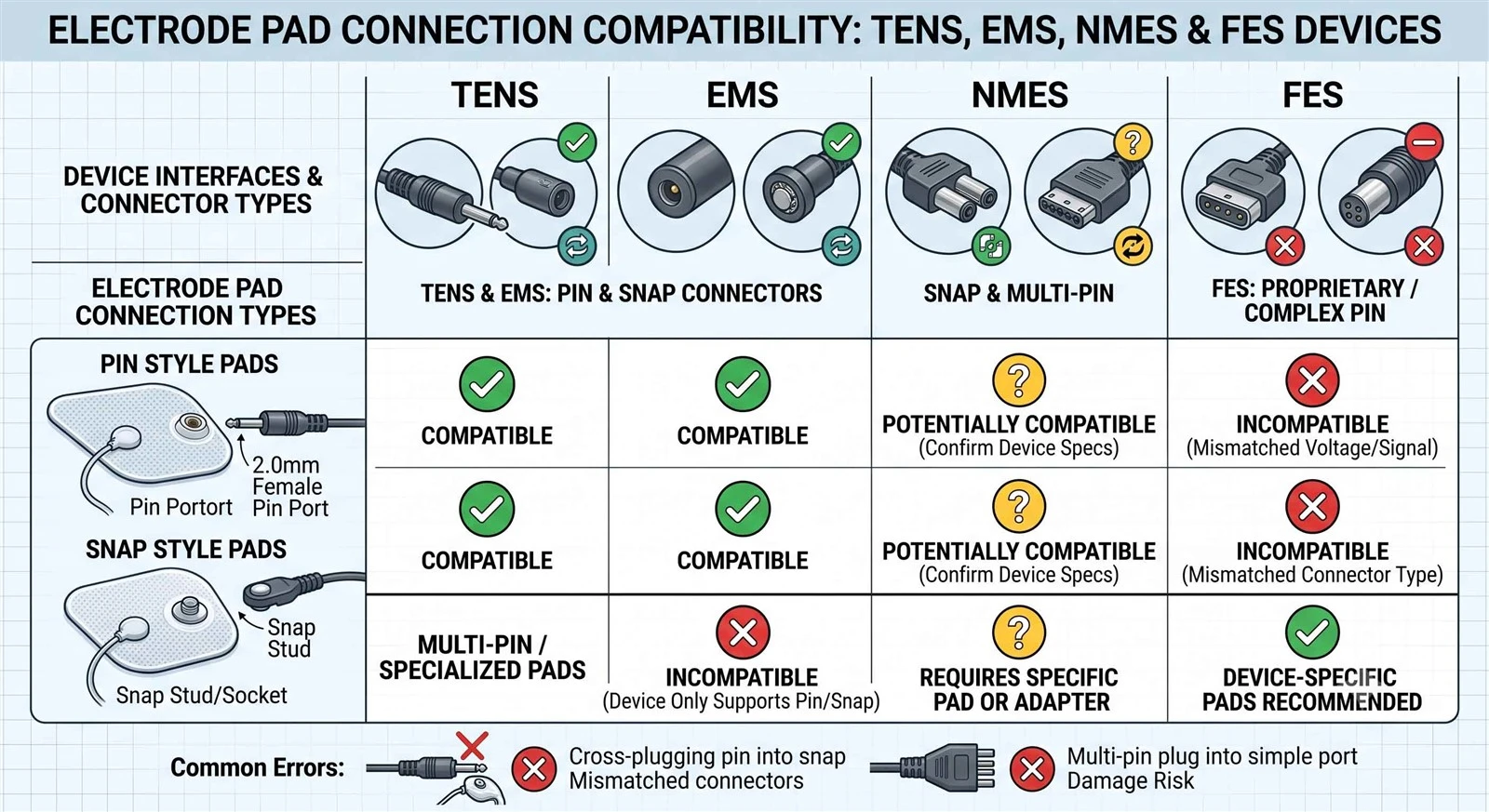
Electrode pad compatibility depends on several factors, including:
- Connector type
- Electrical performance
- Pad size
- Electrode shape
- Hydrogel characteristics
- Treatment application
- Device output parameters
Although many electrotherapy devices use similar-looking electrode pads, not all pads are interchangeable.
Why Compatibility Matters
Choosing a compatible electrode pad helps ensure:
- Stable electrical transmission
- Comfortable stimulation
- Reliable skin contact
- Safe therapy sessions
- Consistent treatment performance
An incompatible pad may result in:
- Poor signal transfer
- Uneven stimulation
- Reduced comfort
- Frequent replacement
- Device connection problems
Electrode pad compatibility refers to the ability of an electrode pad to work effectively with a specific electrotherapy device while maintaining reliable electrical performance and user comfort.
Factor 1: Connector Type
The first thing buyers should verify is the connector.
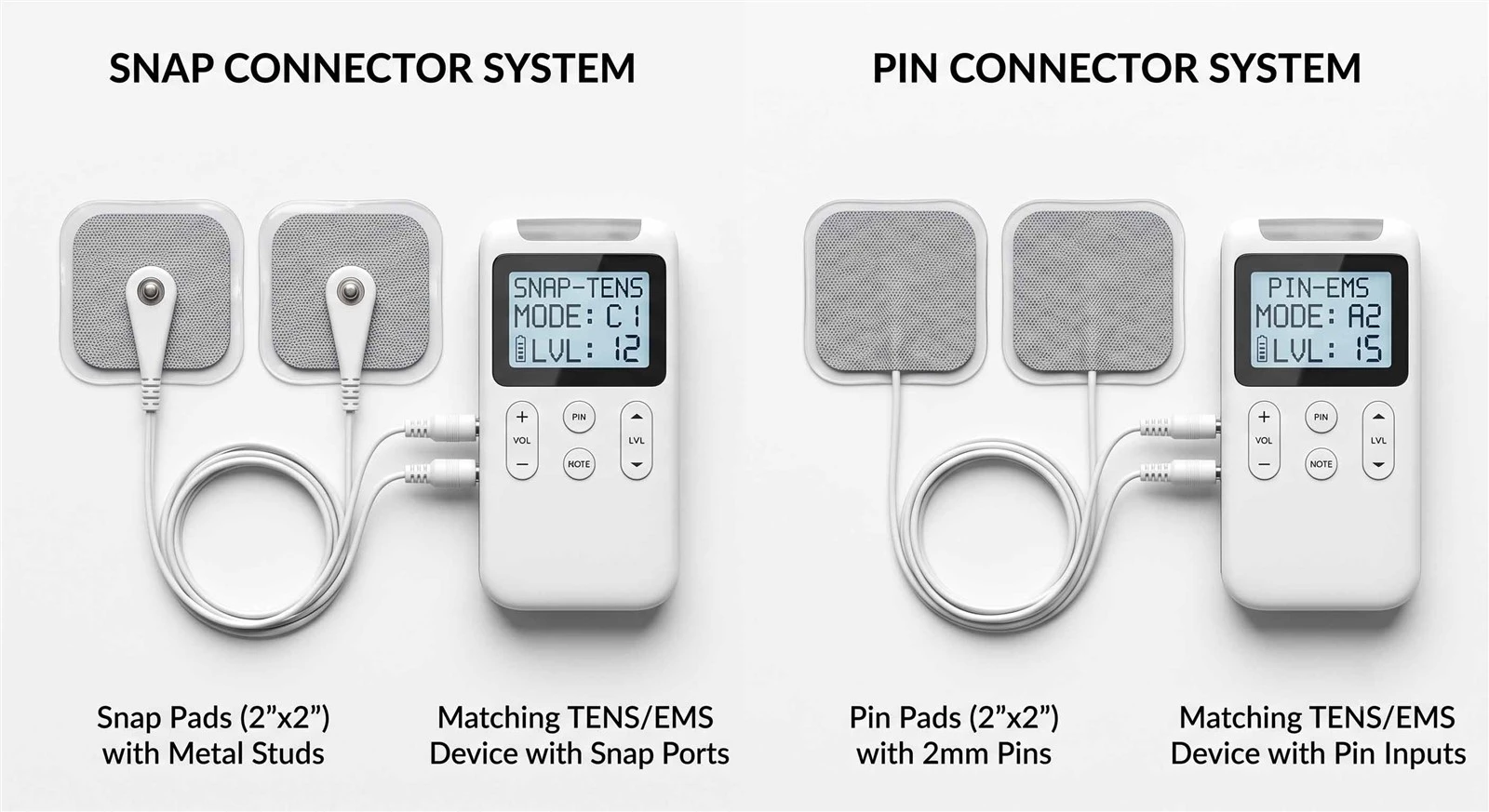
Most electrotherapy devices use one of two connection systems.
Snap Connectors
Typically found on:
- TENS devices
- EMS devices
- Home rehabilitation systems
Advantages include:
- Easy installation
- Secure connection
- Wide market compatibility
Pin Connectors
Commonly used on:
- Professional rehabilitation equipment
- Clinical electrotherapy systems
- Advantages include:
- Compact design
- Reliable signal transfer
- Common in hospital equipment
Some OEM projects also require customized connector designs for proprietary devices.
Connector compatibility is one of the primary requirements when selecting electrode pads for electrotherapy devices.
Factor 2: Electrical Characteristics
Mechanical compatibility alone is not enough.
The electrical performance of the electrode pad should also match the device.
Important considerations include:
Stable Conductivity
Stable current transmission helps improve stimulation consistency.
Uniform Current Distribution
Proper current distribution reduces localized hot spots.
Low Contact Resistance
Lower resistance helps electrical signals pass efficiently through the hydrogel-to-skin interface.
Electrical compatibility is essential for achieving consistent electrotherapy performance.
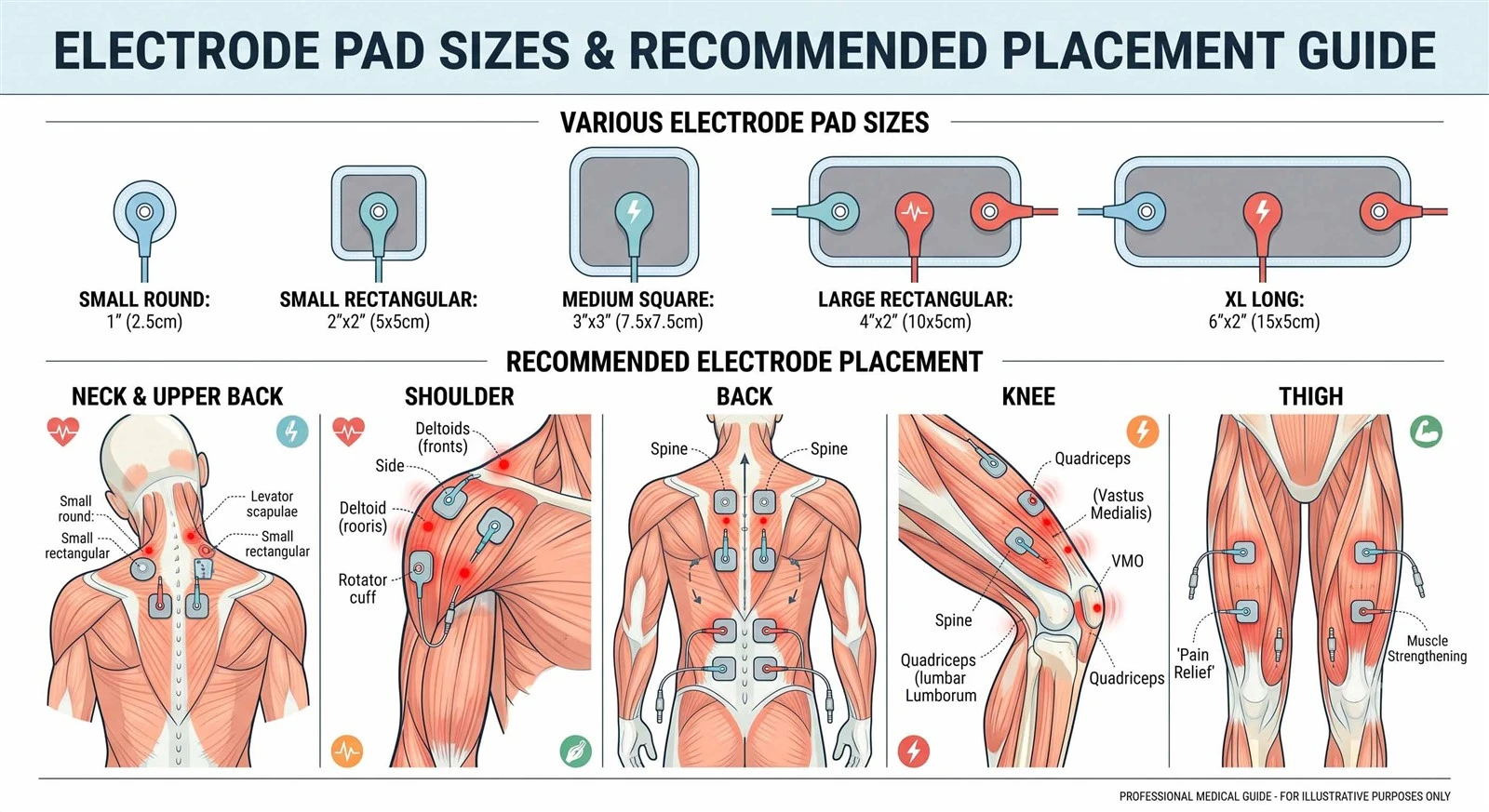
Factor 3: Pad Size
Different devices and treatment areas require different pad sizes.
|
Treatment Area |
Typical Pad Size |
|---|---|
|
Neck |
Small |
|
Shoulder |
Medium |
|
Knee |
Medium |
|
Lower Back |
Large |
|
Thigh |
Large |
A pad that is too small may create concentrated stimulation.
A pad that is too large may reduce treatment precision.
Factor 4: Hydrogel Performance
Hydrogel affects compatibility more than many buyers realize.
A quality hydrogel should provide:
- Good conductivity
- Comfortable skin contact
- Stable adhesion
- Low skin impedance
- Moisture retention
Different therapy durations may require different hydrogel formulations.
For example:
- Home TENS devices may prioritize comfort and multiple uses.
- Clinical rehabilitation systems may prioritize stable conductivity during extended treatment sessions.
Factor 5: Intended Therapy
Although electrode pads may look identical, their applications differ.
TENS
Primary purpose:
- Pain management
Typically requires:
- Comfortable stimulation
- Good skin compatibility
EMS
Primary purpose:
- Muscle contraction
Usually benefits from:
- Stable conductivity
- Reliable adhesion
NMES
Often used for rehabilitation.
May require:
- Consistent muscle activation
- Extended treatment sessions
FES
Functional Electrical Stimulation often requires precise electrode placement and dependable signal delivery.
Different electrotherapy modalities place different performance requirements on electrode pads.
Can Universal Electrode Pads Be Used?
Many manufacturers advertise "universal" electrode pads.
In practice, "universal" usually means the pad is compatible with a range of devices using the same connector type.
However, buyers should still confirm:
- Connector dimensions
- Device specifications
- Treatment requirements
- Manufacturer recommendations
Universal does not necessarily mean suitable for every electrotherapy system.
Considerations for OEM Buyers
OEM buyers should evaluate compatibility from multiple perspectives.
Questions to ask include:
- Which connector does the target device use?
- What stimulation parameters are required?
- What treatment duration is expected?
- What hydrogel formulation is most appropriate?
- Are there regulatory or labeling requirements?
- Is custom sizing needed?
Evaluating these factors early can help reduce redesigns and improve product performance.
Frequently Asked Questions
Can I use EMS electrode pads on a TENS device?
Are snap connectors and pin connectors interchangeable?
Are all electrode pads universal?
Does hydrogel affect compatibility?