

Quick Answer
TENS electrode pads stop sticking mainly due to hydrogel drying out, dirt or oil buildup, repeated use, and low-quality materials.
Proper skin preparation, storage, and high-quality hydrogel can significantly extend their usability.
What Makes TENS Pads Stick in the First Place?
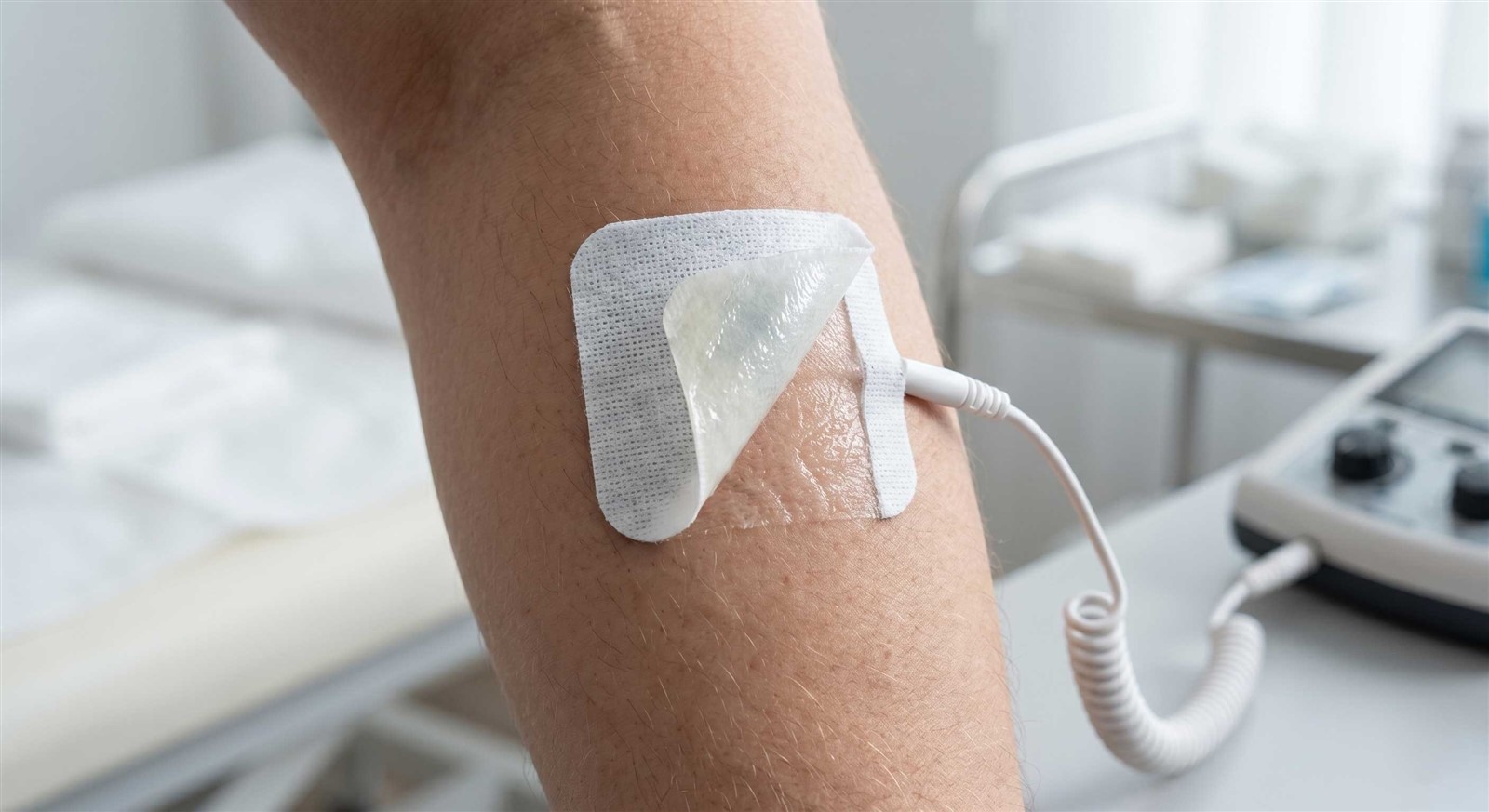
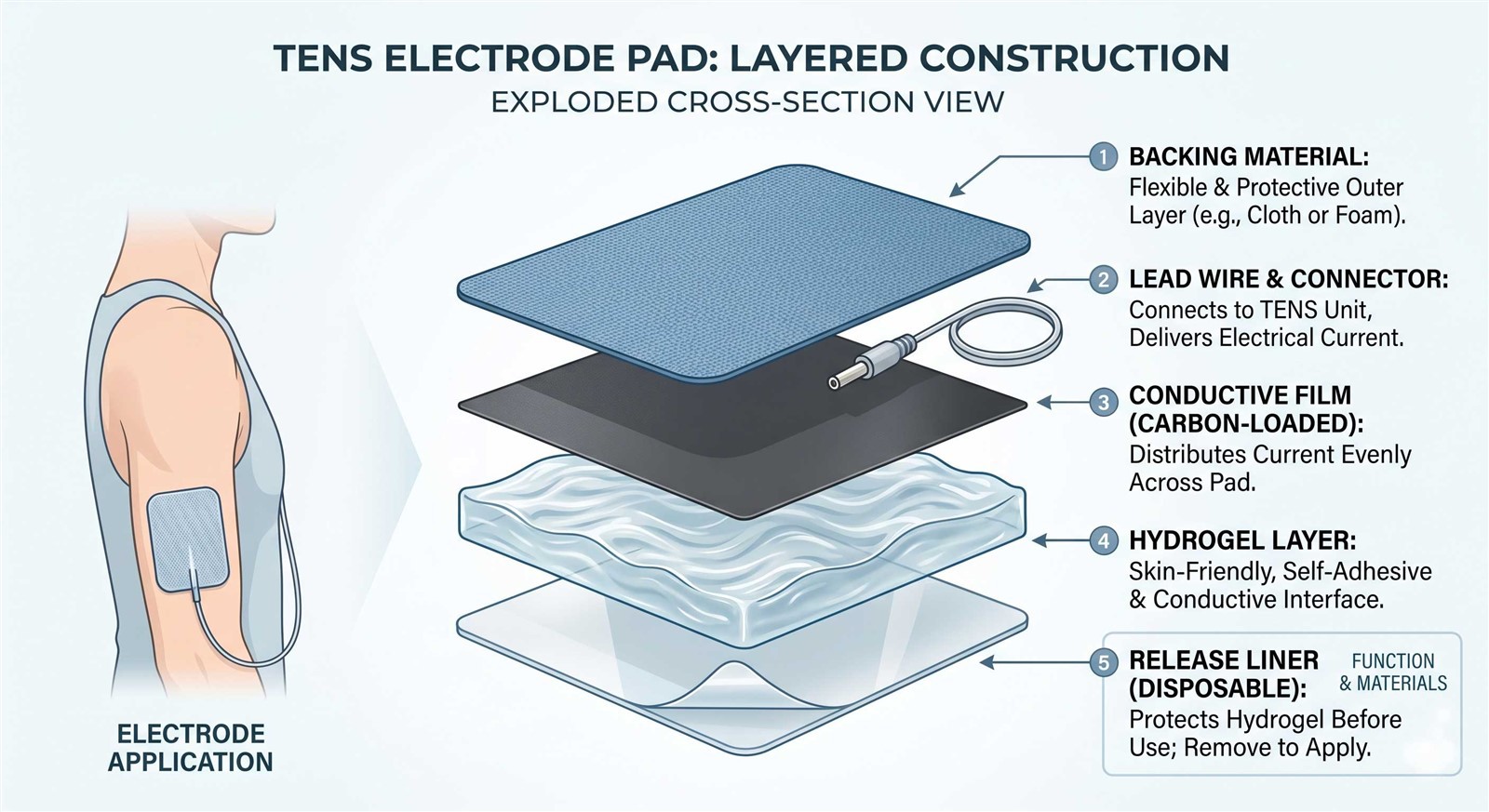
TENS pads rely on a conductive hydrogel layer to adhere to the skin.
Conductive hydrogel is a water-based adhesive material that allows electrical signals to pass through while maintaining skin contact.
The hydrogel layer is responsible for both adhesion and electrical conductivity in TENS electrode pads.
5 Common Reasons Why TENS Pads Stop Sticking
1. Hydrogel Drying Out
Over time, the hydrogel loses moisture.
This leads to:
- reduced stickiness
- poor skin contact
- weaker conductivity
When hydrogel dries out, electrode pads lose both adhesion and electrical performance.
2. Dirt, Oil, and Sweat Buildup
Skin naturally produces oil and sweat, which can accumulate on the pad surface.
This contamination:
- reduces adhesion
- blocks conductivity
- shortens lifespan
Oil and debris on the pad surface are one of the most common causes of adhesion failure.
3. Repeated Use and Wear
Even high-quality pads have a limited lifespan.
Typical reuse range:
10–20 applications (depending on quality and usage)
Repeated use gradually degrades the hydrogel structure, reducing its ability to stick.
4. Poor Storage Conditions
Improper storage accelerates drying.
Common mistakes:
- leaving pads exposed to air
- not using the protective liner
- storing in hot environments
Proper storage is essential to maintain hydrogel moisture and extend pad lifespan.
5. Low-Quality Materials
Not all electrode pads are made the same.
Lower-quality products often use:
- weaker hydrogel formulations
- inconsistent gel coating
Low-quality hydrogel tends to dry out faster and provides less consistent adhesion.

How to Make TENS Pads Stick Longer
1. Clean Your Skin Before Use
- remove oil and lotion
- ensure skin is dry
2. Store Pads Properly
- place back on plastic liner
- seal in foil pouch
- avoid heat and sunlight
3. Keep Pads Clean
- gently rinse with water if needed
- let them air dry
4. Use High-Quality Pads
High-quality electrode pads maintain adhesion longer due to better hydrogel formulation and manufacturing consistency.
When Should You Replace TENS Pads?
You should replace pads when:
- they no longer stick properly
- stimulation feels uneven
- gel becomes dry or damaged
Loss of adhesion is usually the first sign that electrode pads need to be replaced.
Can You Restore Sticky Pads?
Sometimes, yes-but only temporarily.
Possible fixes:
- lightly rinse with water
- rehydrate slightly
However:
👉 These are short-term solutions and do not restore original performance.
Frequently Asked Questions
How many times can TENS pads be reused?
Why do my pads stop sticking after just a few uses?
Is it safe to use non-sticky pads?
CTA
For brands and distributors, adhesion performance is one of the most critical factors in user satisfaction.
Hydrogel formulation, material quality, and packaging all play a key role in determining how long electrode pads remain effective.