

 OEM medical electrode manufacturing solutions for Canadian distributors and private-label brands.
Health Canada Requirements for Medical Electrode Pads
anada has strict regulatory requirements for medical devices, including electrode pads used for TENS therapy, ECG monitoring, EMS stimulation, and defibrillation systems.
For Canadian importers, distributors, and private-label brands, understanding Health Canada compliance is essential before launching products into the market.
This guide explains the key regulatory requirements for medical electrode pads in Canada, including:
- Medical device classification
- Health Canada MDL requirements
- MDSAP certification
- Bilingual labeling obligations
- OEM supplier documentation
- Import compliance considerations
Whether you are sourcing OEM electrode pads or expanding your medical device brand into Canada, these are the core factors you should understand.
Are Medical Electrode Pads Regulated in Canada?
Yes.
In Canada, medical electrode products are regulated by Health Canada under the Medical Devices Regulations framework.
Depending on their intended use, electrode products may fall into different medical device classifications.
Common examples include:
|
Product Type |
Typical Application |
Regulatory Consideration |
|
TENS electrode pads |
Pain relief therapy |
Non-invasive electrotherapy device accessory |
|
EMS electrode pads |
Muscle stimulation |
Rehabilitation or wellness applications |
|
ECG electrodes |
Patient monitoring |
Diagnostic monitoring accessory |
|
AED/Defibrillator pads |
Emergency cardiac response |
Higher-risk medical application |
The classification level affects:
- Licensing requirements
- Technical documentation
- Labeling obligations
- Quality management requirements
Canadian importers should always verify the correct classification before commercialization.
What Is an MDL in Canada?
MDL stands for:
Medical Device License
An MDL is issued by Health Canada for many medical devices sold in Canada.
For electrode-related products, whether an MDL is required depends on:
- Product classification
- Intended medical use
- Risk category
- Whether the product is marketed as a medical device
Canadian distributors often prefer working with manufacturers already familiar with:
- MDL documentation
- Regulatory file preparation
- Traceability requirements
- Technical dossier support
This significantly reduces onboarding complexity for importers and private-label buyers.
Why MDSAP Certification Matters
One of the most important compliance requirements in Canada is:
MDSAP Certification
MDSAP stands for:
Medical Device Single Audit Program
Canada requires medical device manufacturers to comply with MDSAP quality system auditing requirements for many regulated products.
For Canadian buyers, choosing an OEM electrode manufacturer with MDSAP certification provides several advantages:
- Stronger quality management assurance
- Easier regulatory alignment
- Better manufacturing traceability
- More stable production consistency
- Improved importer confidence
At TOP-RANK, our manufacturing system supports international medical device quality requirements, including:
- MDSAP-certified quality management
- ISO 13485 manufacturing standards
- OEM/ODM production support
- Medical electrode manufacturing traceability
This helps Canadian importers streamline supplier qualification processes.
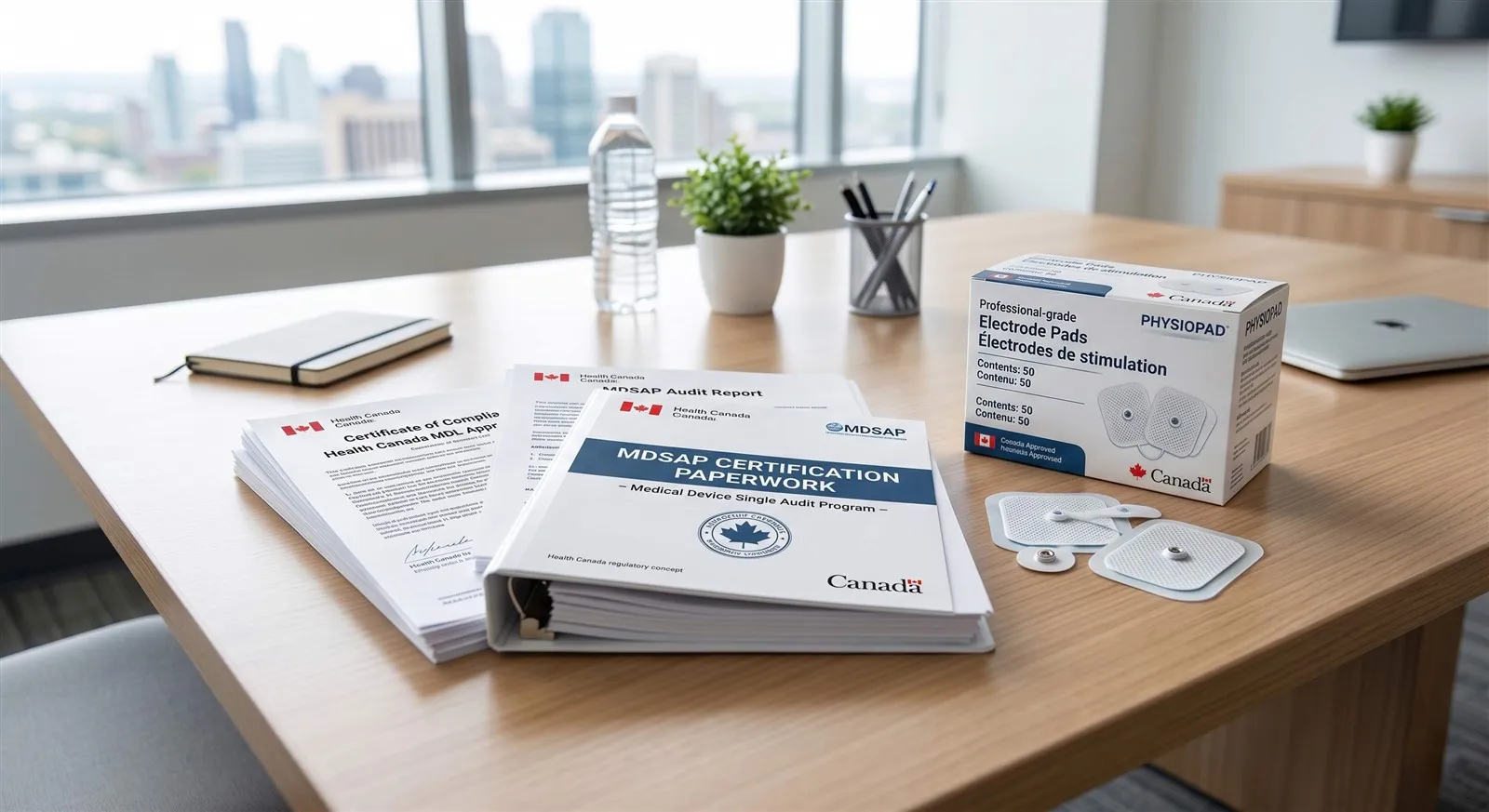
MDSAP and regulatory compliance are important considerations for medical device importers in Canada.
Bilingual Labeling Requirements in Canada
One of the most overlooked compliance issues in Canada is:
English-French Labeling
Many medical devices sold in Canada require bilingual information, including:
- Product labels
- Packaging
- Instructions for use (IFU)
- Safety warnings
- User guidance
For OEM buyers and distributors, this means suppliers should be capable of supporting:
- English/French packaging layouts
- Bilingual printing
- Custom artwork localization
- Regulatory labeling adjustments
Manufacturers unfamiliar with Canadian requirements often create delays during product registration or import review.
What Canadian Importers Should Request From OEM Suppliers
When sourcing electrode pads for the Canadian market, importers should request the following documents and capabilities from manufacturers:
Quality & Compliance Documents
- MDSAP certification
- ISO 13485 certificate
- CE certification (if applicable)
- Product technical documentation
- Biocompatibility information
- Traceability records
Manufacturing Information
- OEM/Private label capabilities
- Lot traceability
- Packaging customization
- Shelf-life validation
- Conductivity consistency data
Logistics & Packaging Support
- Export packaging
- Cold-weather transportation stability
- Long-distance shipping protection
- Moisture-resistant sealing
These factors are especially important for hydrogel electrode products shipped across long distances or stored in colder climates.
Why Cold-Weather Stability Matters in Canada

Cold-weather stability is critical for hydrogel electrode products shipped across Canada.
Canada's climate creates additional challenges for medical electrode products.
Low temperatures during shipping or storage may affect:
- Hydrogel moisture retention
- Adhesive performance
- Conductivity stability
- Shelf life consistency
For this reason, Canadian buyers often prioritize electrode manufacturers with experience in:
- Stable hydrogel formulations
- Anti-dry packaging
- Reliable adhesive performance
- Long-distance export logistics
Products designed for stable conductivity and consistent adhesion are more suitable for Canadian distribution environments.
Choosing the Right OEM Electrode Manufacturer for Canada
When selecting a medical electrode supplier for the Canadian market, buyers should evaluate more than just pricing.
Key factors include:
Regulatory Understanding
Can the supplier support Canadian compliance requirements?
Manufacturing Stability
Does the factory maintain consistent hydrogel and conductive performance?
Packaging Flexibility
Can they provide bilingual packaging and private-label customization?
Quality System Strength
Does the manufacturer maintain MDSAP and ISO 13485 systems?
Export Experience
Do they understand long-distance shipping and Canadian logistics conditions?
Working with an experienced OEM manufacturer can significantly reduce compliance risks and improve long-term supply stability.
FAQ
Do electrode pads require Health Canada approval?
Depending on the intended use and classification, some medical electrode products may require licensing or regulatory compliance before being sold in Canada.
Is bilingual packaging mandatory in Canada?
Is ISO 13485 enough for the Canadian market?
Can OEM electrode pads be sold in Canada?
What should Canadian importers look for in an electrode manufacturer?
Importers should evaluate:
- Regulatory experience
- MDSAP compliance
- Manufacturing consistency
- Hydrogel stability
- Packaging flexibility
- Long-term supply reliability