

When discussing electrode pad performance, most people focus on gel quality, adhesion, or conductivity.
But another important factor is often overlooked:
👉 electrode pad shape.
The shape of an electrode pad can influence:
- current distribution
- stimulation intensity
- comfort
- treatment coverage
Different shapes interact with the body differently, which affects how electrical signals spread across the skin.
In this guide, we explain how electrode pad shape impacts electrotherapy performance and why shape selection matters for different applications.
Quick Answer
Electrode pad shape affects how electrical current spreads across the treatment area.
Larger and more evenly shaped pads usually distribute current more smoothly, while smaller or specialized shapes can create more concentrated stimulation.
Why Electrode Pad Shape Matters
Electrotherapy works by transferring electrical signals through the skin.
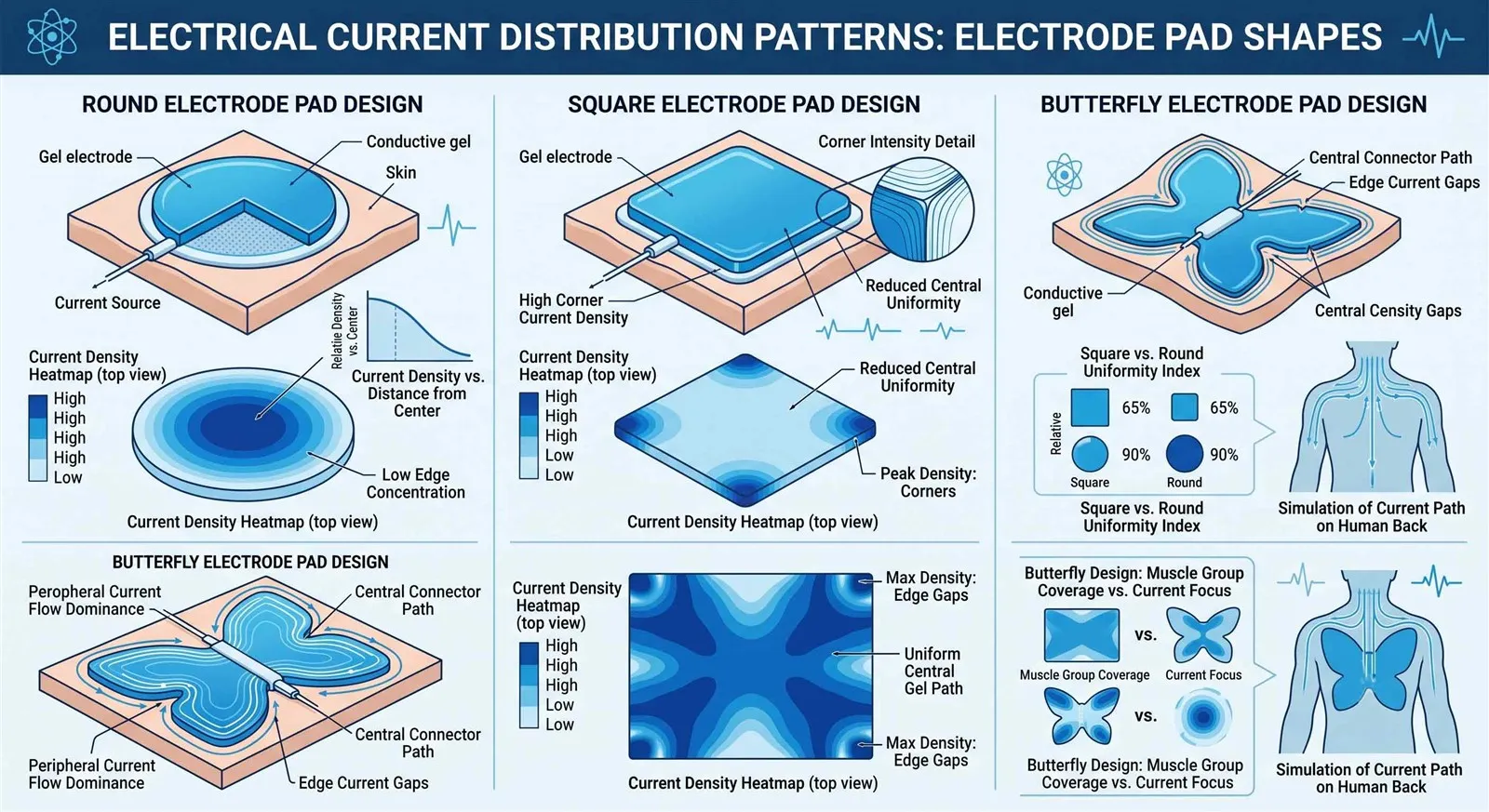
Electrode pad shape influences how electrical current is distributed across the treatment area.
Different pad geometries can affect stimulation intensity, coverage, and comfort.
How Shape Affects Current Distribution
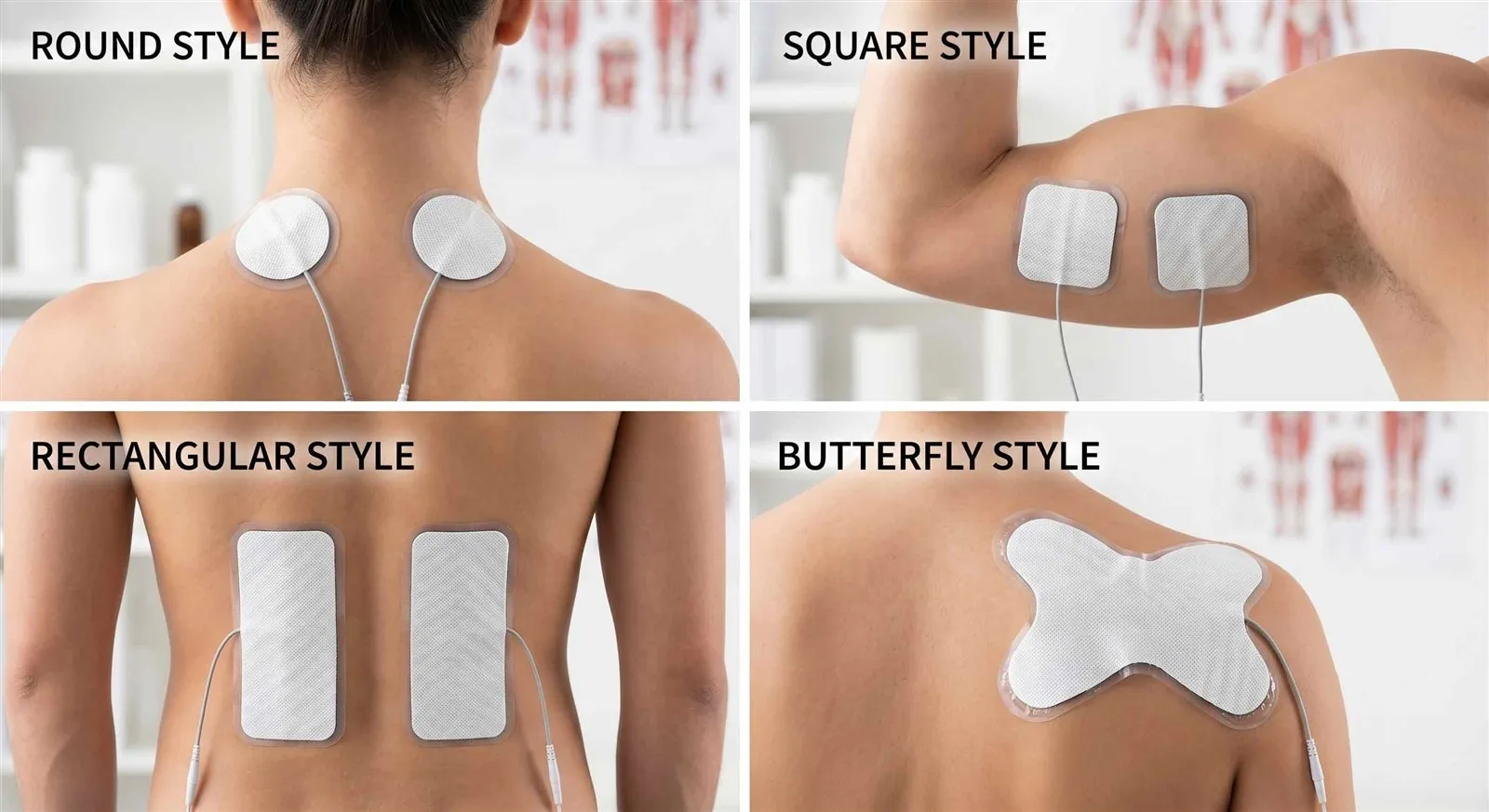
1. Round Electrode Pads
Round pads distribute current relatively evenly because there are no sharp corners.
Advantages
- smoother stimulation sensation
- reduced edge concentration
- comfortable for smaller treatment areas
Best For
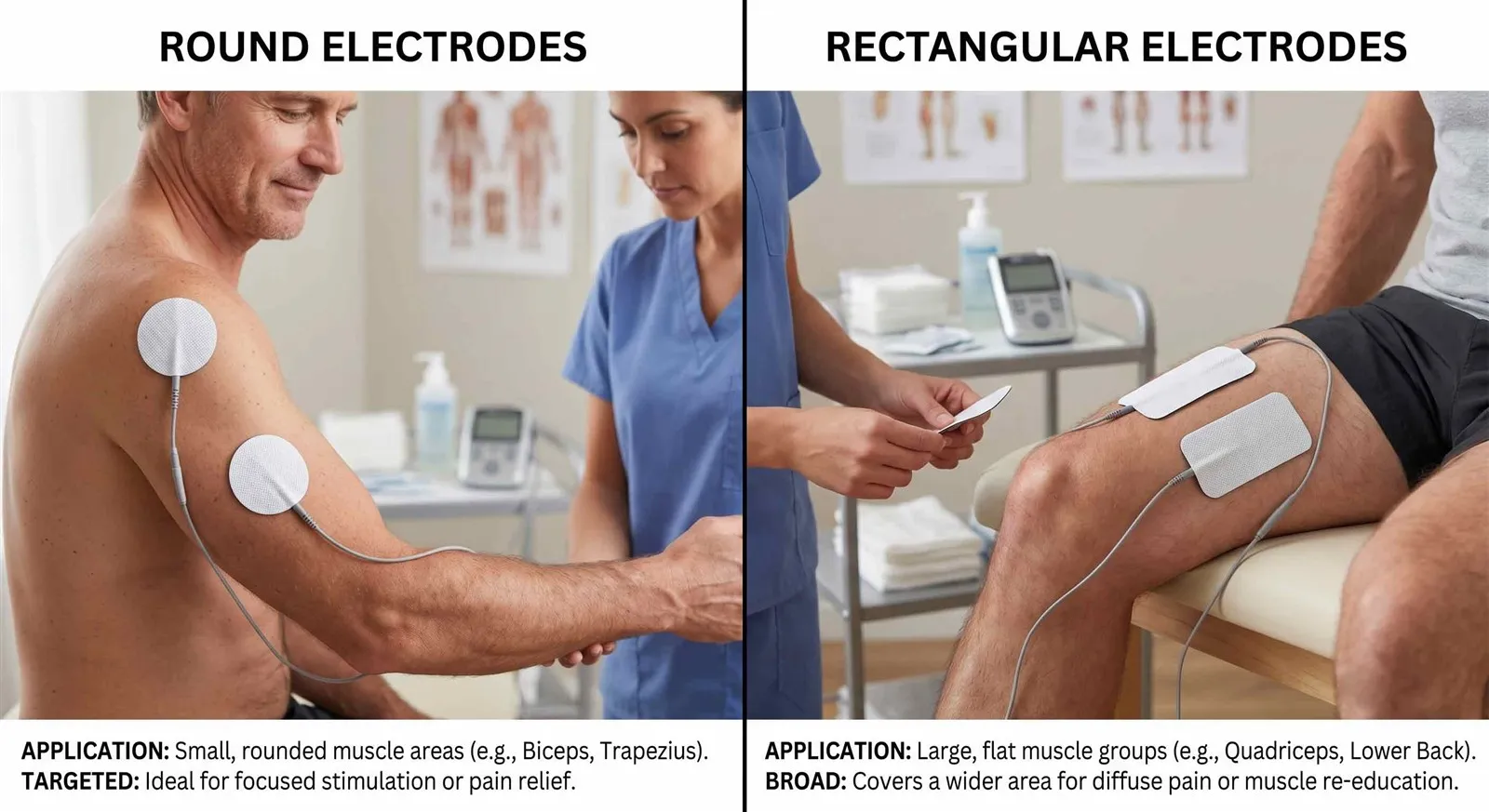
- arms
- neck
- targeted muscle areas
Round electrode pads often provide more uniform current distribution.
2. Square and Rectangular Pads
Square and rectangular pads cover larger surface areas.
Advantages
- broader stimulation coverage
- suitable for larger muscle groups
Considerations
- current may concentrate slightly near corners
Best For
- back
- thighs
- shoulders
Larger rectangular pads are commonly used for broad muscle coverage.
3. Butterfly-Shaped Pads
Butterfly pads are designed to follow specific body contours.
Advantages
- improved fit around joints or spine areas
- better conformity on curved surfaces
Best For
- lower back
- neck
- joint areas
Butterfly-shaped pads are designed to improve conformity on curved body areas.
H2: Does Pad Size Also Affect Current Intensity?
Yes.
Smaller pads:
- concentrate electrical current into a smaller area
- may feel stronger or more intense
Larger pads:
- spread current over a wider surface
- often feel smoother and gentler
Smaller electrode pads typically create higher current density.
Why Uneven Shapes Can Create "Hot Spots"
When current becomes concentrated in specific areas, users may experience:
- sharp sensations
- uneven stimulation
- discomfort
This is often called a "hot spot."
Uneven current concentration can increase the risk of uncomfortable stimulation hot spots.
How to Choose the Right Pad Shape
Choose round pads if:
- targeting small muscle areas
- comfort is a priority
Choose rectangular pads if:
- treating large muscle groups
- wider coverage is needed
Choose butterfly pads if:
- treating curved body areas
- flexibility and contour fit matter most
The ideal electrode pad shape depends on treatment area size and body contour.
Does Shape Affect Adhesion?
Indirectly, yes.
Shapes that better match body contours may:
- reduce edge lifting
- improve contact stability
- maintain more consistent conductivity
Proper pad shape can improve skin contact stability during movement.
Frequently Asked Questions
Are larger electrode pads better?
Why do round pads feel smoother?
What is the best shape for the lower back?
Electrode pad shape is more than just appearance-it directly affects stimulation performance, comfort, and treatment coverage.
From round and rectangular designs to contour-focused butterfly shapes, different geometries are optimized for different therapy needs.