

OEM Foam Electrodes | PE Foam TENS Pads | TOP-RANK
B2B foam electrodes engineered with closed-cell PE backing and cross-linked hydrogel. Water-resistant, high-tack substrate designed to prevent edge lifting from clinical fluid ingress.
Product Overview
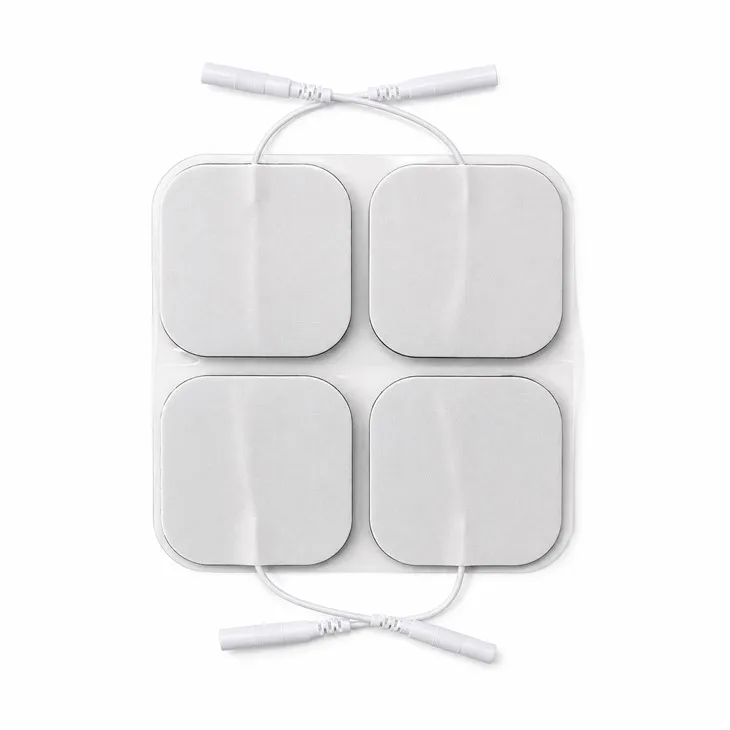
This foam electrode is a self-adhesive transdermal interface utilizing a closed-cell polyethylene (PE) foam backing as the primary structural carrier. Unlike porous spunlace non-woven options, the foam substrate functions as a complete liquid barrier, preventing sweat, water, or clinical cleaning solutions from penetrating the backing and liquefying the hydrogel layer. This hardware maps electrical signals and therapy currents through a conductive carbon film to the skin surface. We supply these moisture-resistant blanks to B2B rehabilitation medical distributors, athletic sports medicine chains, and clinical diagnostic OEMs.
Technical/Engineering Description
The electrode assembly centers on an automated roll-to-roll inline lamination process. The structural carrier is a 1.0mm thick, high-density closed-cell PE foam coated with a medical-grade acrylic pressure-sensitive adhesive on its inner face. A conductive carbon film matrix is laminated to the foam, serving as the electron dispersion plane. A high-tack, cross-linked polyacrylamide hydrogel containing controlled sodium chloride ions is continuously slit-coated over the carbon trace. The complete multi-layer stack undergoes precision rotary die-cutting under audited ISO 13485 protocols. Standard wholesale manufacturing runs dictate a minimum order quantity (MOQ) of 10,000 pads per custom dimension.
Key Features
-
Hydrophobic Fluid-Ingress Barrier
Clinical settings, sports physical therapy, and hydrotherapy expose electrodes to significant fluid contamination. Porous non-woven backings wick external moisture inward via capillary action, chemically breaking down the underlying hydrogel and causing immediate edge lifting. The closed-cell cross-linked PE foam used in this substrate possesses zero open pores. Water, ultrasound coupling gels, or bodily sweat cannot physically pass through the backing layer, preserving the cross-linked structural grid of the skin-contact hydrogel.
-
Mechanical Impact Cushioning & Radial Hold
Applying electrodes over highly mobile muscle groups or prominent bony structures (such as the patella, scapula, or elbows) subjects the assembly to repetitive three-dimensional stretching and localized impacts. This backing absorbs compression and shear stress through the elastic cell deformation of the 1.0mm polymer foam. The foam returns to its nominal thickness without transferring the shifting physical load to the hydrogel interface, stopping focal delamination and preserving electrical continuity during kinetic movement.
-
Edgewater Ooze Elimination
High-volume die-cutting of high-density foam substrates creates a severe hydraulic pinch effect along the cut perimeter. If the die clearance is miscalibrated, the pressure forces the hydrogel to squeeze out from the sides, creating sticky residue (cold flow) that sticks pads to the release liner inside the packaging. Our manufacturing line uses custom-honed steel-rule rotary knives that slash through the 1.0mm foam before the polymer matrix can displace laterally, holding the edge gel overflow tolerance strictly below 0.2mm.
Applications
High-Diaphoresis Sports Rehab
Electrostimulation protocols for athletes undergoing heavy movement where active sweating or fluid irrigation degrades non-foam substrates.
Hydrotherapy Adjacent Clinical Sites
Physical therapy clinics running concurrent moisture-heavy treatment modalities within the same recovery suite.
Geriatric & Thin Epidermis Care
Utilizing the foam matrix to distribute the physical compression of heavy medical lead clamps or cables away from vulnerable skin sites.
OEM & Private Label
-
Custom Die Geometries: We engineer custom geometric tool paths to output round, oval, square, or irregular multi-axis configurations using pure automated CAD cutting lines, without fraying the foam margins.
-
Logistics & Tariffs Management: Primary formulation compounding, carbon film extrusion, and high-speed rotary conversion are executed in China. Terminal pin crimping, custom pouch packing, and carton palletization route through our Vietnam hub to secure supply chain resilience and optimize international medical consumable trade tariffs.
Certifications
-
Systems : Physical sheet lamination, inline testing, and automated cleanroom roll processing operate entirely within audited ISO 13485:2016 and MDSAP regulatory frameworks.
-
Regulatory: Complete material datasheets, chemical tracing logs, and bio-burden files support OEM submissions for FDA 510(k) Class II, CE (MDR), and UKCA compliance.
FAQ
Q: Why does a 1.0mm foam electrode show less flexibility around tight compound joints compared to a 0.5mm non-woven pad?
A: This is a structural trade-off of the cell density. Spunlace non-woven is porous and stretches along multi-directional fibers. Closed-cell PE foam relies on solid polymer walls that do not expand elongational. While the 1.0mm thickness provides the mandatory water barrier and impact cushioning, it possesses a higher bending stiffness, meaning application onto small knuckles requires custom multi-petal or slotted die geometries to prevent spring-back lifting.
Q: Can these foam electrodes be reused for the same number of cycles as non-woven pads when applied to oily skin?
A: The backing type does not dictate the chemical depletion of the hydrogel, but it changes the moisture containment. If the patient has high lipid (sebum) production, the hydrophobic foam prevents the sebum from escaping outward through the backing, trapping the oils entirely within the hydrogel boundary. This accelerates the contamination rate of the polymer grid, potentially reducing the reuse baseline from 20 cycles down to 15 cycles unless the epidermis is chemically prepped prior to application.
B2B procurement networks, orthopedic brand operators, and clinical distributors can request physical foam blank sheets and hydrogel impedance reports.
👉 [Request Foam Electrode Samples]
Hot Tags: foam electrodes, China foam electrodes manufacturers, suppliers, factory
Specifications
| Parameter | Metric Configuration | Engineering Detail |
| Backing Material | Closed-Cell Cross-Linked PE Foam | Hydrophobic liquid block |
| Thickness | 1.0mm (Standard white/flesh tone) | Provides mechanical cushioning |
| Interface | 2.0mm Female Pin or 3.5mm Snap | Hardened brass or stainless steel |
| Impedance | <= 50 Ohms | Pure carbon film conduction |
| Shelf Life | 24 Months | Sealed inside AL/PE foil pouches |


