


An electrode pad can have excellent conductivity, reliable adhesion, and a well-designed hydrogel system-but it still needs one critical connection to work with an electrical stimulation device.
That connection is the electrode connector.
For TENS, EMS, NMES, FES, and other electrical stimulation applications, the connector provides the interface between the electrode pad and the stimulation device.
For OEM buyers, choosing the right connector is therefore not simply a matter of appearance.
It involves mechanical fit, electrical connection, compatibility, durability, and product design.
This guide explains how electrode pad connectors affect device compatibility and what OEM buyers should consider before finalizing a product design.
Quick Answer
Electrode pad connectors affect device compatibility in several ways:
- Mechanical fit
- Electrical contact
- Connector geometry
- Connector dimensions
- Connection stability
- Cable or lead compatibility
- Product-specific requirements
The connector should be selected according to the electrode pad design and the stimulation device interface, rather than treated as a universal component.
For OEM projects, connector selection should ideally be confirmed during the early product development stage.
1. What Is an Electrode Pad Connector?
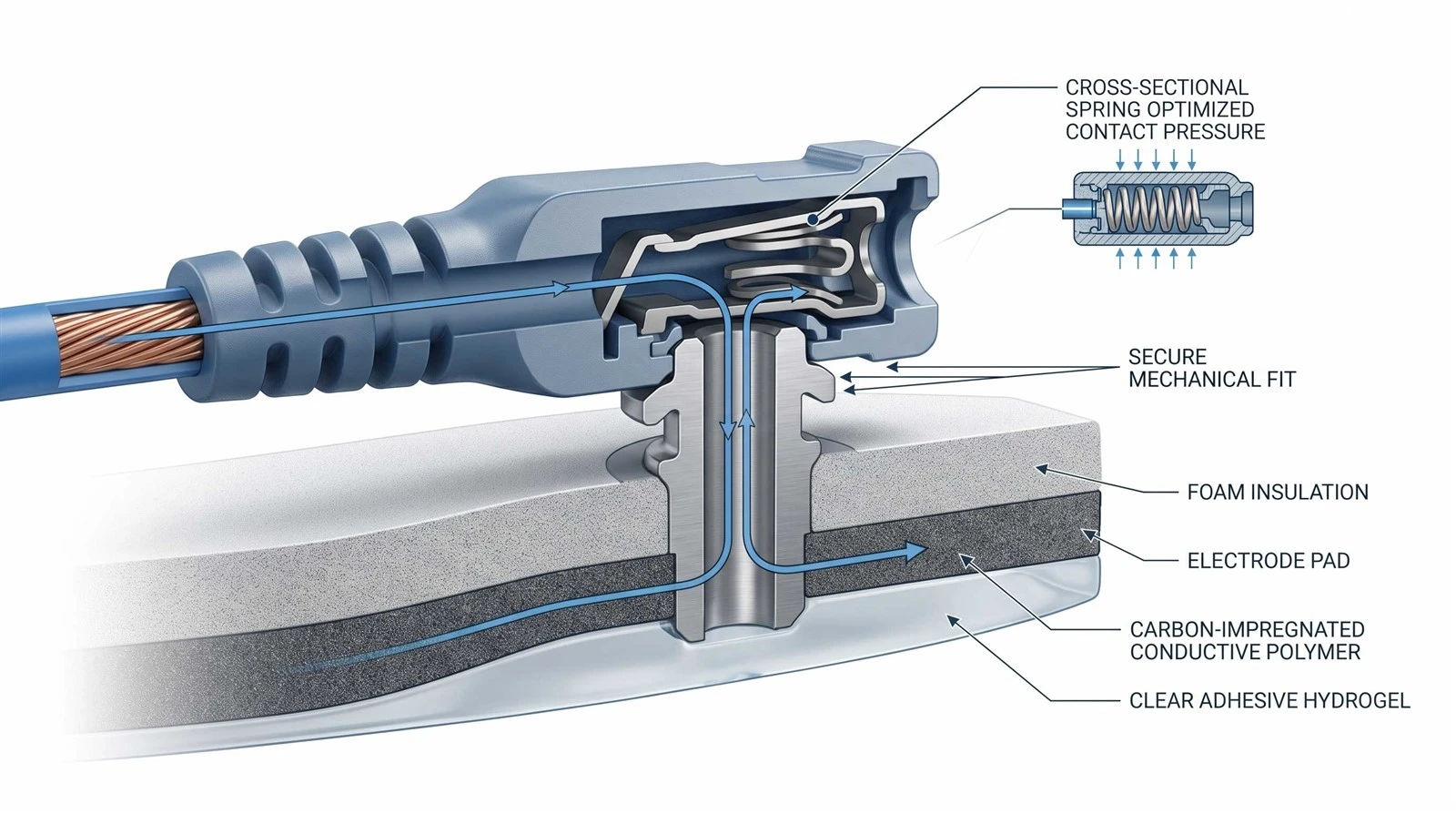
The connector is the interface that transfers electrical energy from the stimulation device to the conductive portion of the electrode pad.
Depending on the product design, an electrode pad may use different connection configurations.
Common designs include:
- Snap-style connectors
- Pin-based connections
- Lead-wire connections
- Device-specific interfaces
- Customized connector configurations
The connector must provide a reliable connection while remaining mechanically compatible with the corresponding device or lead wire.

2. Mechanical Compatibility Comes First
Before evaluating electrical performance, the connector needs to physically fit the intended interface.
Mechanical compatibility may involve:
- Connector diameter
- Pin size
- Snap dimensions
- Connection geometry
- Insertion depth
- Alignment
- Mechanical tolerance
Even a small dimensional mismatch can make a connector difficult to attach or cause an unstable connection.
For OEM projects, connector dimensions should therefore be treated as an engineering specification rather than an afterthought.
3. Electrical Contact Must Remain Stable
Mechanical connection alone is not enough.
The connector must also maintain a stable electrical pathway between the stimulation device and the electrode.
Poor electrical contact may result from:
- Inadequate contact pressure
- Poor connector material
- Dimensional variation
- Surface contamination
- Mechanical wear
- Improper connection
For this reason, connector performance should be evaluated together with the conductive layer and hydrogel system.
4. Connector Design Can Affect User Experience
Although connectors are small, their design can influence how the complete electrode system feels during use.
For example, connector placement may affect:
- Flexibility
- Cable movement
- Pad conformity
- Mechanical stress
- Ease of attachment and removal
A connector that works electrically may still be poorly suited to the final product if it creates excessive mechanical stress on the electrode pad.
This is particularly relevant for applications involving movement or repeated use.
5. Connector Placement Matters
The connector does not exist independently from the electrode pad.
Its position on the pad can affect:
- Current pathway
- Flexibility
- Stress distribution
- Cable direction
- User comfort
- Application area
For some electrode pad designs, the connector is positioned centrally.
Other designs may place the connector toward one side to improve flexibility or accommodate a specific application.
Therefore, connector placement should be considered together with the shape and intended placement of the electrode pad.
6. The Connector Must Match the Device Interface
One of the most important questions for an OEM buyer is:
What connector does the stimulation device actually require?
The answer depends on the device.
A pad designed for one stimulation system may not be directly compatible with another if the connector configuration differs.
Before requesting samples, buyers should provide:
- Device model
- Existing connector type
- Connector dimensions
- Cable specifications
- Photos or drawings of the interface
- Electrical requirements, where applicable
This information can significantly reduce unnecessary sampling and development time.
7. Standard Connectors vs Customized Connectors
For some applications, a standard connector may be sufficient.
For others, customization may be necessary.
Standard connectors
Advantages may include:
- Easier sourcing
- Faster development
- Existing tooling
- Familiarity with common device interfaces
Customized connectors
May be useful when the OEM project requires:
- A proprietary interface
- Special dimensions
- Specific mechanical characteristics
- Unique cable configuration
- Integrated product design
The best option depends on the device architecture and project requirements.

8. Connector Durability Matters for Reusable Electrode Pads
For reusable electrode pads, the connector may experience repeated attachment and removal.
Over time, repeated mechanical cycles can contribute to:
- Wear
- Loosening
- Deformation
- Reduced contact stability
Therefore, connector durability should be considered alongside the expected product lifespan.
A connector suitable for a single-use product may have different requirements from one designed for repeated application.
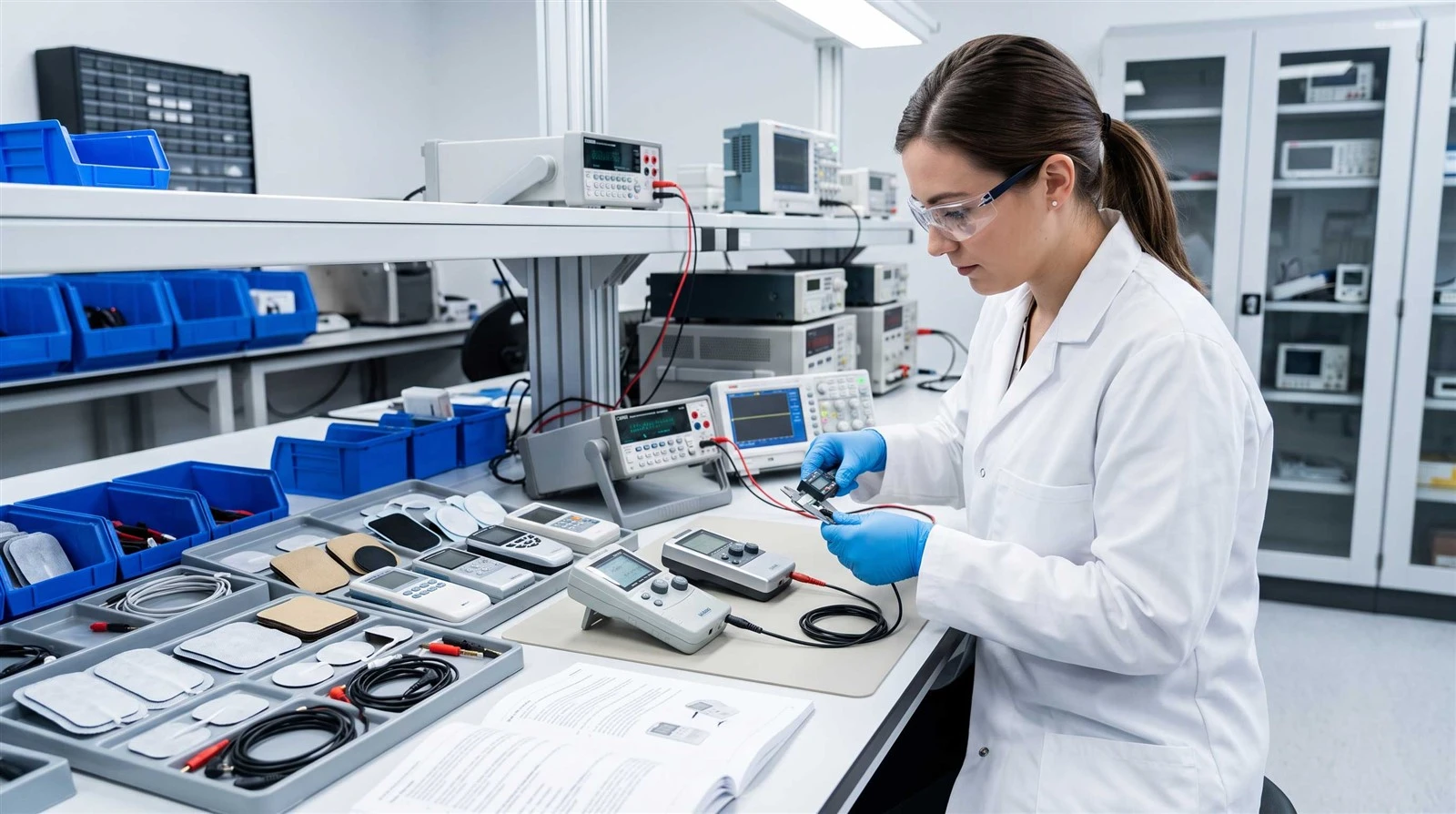
9. Connector Compatibility Should Be Tested Before Mass Production
A connector may look compatible based on dimensions alone, but actual testing is still important.
OEM validation may include:
- Physical fit testing
- Connection and disconnection testing
- Electrical continuity testing
- Mechanical stability testing
- Repeated-use testing
- Compatibility with the final device
Testing the complete system is particularly important because the connector, electrode pad, cable, and stimulation device ultimately function as one electrical interface.
10. What OEM Buyers Should Provide to the Manufacturer
When requesting a customized electrode pad, providing accurate connector information can make the development process much more efficient.
Ideally, provide:
Device Information
- Device model
- Intended application
- Existing cable or lead
Connector Information
- Connector type
- Dimensions
- Photos
- Technical drawings
- Connection method
Electrode Information
- Pad dimensions
- Shape
- Intended placement
- Single-use or reusable
- Expected application time
Project Information
- Target quantity
- Target market
- Packaging requirements
- Branding requirements
The more complete the initial information, the easier it is for the manufacturer to assess compatibility and recommend an appropriate configuration.
Common Mistakes
Choosing a connector based only on appearance
Two connectors may look similar but have different dimensions or electrical characteristics.
Assuming connectors are universally compatible
Compatibility depends on the actual device interface.
Ignoring mechanical stress
A connector may work electrically but create excessive stress on the electrode pad or cable.
Waiting until the final stage to confirm the connector
Connector requirements should be established early in the OEM development process.
Testing the connector separately from the device
The final evaluation should consider the complete connection system.
Frequently Asked Questions
Are electrode pad connectors universal?
Can electrode pad connectors be customized?
Does the connector affect conductivity?
Should I provide the device when requesting a custom electrode pad?