High-Conductivity Knee TENS Electrode Pads for Clinical Therapy
Technical guide on knee-specific TENS electrodes, covering materials, ISO standards, and OEM supply chain integration for medical diagnostics and rehabilitation.
Product Overview
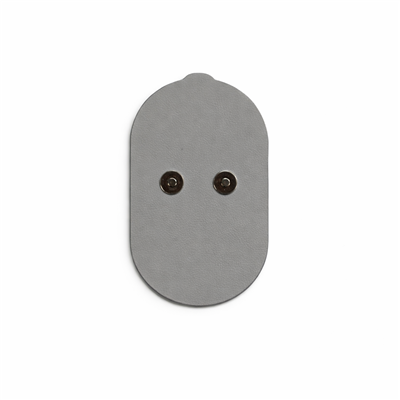
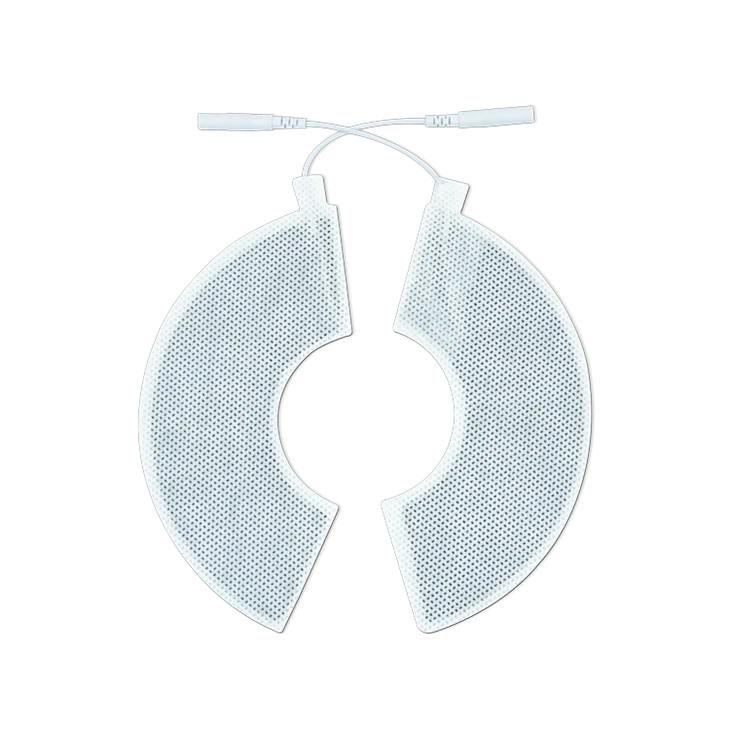
Knee TENS electrodes are specialized hydrogel-based interface components designed for targeted transcutaneous electrical nerve stimulation around the patella and joint capsule. These pads utilize a contoured geometry to maintain contact across the irregular surface area of the knee during movement.
Technical/Engineering Description
The electrode construction consists of a multi-layer stack: a top-layer PET backing for structural integrity, a central conductive silver/carbon ink layer, and a bottom-layer medical-grade hydrogel.
Adhesion is governed by the hydrogel's internal cohesive strength vs. the surface tack (peel force). The carbon film layer minimizes impedance across the interface to prevent "hot spots" where current density peaks. Standards compliance follows ISO 10993 for biocompatibility and ISO 13485 for the manufacturing environment. MOQs are typically calibrated to 20,000 units for automated assembly lines.
Key Features
-
Geometry and Contact Mechanics
The shape is die-cut specifically to wrap around the knee joint. This minimizes edge-lift during flexion and extension. The conductive pattern is distributed to ensure current density remains uniform, preventing discomfort associated with localized current spikes.
-
Skin Interface and Conductivity
The hydrogel is formulated with controlled moisture content to maintain consistent impedance levels ($500 \Omega$ to $1000 \Omega$ nominal). This moisture balance prevents premature drying while allowing the electrode to maintain electrical contact despite perspiration or minor skin oil presence.
Applications
Post-Operative Rehab
Managing pain after ACL or meniscus repair.
Osteoarthritis Therapy
Long-term pain management for chronic knee joint inflammation.
Sports Medicine
Muscle recruitment therapy during physical therapy sessions.
OEM & Private Label
-
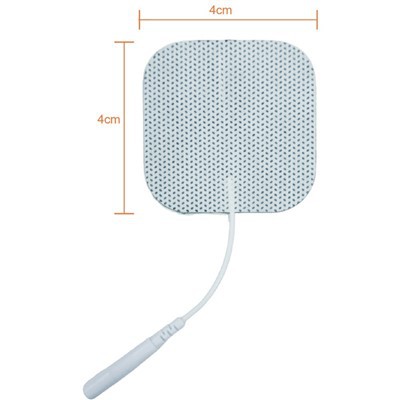
Multi-Cavity Zero-Gap Nesting : Rectangular formats are highly optimized for web processing yield. We utilize zero-gap nesting on our rotary dies to minimize hydrogel matrix waste. This drastically reduces the per-unit cost for million-unit wholesale B2B orders compared to complex butterfly or oval geometries.
-
Logistics Routing : Base web lamination and high-speed carbon printing execute in China. Final dimensional die-cutting, terminal integration, and heavy-gauge AL/PE barrier pouching route through our Vietnam hub to optimize supply chain resilience and absorb global medical consumable tariffs.
Certifications
-
ISO 13485: Standardized quality management for medical devices.
-
CE Marking: Conformity with EU medical device regulations.
-
FDA: 510(k) clearance documentation availability.
-
MDSAP: Multi-regional compliance for specific market entry.
-
Batch Tracking: Every production run is linked to a serialized QC log covering raw material lots, gel viscosity, and impedance testing data.
FAQ
Q: Why does electrode adhesion decrease after cleaning?
A: Cleaning with water can leach ions out of the hydrogel, breaking the polymer network. Hydrogels are designed for a finite number of cycles; once the tack is lost, the cross-linking in the polymer has degraded.
Q: How is impedance drift managed during mass production?
A: Impedance is governed by the silver-carbon ink ratio and the gel thickness. Automated testing stations measure the impedance of every 50th unit in a production cycle to ensure it stays within the specified tolerance.
Request product validation data, specific impedance test reports, or technical samples for your clinical evaluation.
👉 [Request Knee TENS Electrodes]
Hot Tags: knee tens electrodes, China knee tens electrodes manufacturers, suppliers, factory, large TENS pads, TENS Gel Pads, TENS Machine Electrode Pads, TENS machine pads, TENS pads for sensitive skin, TENS Unit Electrodes
Specifications
| Parameter | Specification |
| Substrate Material | Flexible PET / Non-woven Fabric |
| Conductive Element | Carbon Film / Silver Ink |
| Interface | 2.0mm Pin / Snap Connector |
| Cycle Life | 15–30 applications (skin-type dependent) |
| Shelf Life | 24 months (sealed, 5–25C) |