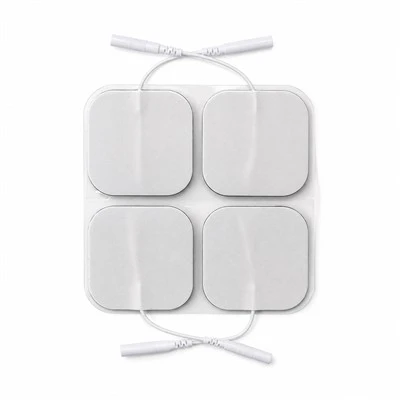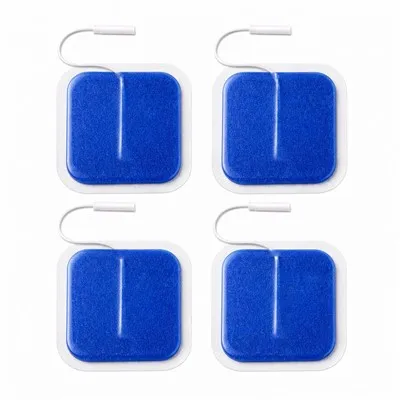

Volume White Cloth Pads | OEM Spunlace Carrier | TOP-RANK
Wholesaling bulk white cloth TENS pads and flexible backings for medical device distributors. Engineered with non-bleed carbon laminates and high-MVTR matrices to survive dynamic joint extension.
Product Overview
White cloth pads function as the standard, high-flexibility conductive interface designed for transcutaneous electrical nerve stimulation (TENS) and high-load muscle recruitment. Diverging from the rigid impermeable boundary of cross-linked PE foam sheets, this profile utilizes a dense, hydro-entangled white spunlace cloth web. The structural carrier is explicitly configured to follow complex muscular topographies and moving joint margins without generating shear-induced border peeling. We manufacture these bulk commodity blanks for durable medical equipment (DME) stockists, healthcare group purchasing organizations (GPOs), and private-label e-commerce brands requiring reliable shelf-ready consumables.
Technical/Engineering Description
The lamination flow of the white cloth pad paths a continuous spool of hydro-entangled non-woven polyester fabric past high-speed rotary alignment bars. The core technical failure mode in producing cloth backings is ink bleed-through; because the spunlace substrate features microscopic porous channels, liquid conductive carbon trace formulations can seep directly through the Z-axis during roller pressing, destroying the cosmetic look of the white blank. We block this fluid migration by slot-die extruding a macro-molecular thermoplastic barrier film over the weave before printing the electrical path. The skin-contact polymer is an advanced polyacrylamide gel layer whose monomer chains are polymerized via targeted ultraviolet (UV) cross-linking directly around the micro-fibers of the backing, forcing an unbreakable physical mechanical interlock. Completed batches route through automatic horizontal flow-wrappers into non-porous AL/PE shrouds. Standard wholesale runs carry a 20,000-unit MOQ limit per configuration.
Key Features
-
Multi-Axis Kinetic Strain Dissipation
Dynamic body zones like the lower lumbar or scapular regions pull the skin in irregular, non-linear patterns during forward bending or twisting. If an electrode utilizes a rigid backing, this mechanical movement creates a harsh localized pulling leverage at the perimeter, forcefully tearing the gel off the skin. We select a heavy-weft white spunlace mesh where individual fibers are intertwined using a cross-lapping pattern. This matrix yields symmetrically to both longitudinal and transverse forces. Under kinetic stress, the cloth fibers shift and slide slightly within the weave to absorb the tensile strain, spreading the mechanical load evenly and ensuring zero edge curling.
-
Capillary Evaporative Vapor Shunting
When patients receive constant 60-minute electrotherapy payloads under synthetic office wear or active compression garments, metabolic sweat pools rapidly beneath the pad. Flimsy foam packagings trap this liquid phase, causing immediate epidermal maceration (softening and white wrinkling) that spikes local resistance and triggers burning sensations. The interwoven spaces in our white cloth matrix function as a dedicated capillary shunting network. The high Moisture Vapor Transmission Rate (MVTR) allows vaporized perspiration to vent continuously out through the back of the fabric, locking in a flat impedance topology and ensuring the dermal barrier remains completely dry and dry.
-
Heterogeneous Lamination Delamination Block
The physical interface between a fabric cloth backing and a conductive polymer film is a high-risk zone for stress failure during packaging kitting and long-distance ocean transport. High humidity and physical vibration can cause the carbon sheet to separate from the fabric fibers, creating internal gaps that trigger device microcontroller errors. Our slot-die lines prime the cloth surface with an elastomeric, high-shear structural adhesive before lamination. This chemical bridge matches the thermal expansion rates of both the fabric and the plastic core, ensuring zero cross-layer peeling or phase separation even when stockpiled inside un-climate-controlled storage warehouses for up to 24 months.
Downstream B2B Deployments
High-Turnover Physiotherapy Ward Tenders
Mass-volume unbranded white blanks selected for busy clinical departments requiring durable, multi-use conformability to lower overall consumable per-run unit costs.
Premium OTC Hardware Kit Inclusion
Standardized white-cloth components packaged inside premium retail box kits to establish an aesthetic and high-performance accessory baseline for consumer health setups.
Pharmacy Chain Private Labeling
Peg-board ready multi-packs lot-tracked and sealed for serialized OTC distribution across mass pharmacy procurement chains.
Custom Branding & Supply Hub Routing
-
Inline Elastomeric Brand Printing : Applying custom brand artwork to white spunlace fabric dictates precision fluid control to prevent blurred lines. We integrate automated inline flexographic presses running fast-curing, medical-grade elastomeric inks. The pigment locks permanently within the outer thread weave without blocking the micro-porous channels, delivering sharp logos that extend smoothly alongside the fabric matrix.
-
Vietnam Hub Logistics Sourcing: Raw polymer complex formulation, silver-carbon circuit printing, and continuous cloth web calamination execute natively inside our main manufacturing facility in China. High-precision rotary shape blanking, lead wire insertion, and individual vacuum hermetic sealing route strictly through our Vietnam center, protecting global B2B procurement networks from volatile international consumable import tariffs.
Regulatory & Quality Safeguards
-
ISO 10993 Boundary Auditing : The cured multi-layer matrices (fabric web, conducting ink layers, and electrolyte hydrogel) undergo strict independent clinical laboratory extractions, verified successfully against ISO 10993-5 (Cytotoxicity Grade 0) and ISO 10993-10 (Skin Irritation Index <0.2) bounds to eradicate dermatological liability.
-
MDSAP Registered Operations : Every volume processing run functions firmly within manufacturing facilities audited and registered to ISO 13485:2016 and MDSAP regulatory frameworks, facilitating full, lot-serialized traceability from liquid chemical monomers to the clinic warehouse floor.
Technical FAQ
Q: Why do some cheap white cloth pads exhibit yellow staining on the fabric face during long-term warehouse storage?
A: Yellow tracking on white cloth is a biochemical consequence of polymer leaching mixed with atmospheric oxidation. Low-end manufacturing lines use un-stabilized curing agents and poor resin binders in the carbon film layer. When stored in thin polybags under warehouse heat spikes, the liquid plasticizers degrade and leach upward through the fabric capillaries, reacting with oxygen to create amber discoloration. Our slot-die line treats the weave with a cross-linked barrier film, isolating the chemicals to keep the white fabric cosmetically perfect over its entire 24-month lifespan.
Q: Can we utilize these white cloth electrodes for hydrotherapy or active aquatic electro-rehabilitation?
A: Functionally, it is an immediate physical failure mode. Spunlace non-woven cloth is engineered with open micro-pores to facilitate sweat evaporation. It possesses an MVTR $> 0$ and carries no hydrophobic fluid barrier. If submerged, ambient pool water will instantly pass through the back of the cloth, flooding the hydrogel matrix, altering the localized dielectric constants, and wiping out both physical adhesion and current localization. Hydro-heavy工况 require our specialized closed-cell PE Foam or PET film backing models.
Medical procurement networks, clinical device OEMs, and private label distributors can request multi-point surface impedance mapping data, independent skin sensitization test logs, and structural blank samples for technical auditing.
👉 [Request White Cloth Pad Samples]
Hot Tags: white cloth pads, China white cloth pads manufacturers, suppliers, factory, Electrode Pad, electrotherapy pad, stimulation pads, TENS electrodes, TENS Replacement Pads, TENS unit replacement pads
Specifications
| Component Parameter | Material Target / | Engineering Reality |
| Backing Basis Weight | 55g - 65g / m^2 | Optimal balance of fabric weight and grid bias |
| Vapor Permeability | High-Aperture MVTR Lattice | Halts fluid entrapment over 60-min cycles |
| Interfacial Impedance | < 45 Ohms (at 500Hz AC) | Uniform screen-printed carbon |
| Mechanical Stretch | Multidirectional Cross-Lapping | Symmetrical yield alongside the dermis |
| Peel Adhesion | 3.5N - 5.0N / 25mm | Calibrated via standard ASTM D3330 protocol |