

OEM 2x2 TENS Electrodes | 50x50mm Square Pads | TOP-RANK
B2B industry-standard 2x2 inch TENS/EMS electrodes. Engineered with corner-compensated carbon films and high-cohesion hydrogel to maintain < 0.5mm edge ooze during high-speed die-cutting.
Product Overview
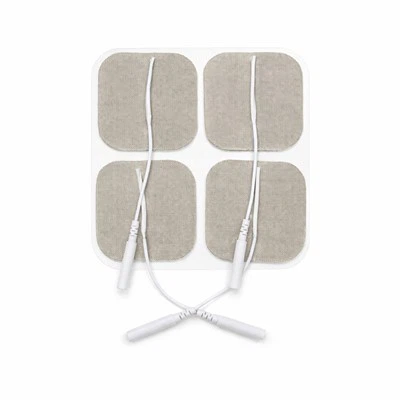
The 2x2 inch (approx. 50x50mm) square electrode is the universal baseline consumable for transcutaneous electrical nerve stimulation. Spanning exactly 4 square inches of active conductive surface, this specific geometric footprint serves as the mathematical baseline for most TENS/EMS pulse generator output algorithms. We manufacture these high-volume standard blanks for physical therapy distributors, wearable hardware OEMs, and OTC pharmacy retail brands requiring strict batch-to-batch impedance consistency.
Key Features
-
Corner Current Density Mitigation
Electrical current naturally crowds at sharp geometric angles. On a perfect 90-degree square pad, electrons bottleneck at the four corners, creating localized thermal spikes that cause stinging sensations on the patient's skin. The carbon ink extrusion process modifies the resistance gradient near the perimeter. This impedance-matching forces the electrical vector to remain uniform across the flat central plane of the 50x50mm geometry rather than pooling at the corners.
-
High-Speed Die-Cut Rheology
The 2x2 inch pad runs on the fastest automated converting lines. When low-grade hydrogel is subjected to the massive mechanical pressure of high-speed steel rotary anvils, the polymer lattice fails. The gel oozes outward, gumming up the cutting blades and leaving sticky adhesive residue along the perimeter of the finished pad. This formulation tightens the cross-linking density. The gel snaps cleanly under blunt-force shear, locking the edge overflow tolerance strictly below 0.5mm at processing speeds exceeding 30 meters per minute.
-
Mathematical Constant-Current Matching
Most TENS and EMS pulse generators map their internal closed-loop constant current (CC) algorithms based on a standard 4-square-inch load. If a pad's surface resistance fluctuates, the MCU overcompensates, sending erratic voltage spikes to the patient. By strictly standardizing the carbon layer thickness to maintain a flat < 50 Ohm impedance across the 2x2 surface, the pad synchronizes flawlessly with the default output parameters of 90% of global electrotherapy devices.
Applications
Universal Pain Gating
The default interface for localized acute and chronic pain management across flat anatomical planes.
Device Kitting
Standard "in-the-box" consumable included with 95% of OTC retail TENS units to ensure immediate out-of-box operation.
High-Volume Clinics
Bulk-dispensed for daily physiotherapy turnover where specialized anatomical shapes are unnecessary.
OEM & Private Label
-
Packaging Configurations: Supplied strictly as 4 pads per PET/AL pouch to match standard dual-channel (4-lead) TENS machines. Custom rotary 4-color printing available for the foil exterior.
-
Logistics Routing : Base web lamination and high-speed carbon printing execute in China. Final automated 2x2 die-cutting, terminal attachment, and retail batching are routed through our Vietnam hub to manage supply chain continuity and optimize global medical consumable tariffs.
Certifications
-
Regulatory : Standardized technical files and baseline impedance reports support OEM filings for FDA 510(k) and CE (MDR) hardware compliance.
-
Systems High-speed continuous converting lines operate fully within audited ISO 13485:2016 and MDSAP quality frameworks.
FAQ
Q: Are the corners of the 2x2 pads literally 90-degree sharp angles?
A: No. While designated as "square," the rotary dies utilize a micro-radius cut (e.g., R5 or R8). A literal 90-degree sharp corner easily catches on clothing or bedding during patient movement, creating a mechanical lever that peels the entire pad off the skin. The micro-radius edge prevents this kinetic friction.
Q: Why does the 2x2 pad dry out faster than the larger 50x90mm rectangular pads?
A: Evaporation dynamics. The perimeter-to-surface-area ratio is higher on a smaller 50x50mm pad. Moisture vapor escapes primarily from the exposed hydrogel edges, not through the impermeable backing. A smaller pad has less internal water volume to sustain this edge-loss, requiring strict storage inside the foil zip-pouch between therapy sessions.
B2B distributors and TENS hardware OEMs can request high-speed die-cut tolerance data and 50x50mm physical blank samples.
👉 [Request 2x2 TENS Pad Samples]
Hot Tags: 2x2 tens electrode, China 2x2 tens electrode manufacturers, suppliers, factory, Electrotherapy Replacement Pads, Neck Relax Electrode Pads, stimulation pads, TENS electrode, TENS unit replacement pads, TENS sticky pads
Specifications
| Parameter | Metric Configuration | Engineering Detail |
| Dimensions | 2" x 2" (50x50mm) | Universal baseline footprint |
| Impedance | < 50 Ohms | Measured at 100Hz AC |
| Edge Tolerance | < 0.5mm Gel Ooze | Rotary die-cut calibrated |
| Corner Profile | Micro-Radius (e.g., R5) | Prevents clothing snags |
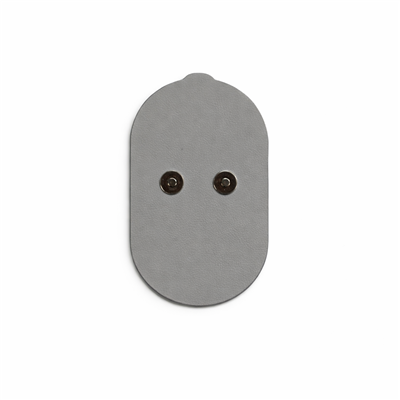
| Interface | 2.0mm Pin / 3.5mm Snap | Tensile-anchored connection |