

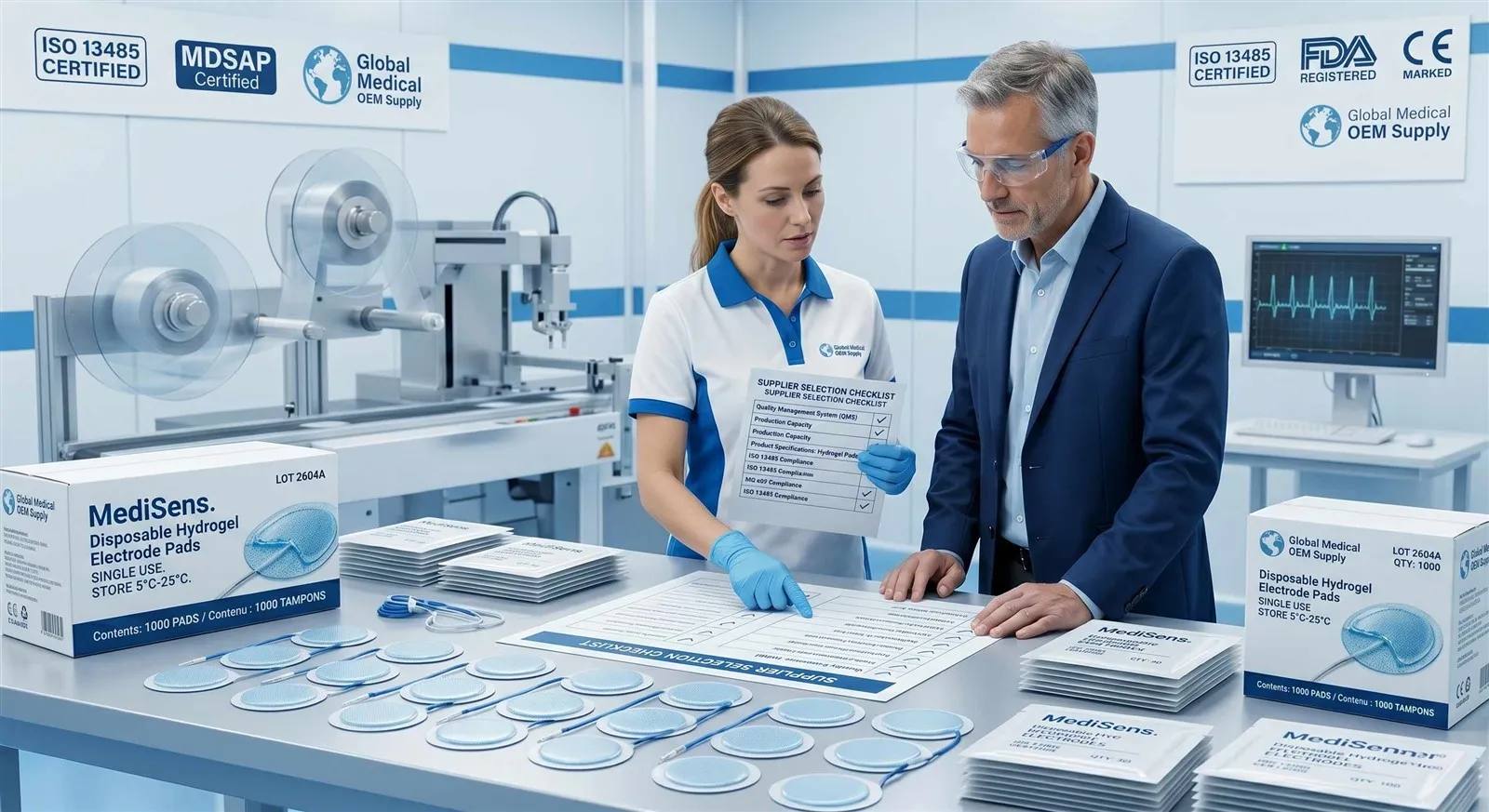
Selecting the right OEM electrode pad supplier is one of the most important decisions for medical device brands, distributors, and healthcare product companies.
Electrode pads are widely used in:
- TENS therapy devices
- EMS muscle stimulation systems
- ECG monitoring equipment
- Rehabilitation and physiotherapy devices
Because these products directly affect user comfort, signal quality, and treatment performance, supplier selection has a long-term impact on product success in the market.
A low-quality supplier can lead to:
- Unstable conductivity
- Poor adhesion performance
- Inconsistent batch quality
- High return rates
- Brand reputation issues
For OEM buyers, choosing the right manufacturer is not just a sourcing decision-it is a product quality strategy.
Why Supplier Selection Matters in Medical Electrode Products
Unlike general consumer goods, medical electrode pads require stable and repeatable performance.
Small variations in materials or manufacturing processes can significantly affect:
- Electrical conductivity
- Skin contact quality
- Hydrogel stability
- Product lifespan
- User experience
This is why experienced buyers focus not only on price, but also on manufacturing capability and quality consistency.
Key Quality Indicators Buyers Should Evaluate

When evaluating an OEM electrode pad manufacturer, buyers should consider several technical and production-related factors.
1. Conductivity Stability
Stable conductivity ensures consistent current transmission across different batches.
Key considerations include:
- Hydrogel formulation consistency
- Conductive layer quality (e.g., Ag/AgCl)
- Resistance control across production batches
Stable conductivity directly affects treatment performance and user comfort.
2. Hydrogel Performance
Hydrogel is the core material in electrode pads.
A high-quality hydrogel should provide:
- Balanced moisture retention
- Strong but comfortable adhesion
- Long-term stability during storage
- Minimal residue after removal
Poor hydrogel quality often leads to dry-out, weak adhesion, or inconsistent performance.
3. Adhesion Balance
Adhesion should not be evaluated in isolation.
Overly strong adhesion may cause discomfort, while weak adhesion affects usability.
A reliable OEM supplier focuses on:
- Balanced adhesion strength
- Skin-friendly materials
- Reusable performance consistency
4. Batch-to-Batch Consistency
Consistency is a critical factor in OEM manufacturing.
Buyers should ensure the supplier can maintain:
- Stable production processes
- Controlled raw material sourcing
- Quality inspection systems
- Standardized manufacturing parameters
Certifications That Matter for OEM Buyers
Certifications help verify whether a manufacturer meets international medical device standards.
Common certifications include:
- ISO 13485 quality management system
- MDSAP (Medical Device Single Audit Program)
- CE certification (for applicable markets)
- FDA compliance support (for US market requirements)
These certifications demonstrate that the supplier follows structured quality control systems suitable for medical device production.
Packaging and Export Capability
For international buyers, packaging is not just branding-it is part of product quality protection.
A qualified OEM supplier should be able to support:
- Moisture-resistant packaging
- Export-grade sealing systems
- Long-distance transportation stability
- Custom private-label packaging
- Bilingual labeling when required
Packaging quality directly affects hydrogel stability, adhesion performance, and product shelf life.
Manufacturing Experience Matters More Than Price

While pricing is always a consideration, it should not be the primary factor in OEM selection.
Experienced manufacturers typically provide:
- More stable product performance
- Better technical support
- Lower defect rates
- More reliable long-term supply
- Better understanding of international regulations
For medical electrode products, manufacturing expertise has a greater impact on total cost of ownership than unit price alone.
Red Flags in Low-Quality Suppliers
OEM buyers should be cautious if suppliers show the following signs:
- No clear quality control process
- Inconsistent product specifications
- Lack of hydrogel formulation transparency
- Weak or missing certifications
- Poor communication on technical details
- No export experience
These issues often lead to unstable product performance and supply chain risks.
Why OEM Experience Is Critical for Global Markets
Electrode pads sold in different markets may require different compliance and packaging standards.
For example:
- Canada requires bilingual labeling in many cases
- Some regions require specific medical certifications
- Climate conditions affect hydrogel performance during shipping
An experienced OEM supplier understands these variations and can adjust production and packaging accordingly.
At TOP-RANK, we support OEM electrode pad manufacturing with stable hydrogel systems, ISO 13485 production standards, and export-ready packaging solutions for global medical markets.
Choosing a reliable OEM electrode pad supplier requires a comprehensive evaluation of:
- Conductivity stability
- Hydrogel performance
- Manufacturing consistency
- Certifications
- Packaging capability
- Export experience
For medical device brands and distributors, supplier selection is directly linked to product performance, market reputation, and long-term business success.
A well-qualified OEM partner not only provides products, but also ensures stability, compliance, and scalability for global markets.
FAQ
What should I look for in an OEM electrode pad supplier?
Why is conductivity more important than adhesion?
What certifications are required for medical electrode manufacturers?
How can I evaluate supplier quality?
Why is OEM experience important?