


When using a TENS, EMS, or other electrotherapy device, many people assume that electrical signals travel directly from the device into the body without resistance.
In reality, the skin acts as a natural barrier.
Before electrical stimulation can reach nerves or muscles, it must first pass through the skin's outer layers, which resist the flow of electrical current.
This resistance is known as skin impedance.
Skin impedance plays a major role in determining:
- stimulation intensity
- user comfort
- signal transmission efficiency
- overall treatment performance
Understanding skin impedance helps explain why electrical stimulation may feel different from one person to another-or even on different areas of the same body.
What Is Skin Impedance?
Human skin is not a perfect conductor.
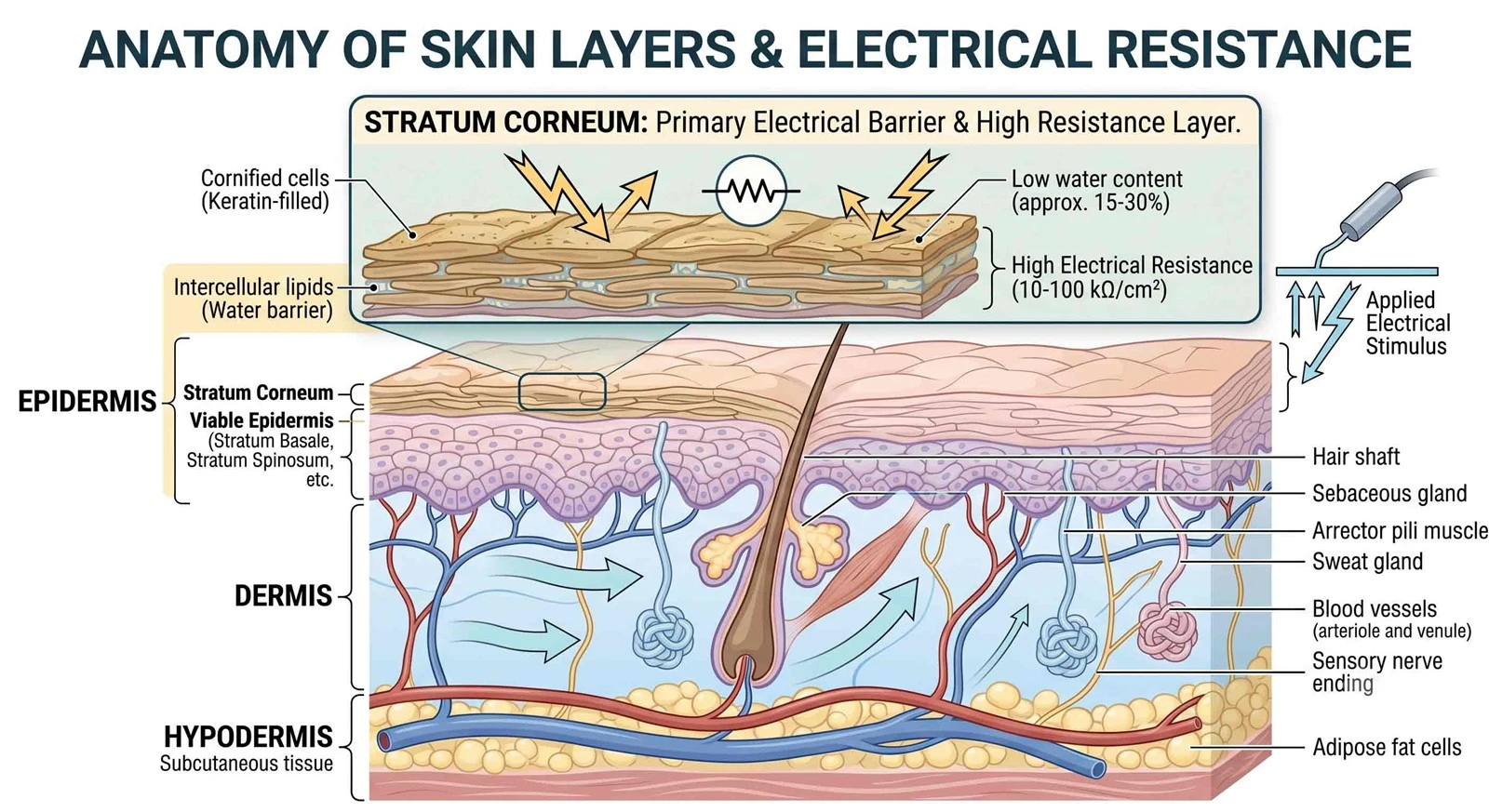
The outermost layer of the skin, known as the stratum corneum, acts as a protective barrier.
This layer naturally resists the flow of electricity.
Skin impedance is the resistance that skin offers to the flow of electrical current during electrotherapy.
Skin impedance directly influences how efficiently electrical stimulation reaches underlying tissues.
Why Does Skin Resist Electrical Current?
The skin's primary function is protection.
To prevent excessive moisture loss and block external contaminants, the outer skin layer contains relatively low amounts of free water.
Because electrical current travels more easily through water-rich tissues, dry outer skin naturally creates resistance.
This resistance helps explain why stimulation sometimes feels weaker, stronger, or different depending on skin condition.
The outer skin layer creates most of the resistance encountered during electrical stimulation.
Factors That Affect Skin Impedance
Skin impedance is not constant.
It changes based on several physiological and environmental factors.
1. Skin Hydration
Hydrated skin generally has lower impedance.
Dry skin typically creates greater resistance.
For this reason, stimulation may feel stronger after:
- exercise
- showering
- increased skin moisture
Higher skin hydration typically reduces skin impedance and improves signal transmission.
2. Body Location
Different body areas have different impedance levels.
For example:
- palms and soles often have higher impedance
- arms and thighs may have lower impedance
- scar tissue may increase resistance
This is one reason why electrode placement can affect user perception.
Skin impedance varies across different areas of the body.
3. Temperature
Warmer skin generally has better blood circulation and slightly lower impedance.
Cold skin may increase resistance and reduce signal transfer efficiency.
4. Skin Condition
Factors such as:
- dryness
- calluses
- dead skin buildup
- irritation
can influence impedance levels.
Skin condition can significantly affect electrical stimulation performance.

How Skin Impedance Affects Electrical Stimulation
Skin impedance directly influences how electrical signals are delivered.
Higher Impedance
When impedance is high:
- more resistance occurs
- signal transfer becomes less efficient
- stimulation may feel weaker or uneven
In some cases, users increase device intensity to compensate.
Lower Impedance
When impedance is lower:
- current flows more efficiently
- stimulation feels smoother
- signal delivery becomes more consistent
Lower skin impedance generally improves electrical signal transmission and user comfort.
Why Hydrogel Is Important
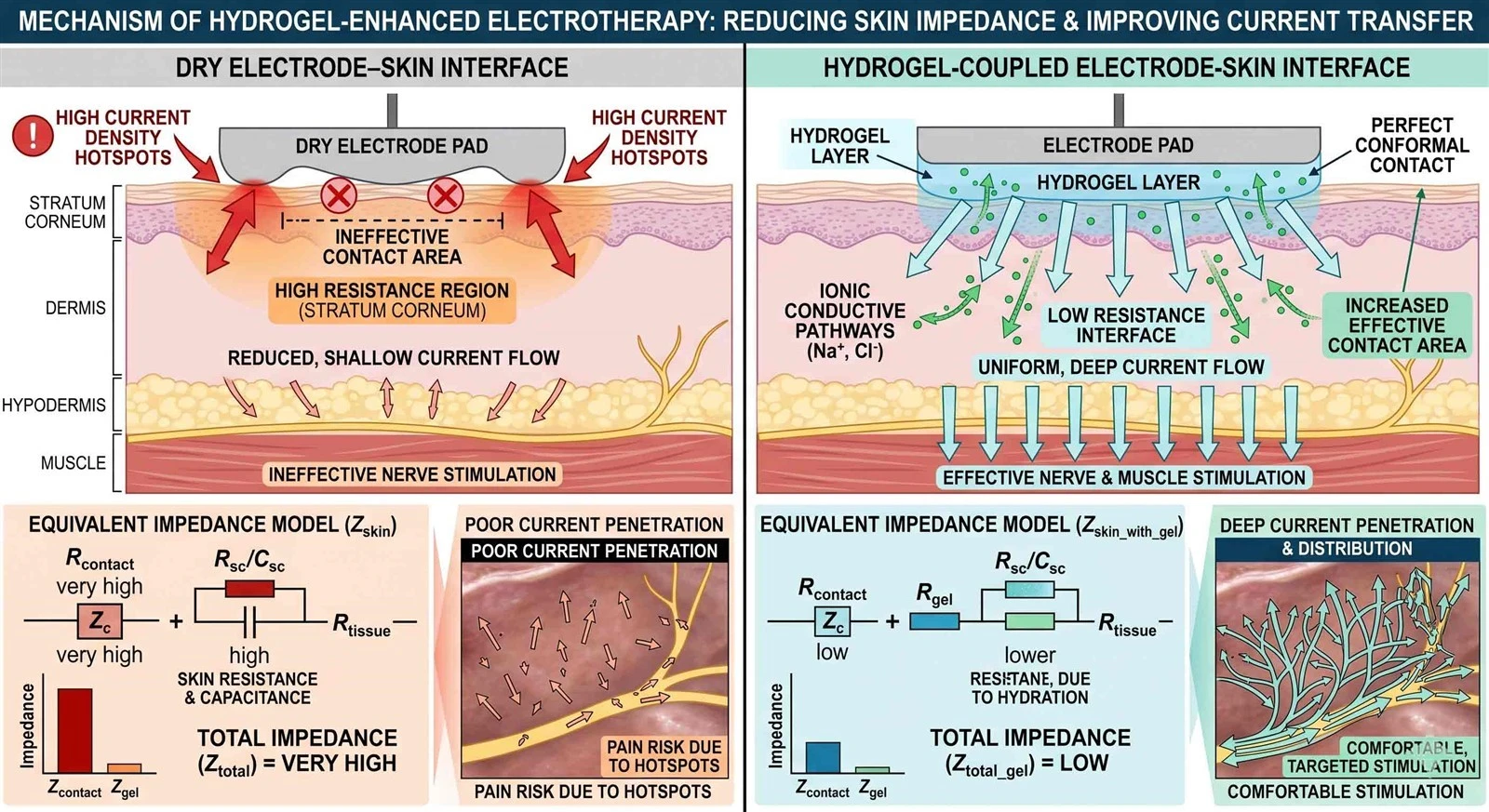
Hydrogel plays a critical role in overcoming skin impedance.
It acts as an interface between the electrode pad and the skin.
Hydrogel helps by:
Improving Contact
The gel fills microscopic gaps on the skin surface.
Increasing Moisture
Water-rich hydrogel reduces electrical resistance.
Distributing Current Evenly
The hydrogel helps spread electrical signals across the electrode surface.
This reduces the risk of uncomfortable hot spots.
Hydrogel functions as a conductive interface that helps reduce skin impedance during electrical stimulation.
Hydrogel improves both signal transfer efficiency and treatment comfort.
Why Stimulation Feels Different on Different Days
Many users notice that stimulation intensity seems to change from session to session.
This is often related to changes in skin impedance.
Factors include:
- hydration levels
- temperature
- sweating
- skin preparation
- electrode placement
The device settings may remain unchanged, but the body's electrical characteristics can vary.
Changes in skin impedance can alter the perceived intensity of electrical stimulation.
Can Electrode Pads Affect Skin Impedance?
Yes.
The quality of the electrode pad influences how effectively electrical current passes through the skin interface.
Important factors include:
- hydrogel formulation
- moisture retention
- conductive layer design
- pad conformity
Higher-quality electrode pads are designed to maintain stable contact and reduce impedance-related variability.
Electrode pad design can influence the effectiveness of electrical signal transfer through the skin.
Common Questions
Is skin impedance harmful?
No. Skin impedance is a natural biological characteristic that helps protect the body.
Why does stimulation feel stronger on some body parts?
Different body regions have different skin thickness, hydration levels, and impedance characteristics.
Does hydrogel reduce skin impedance?
Yes. Hydrogel improves electrical coupling between the electrode and the skin, helping current pass more efficiently.
Can dry skin affect TENS or EMS performance?
Yes. Dry skin often increases impedance and may reduce stimulation efficiency.