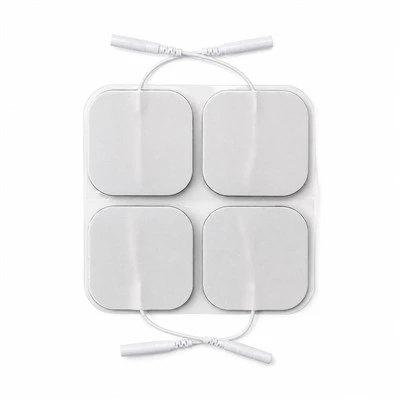

Wholesale Solid Hydrogel Sheets | Unbacked Gel Pads | TOP-RANK
B2B solid hydrogel sheets for medical electrode converting and bio-sensor manufacturing. Engineered with cross-linked polyacrylamide networks for dual-sided differential tack and zero-residue release.
Product Profile
These solid hydrogel sheets function as unsupported, self-standing conductive adhesive matrices engineered explicitly for medical device converters, bio-potential sensor assemblers, and therapeutic electrode manufacturers. Diverging from pre-laminated TENS pads that arrive permanently bonded to non-woven or carbon backings, these pure gel sheets consist entirely of a cross-linked polyacrylamide biopolymer network saturated with electrolyte-rich aqueous carriers. Protected between dual siliconized fluoropolymer release liners, the solid gel exhibits dimensional stability, high tensile memory, and dual-sided differential adhesion-allowing automated converting equipment to laminate the gel directly onto proprietary carbon films, metallic sensors, or wearable electronics. We manufacture these converting-ready master rolls and die-cut sheet blanks for B2B medical packagers, wearable health-tech OEMs, and diagnostic hardware brands.
Slot-Die Extrusion & Photopolymerization
The continuous fabrication of solid hydrogel sheets combines precise liquid phase formulation with online UV-initiated photopolymerization. An aqueous monomer solution-comprising acrylamide, cross-linking agents, and alkali chloride electrolytes-is pumped into a precision slot-die extrusion head that deposits a uniform liquid ribbon onto a moving fluorosilicone PET carrier film. The liquid web enters an extended nitrogen-purged UV curing chamber. High-intensity ultraviolet radiation triggers free-radical polymerization, instantaneously cross-linking the liquid monomers into a solid, elastic 3D polymer matrix that traps water molecules within its crystalline grid. A second, differential-release PET liner is laminated over the top surface before the solid web is wound into master rolls or precision die-cut into rectangular sheet blanks. Manufacturing operates strictly inside ISO 13485 cleanroom bays, with an MOQ starting at 1,000 square meters for master rolls or 20,000 sheet units.
Core Engineering Assets
-
Unsupported Self-Standing Elasticity (Zero-Creep Converting Stability)
Cheap hydrogels lack cohesive tensile strength, collapsing or tearing like liquid jelly when peeled from protective liners on automated converting machinery. Our solid hydrogel sheets are formulated with a dense, highly cross-linked covalent polyacrylamide network. This gives the unsupported gel sheet a high storage modulus (G' > 35,000Pa) and a tensile strength exceeding 0.45 MPa. Converting equipment can pull, die-cut, and position the unbacked gel sheet at high line speeds without edge distortion, web tearing, or dimensional creep.
-
Differential Tack Architecture (Dual-Surface Cohesive Tuning)
When assembling bio-sensors or smart wearables, the gel must bond permanently to the hardware substrate (such as printed carbon, Ag/AgCl sensors, or polyurethane film) while remaining gently peelable from human skin without epidermal trauma. We achieve this by tuning the cross-linking gradient during UV photopolymerization, creating a differential tack profile. Side A (Hardware-Facing) delivers a high-tack peel force (6.5N/25mm) that anchors permanently to carbon/metal traces, preventing adhesive separation during storage. Side B (Skin-Facing) is calibrated to a moderate 3.5N/25mm peel force, providing repeatable skin tack with zero-residue, trauma-free removal.
-
Controlled Water Activity aω Barrier (Zero-Crystallization Shelf Retention)
Unbacked hydrogel sheets feature a 100% exposed perimeter ratio when die-cut, leaving them vulnerable to swift water evaporation and salt crystallization under ambient warehouse conditions. We resolve this thermodynamic failure mode by optimizing the liquid phase with a 15% polyhydric alcohol humectant complex that depresses the water activity (aω < 0.70). The humectants form strong hydrogen-bonding clusters with water molecules, retarding moisture evaporation under dry conditions and preventing atmospheric moisture absorption in humid climates, guaranteeing a 24-month to 36-month field shelf life.
B2B Procurement & Converting Deployments
Medical Electrode Secondary Converting
Supplied in 1,000-meter master rolls or raw sheet formats to medical device converting plants that die-cut, laminate, and package custom-branded TENS, EMS, and ECG electrodes.
Wearable Smart Bio-Sensor Assembly
High-precision, zero-residue conductive gel sheets used by digital health hardware companies to integrate continuous ECG, Holter, or EMG monitoring patches into flexible printed circuit boards (FPCBs).
Cosmetic & Aesthetic Hydrogel Patch Manufacturing
Specialized unscented, skin-neutral gel sheets converted into cooling, conductive, or transdermal delivery matrices for home-use beauty wands and spa devices.
Precision Packaging & Global Supply Routing
-
Humidity-Controlled Cleanroom Barrier Packing : Master rolls and sheet packs are slit and packaged inside humidity-controlled ISO Class 7 cleanrooms. Sheet units are stacked with plastic inter-leaving sheets, sealed inside heavy-duty multi-layer PET/AL/PE foil pouches with 10mm heat-seals, and desiccant-packed to prevent edge-fusion during international ocean freight.
-
Supply Chain Resilience Routing : Polymer formulation, slot-die extrusion, and UV photopolymerization execute within our primary China facility. Precision roll slitting, sheet die-cutting, cleanroom foil pouching, and export palletization route through our Vietnam hub, protecting global B2B converting networks from regional import trade tariffs on polymer hydrogels.
Regulatory & Quality Safeguards
-
ISO 10993 Dermal Safety Clearance : Finished solid hydrogel lots undergo continuous independent laboratory testing against strict ISO 10993-5 (Cytotoxicity Grade 0), ISO 10993-10 (Primary Dermal Irritation Index < 0.1), and ISO 10993-10 (Sensitization) boundaries, confirming zero skin reactivity, erythema, or pore blockage.
-
MDSAP & ISO 13485 Manufacturing : Our extrusion reactors and cleanroom converting bays operate strictly within facilities audited and registered to ISO 13485:2016 and MDSAP quality frameworks, delivering unbroken lot-serialization from raw monomer materials to outbound pallets.
Technical FAQ
Q: Can your factory custom-calibrate the gel thickness and dual-sided peel force for our specific converting machinery?
A: Yes. We offer complete technical customization for converting clients. Our engineering team can adjust the slot-die lip gap to produce custom gel thicknesses ranging from 0.5mm to 2.0mm (± 0.03mm). We can also tune the UV cure gradient to deliver customized differential tack ratios (e.g., matching low-surface-energy carbon films or delicate neonatal skin application) with a master roll MOQ starting at 1,000 square meters.
Q: How do solid hydrogel sheets differ from fluid conductive gels during automated electrode manufacturing?
A: Liquid conductive gels must be pumped, contained within sponge wells, or cross-linked online using specialized UV or heat-curing tunnels on the converter's line. Solid hydrogel sheets are pre-crosslinked, self-standing elastic solids. They require zero curing equipment-converters simply feed the gel sheet off a roll, peel the bottom liner, laminate it directly onto the carbon film, and die-cut the finished electrode, drastically simplifying line machinery and reducing scrap rates.
Medical device converters, wearable bio-sensor OEMs, and electrode manufacturing networks can request lot-specific Certificates of Analysis (COA), tensile/peel force test logs, and trial master roll or sheet samples for converting machine testing.
👉 [Request Solid Hydrogel Sheet Samples]
Hot Tags: solid hydrogel sheets, China solid hydrogel sheets manufacturers, suppliers, factory, Back Stimulation Pads, extra large TENS pads, Large TENS Unit Pads, TENS Gel Pads, TENS sticky pads, TENS Therapy Replacement Pads
Technical Specifications
| Analytical Parameter | Target Baseline | Analytical Verification |
| Physical Format | Unbacked Solid Hydrogel Sheet | Dual siliconized PET liner protection |
| Gel Thickness | 0.8mm - 1.2mm (± 0.05mm) | Slot-die precision web extrusion |
| Tensile Strength | > 0.45 MPa | ASTM D882 unsupported elastomer pull |
| Differential Tack | Hardware: 6.5N / Skin: 3.5N (per 25mm) | High tack to carbon film, gentle to skin |
| Z-Axis Impedance | < 25 Ohms (100Hz AC bridge) | Four-point probe isotropic conductivity |