

OEM Bulk Medical Hydrogel Rolls | Master Web | TOP-RANK
B2B continuous medical conductive hydrogel rolls. Slit-coated to strict Z-axis tolerances with high shear modulus to prevent blade-fouling during high-speed rotary die-cutting.
Product Overview
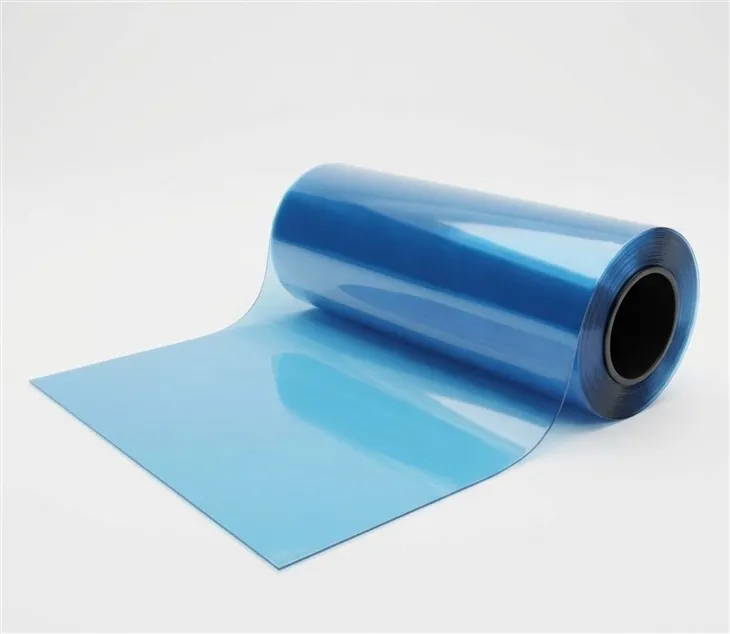
These bulk medical hydrogel rolls are unconverted, continuous web substrates supplied directly to medical device converters and wearable hardware OEMs. The core material is our proprietary NexaFlow matrix, an aqueous conductive polymer cast onto specific release liners. Rather than purchasing finished pre-cut pads, high-volume converters integrate these master rolls directly into their automated rotary die-cutting lines to stamp out custom TENS, ECG, or grounding pad geometries. The product is shipped in humidity-controlled, hermetically sealed industrial spools.
Technical/Engineering Description
The production of continuous hydrogel web relies on fluid coating dynamics. The liquid NexaFlow monomer solution is pumped through a precision slot-die extrusion head onto a moving PET carrier web. This continuous sheet passes through an inline thermal or UV curing tunnel. Inside the tunnel, the liquid polymerizes into a stable, cross-linked viscoelastic solid. The mechanical challenge lies in maintaining absolute web tension to prevent edge-pooling (where the gel curves thicker at the borders) and managing the exothermic reaction during curing to prevent microscopic boiling pockets. Finished master rolls are rewound onto standard 3-inch or 6-inch plastic cores. Wholesale production minimum order quantities (MOQ) are measured in linear meters, typically starting at 100 meters per chemical batch.
Key Features
-
Z-Axis Thickness Tolerance
Rotary die-cutting relies on absolute physical tolerances. If a hydrogel roll varies in thickness by just 0.1mm along the Z-axis, the cutting blade will either fail to sever the gel completely or will cut too deep, shattering the underlying release liner. Standard knife-over-roll coating methods produce a slight wedge shape across the web width. Our extrusion lines utilize closed-loop slot-die heads with automated micrometer feedback. This mechanically forces the fluid thickness into a flat ±0.05mm tolerance from edge to edge. The die-cutting anvil applies uniform pressure across the entire web during high-speed stamping operations.
-
High Shear Modulus against Blade-Fouling
Converters run continuous die-cutting lines at speeds exceeding 20 meters per minute. When the steel blade compresses the gel, formulations with low cross-linking density undergo shear failure. The gel oozes out the sides under pressure, gumming up the gears, sticking to the rotary blade, and forcing the factory to halt the line for physical cleaning. The specific NexaFlow polymer lattice is chemically hardened to exhibit a high shear modulus. It resists the lateral compression force of the blade, cleaving sharply and cleanly without leaving residual polymer strings on the tooling.
-
Vacuum-Degassed Ionic Dispersion
Electrical impedance is entirely dependent on the uniform distribution of chloride ions within the water matrix. If the salt aggregates during the liquid mixing phase, the cured master roll will contain localized high-resistance dead zones and low-resistance hot spots. We process the monomer precursors through planetary vacuum mixers prior to extrusion. This mechanically crushes salt agglomerates and extracts trapped atmospheric air bubbles from the liquid phase. The resulting cured web presents a mathematically flat resistance curve (<50 Ohms) across its entire square meterage.
Applications
OEM Electrode Converters
Primary raw material input for third-party factories stamping out large volumes of private-label TENS, EMS, and diagnostic resting ECG electrodes.
Continuous Biosensor Patches
Medical-grade substrate layered into wearable Holter monitors and Continuous Glucose Monitors (CGM) requiring multi-day epidermal adhesion without mechanical breakdown.
RF Cosmetology Devices
Cut into complex geometries to serve as the highly hydrated conductive interface for professional and home-use radio frequency aesthetic hardware.
OEM & Private Label
-
Tackiness & Exudation Tuning : The NexaFlow acrylic acid ratio and humectant density can be modified based on the OEM's required wear time. We output high-tack formulations for 7-day wearables or low-peel configurations for 10-minute diagnostic procedures to prevent stratum corneum stripping.
-
Logistics Routing: Polymerization and wide-web continuous coating execute in our China facility. Master roll slitting (cutting wide webs into 100mm narrow spools), hermetic aluminum foil bag sealing, and humidity-controlled palletization route through our Vietnam hub. This manages supply chain continuity for global converters while navigating specific raw material import restrictions.
Certifications
-
Regulatory Support : We provide the converter with the complete underlying biological safety data logs, including ISO 10993-5 (Cytotoxicity) and ISO 10993-10 (Irritation), to support their finished medical device submissions to the FDA, CE, or Health Canada.
-
Systems : Chemical mixing, extrusion, and environmental web storage operate strictly within our audited MDSAP and ISO 13485:2016 quality management framework.
FAQ
Q: Why does the hydrogel roll sometimes shrink and pull away from the PET release liner during warehouse storage?
A: This is caused by ambient humidity gradients. Hydrogel is hygroscopic. If a master roll is stored in a warehouse with very low humidity (below 40% RH), the water in the polymer matrix evaporates into the air. As it loses water volume, the physical geometry of the gel shrinks, exerting kinetic force that pulls it off the rigid PET liner. Master rolls must be kept in their sealed aluminum moisture-barrier bags until immediately before mounting onto the die-cutter, and the facility environment should maintain 50-60% RH.
Q: Can you provide the master roll with a single release liner instead of double-sided liners to speed up our lamination process?
A: A continuous roll requires at least one heavy carrier liner (bottom) and a thin cover liner (top) during the coating process. If you rewind a roll with only one liner, the gel will adhere to the back of that same liner on the next spool layer. The entire roll will fuse into a solid block of gel and plastic. We provide differential release liners (one side requires heavy peel force, the other side requires very light peel force). Your die-cutting machine strips the light liner off automatically just before laminating your conductive carbon or fabric backing.
Medical device converters and wearable OEM engineers can request NexaFlow hydrogel material data sheets and 10-meter physical evaluation spools.
👉 [Request Master Roll Evaluation Spools ]
Hot Tags: bulk medical hydrogel rolls, China bulk medical hydrogel rolls manufacturers, suppliers, factory, Hydrogel, Medical Hydrogel
Specifications
| Parameter | Metric Configuration | Engineering Detail |
| Web Width | 100mm to 400mm | Matches converter anvil dimensions |
| Z-Axis Thickness | 0.8mm - 1.2mm (±0.05mm) | Slot-die precision |
| Peel Force | 2.5N - 5.0N / 25mm | Adjustable acrylic acid ratio |
| Impedance | < 50 Ohms (at 10Hz) | Homogeneous chloride dispersion |
| Release Liners | Dual PET or PE Film | Controls unwinding tension |


