
OEM Stress Test ECG Electrodes | Exercise Treadmill Pads | TOP-RANK
B2B wholesale stress test ECG electrodes engineered for Bruce protocol treadmill and ergometer testing. Features sweat-displacing high-shear adhesives, low-noise fast-wetting Ag/AgCl sensor cores, sub-50 Ohm impedance, and leadwire whip decoupling.
Clinical Rationale & Biomechanical Operating Profile
Diagnostic exercise stress testing-such as the standard Bruce Protocol, modified Balke treadmill regimens, and cycle ergometry-subjects cardiac sensor interfaces to violent physical and thermodynamic stress. As target workloads escalate toward maximum functional capacity (>10 METs, heart rates exceeding 160–185 bpm), the patient's torso experiences multi-axis mechanical shearing from rhythmic arm swing, chest wall excursion, and leadwire whipping. Simultaneously, sympathetic autonomic activation triggers profuse diaphoresis (sweating), flooding the skin-electrode boundary with warm saline and lactic acid.
Standard resting tab electrodes or light-duty monitoring pads fail within the first few minutes of a stress test: dynamic shear forces pop electrodes off the skin, while sweat breaks down conventional adhesives, allowing fluid to seep beneath the sensor. When an electrode lifts or shifts, the micro-capacitive double layer at the skin interface destabilizes, generating massive low-frequency baseline wandering (>1.0mV) and triboelectric motion artifacts. These electrical spikes mask critical diagnostic markers-such as horizontal or down-sloping ST-segment depressions (≥ 0.1mV), subtle J-point elevations, and ventricular premature beats-forcing cardiologists to abort the test or produce inconclusive stress reports.
This stress test ECG electrode platform resolves these failure modes through an aggressive, sweat-displacing cross-linked acrylic adhesive perimeter combined with an engineered, high-chloride fast-transduction wet-gel sensor well. Supported by an open-cell high-density foam or tear-resistant microporous spunlace carrier, the pad isolates leadwire mechanical tugs from the central sensing eyelet. The sensor stabilizes contact impedance below 50 Ohms in seconds and holds baseline wander strictly under 15μV, providing uncompromised diagnostic waveform fidelity at peak physical exhaustion. We mass-manufacture these specialized exercise consumables for cardiovascular diagnostic centers, sports medicine core laboratories, and stress-test telemetry OEMs worldwide.
Manufacturing Kinetics & Converting Workflow
The industrial manufacturing of stress-test ECG electrodes combines continuous high-shear acrylic coating, precision eyelet riveting, automated liquid-gel micro-dosing, and high-speed rotary die-cutting inside ISO 13485-certified Class 8 cleanrooms. The structural web begins with high-density, cross-linked closed-cell PE foam (1.5mm thickness, 70kg/m³ density) or multi-filament spunlace non-woven (65g/m²). The skin-contact face is pattern-coated with a solvent-free, medical-grade pure acrylic pressure-sensitive adhesive (PSA) enriched with tackifying tack-resins. The adhesive is slot-die applied with micro-grooved channels that vent vapor and sweat away from the center.
The web passes into synchronized rotary punching stations that cut central gel chambers. Heavy-tonnage pneumatic presses swage a solid stainless-steel 4.0mm snap stud onto a micro-porous ABS eyelet coated with a vacuum-sputtered stoichiometric silver/silver-chloride (Ag/AgCl) active layer. In offset teardrop configurations, the snap connection is positioned off-center from the conductive gel well, establishing physical decoupling that isolates cable vibration from the gel interface.
An open-cell polyurethane micro-sponge is inserted into the central eyelet cavity and injected with a high-conductivity, chloride-balanced liquid gel via computer-metered positive-displacement pumps. The liquid gel rapidly hydrates skin micro-crevices without waiting for passive moisture buildup. Heavy rotary dies punch finished anatomical contours with smooth, stress-relieved radii and oversized, non-adhesive lift tabs for quick post-test removal. Finished electrodes are mounted on silicone-treated PET release cards in sets of 5 or 10 and hermetically sealed into heavy-gauge multi-layer PET/AL/PE foil barrier pouches to prevent volatile solvent evaporation. The minimum OEM contract production run is 300,000 units.
Core Engineering Assets
-
Sweat-Displacing High-Shear Adhesive Perimeter (Zero Edge-Lift Under Dynamic Arm Swing)
During treadmill testing at full incline, the patient's chest muscles expand and contract violently while heavy telemetry cables pull laterally on every footstrike. If the backing adhesive lacks cohesive shear strength, sweat softens the perimeter, causing the pad to peel from the outside in. We formulate our pressure-sensitive adhesive with a high-tack, hydrophobically modified acrylic polymer (6.5N to 8.5N/25mm peel strength on sweaty skin). The adhesive contains micro-phase separation zones that wick perspiration outward away from the center. The pad remains locked to the skin through multi-directional shearing forces, preventing edge curl and stopping salty sweat from contaminating the inner conductive well.
-
Rapid-Wetting High-Chloride Liquid Gel Core (Sub-50 Ohm Impedance for ST-Segment Fidelity)
Solid hydrogels require several minutes to warm up and hydrate the stratum corneum, often resulting in noisy baselines during the initial stages of exercise. For instantaneous signal stability, our stress-test electrode utilizes a low-viscosity, high-chloride liquid gel held inside a reticulated polyurethane foam reservoir. Upon contact, the fluid wet gel instantly penetrates epidermal crevices and hair follicles, establishing an ionic bridge with skin tissue within milliseconds. It delivers an AC contact impedance below 50Ω at 10Hz and keeps DC offset voltage below 1.0mV. This ultra-low impedance eliminates baseline wandering and high-frequency EMG muscle tremor spikes, enabling cardiologists to detect fractions of a millimeter of ST-segment depression under peak physical stress.
-
Offset Snap Mechanical Decoupling (Isolating Heavy Cable Whip from the Sensing Reservoir)
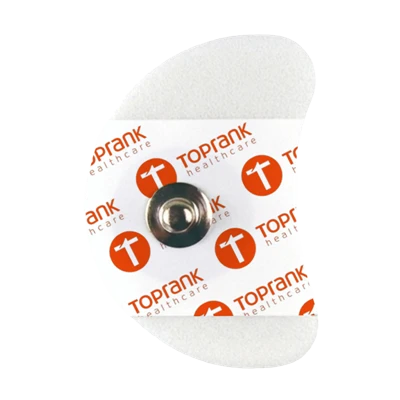
In conventional concentric electrodes, the metal lead snap is positioned directly on top of the conductive gel core. As heavy ECG patient cables bounce and whip during treadmill running, this vertical vibration transfers directly into the conductive gel, physically churning the electrolyte layer and modulating the capacitive double layer to generate huge motion artifact spikes. We engineer an offset teardrop footprint: the stainless-steel snap stud is anchored onto an extended foam tab, physically separated from the conductive sponge well by a flexible decoupling bridge. Mechanical shock, lateral tugs, and cable bounce are dissipated across the foam border, leaving the central sensing gel and skin interface undisturbed.
Clinical & Commercial Deployments
Cardiovascular Stress Laboratories & Treadmill Suites
High-volume disposable electrodes paired with 12-lead diagnostic stress ECG consoles (compatible with GE CASE, Mortara X-Scribe, Philips, and Schiller platforms) for coronary artery disease (CAD) ischemic evaluation.
Cardiopulmonary Exercise Testing (CPET) & Metabolic Research
Heavy-duty, sweat-resistant electrodes deployed during combined gas-exchange (VO2 max) and cardiac stress evaluations in heart failure patients and elite athletes.
Nuclear Cardiology & Stress Echocardiography Labs
Fast-transduction wet-gel electrodes applied during pharmacological or exercise stress imaging protocols to track arrhythmias and ischemia prior to gamma-camera scanning.
Packaging Configurations & Transnational Logistics
-
Procedural Multi-Pad Strips & Hermetic Pouching : Stress testing procedures follow strict multi-lead configurations. Electrodes are supplied in clinical sets of 5, 10, or 25 pads mounted on fluorosilicone PET release cards. The assemblies are hermetically sealed inside puncture-resistant multi-layer PET/AL/PE foil barrier pouches with solid 8mm perimeter heat seals. This packaging drives Moisture Vapor Transmission Rates (MVTR) near zero, preventing volatile liquid gel evaporation and preserving sub-50 Ohm electrical conductivity across a 24-month shelf life.
-
Transnational Logistics Resilience : Base tear-resistant backing converting, medical-grade acrylic adhesive synthesis, Ag/AgCl thin-film sputtering, and liquid gel compounding execute natively inside our primary China facility. High-speed automated rotary die-cutting, offset snap swaging, cleanroom pouch packaging, and master export palletization route through our Vietnam hub, shielding international B2B medical supply networks from regional medical consumable import tariffs.
Quality, Regulatory & Biocompatibility Systems
-
ANSI/AAMI EC12 Stringent Electrical Clearance : Production master lots undergo batch testing in accredited testing laboratories confirming strict compliance with ANSI/AAMI EC12:2000/(R)2020 requirements, verifying AC impedance (<50Ω), DC offset voltage (<1.0mV), 5-shock defibrillation overload recovery (residual <15mV within 2 seconds), and internal baseline noise suppression.
-
ISO 10993 Dermal Biocompatibility Profile : Adhesives and conductive gels undergo testing against ISO 10993-5 (Cytotoxicity Grade 0), ISO 10993-10 (Sensitization: 0% allergic response), and ISO 10993-23 (Primary Dermal Irritation Index = 0.0). The entire assembly is 100% natural rubber latex-free, phthalate-free, and leaves zero sticky residue upon removal.
-
MDSAP & ISO 13485 Certified Manufacturing Controls : Adhesive coating plants, automated liquid gel dosing decks, and cleanroom die-cutting lines operate strictly under certified ISO 13485:2016 and MDSAP regulatory frameworks, delivering unbroken electronic lot-traceability from raw acrylic resins to outbound shipping cartons.
Technical FAQ
Q: Why do conventional resting ECG electrodes and standard monitoring pads fail during a Bruce protocol treadmill test?
A: Conventional resting tab electrodes and basic monitoring pads are engineered for stationary, resting patients. They utilize mild adhesives and solid hydrogels that require time to hydrate the stratum corneum. During a Bruce protocol treadmill test, mechanical shear forces from arm swing and bouncing heavy cables quickly break the weak adhesive bond, causing the pad to lift. Furthermore, as the patient sweats, perspiration pools underneath non-sweat-resistant adhesives, separating the gel from the skin. This disruption destabilizes the interfacial double-layer capacitance, causing massive low-frequency baseline wandering (>1.0mV) and high-frequency motion artifacts that completely obscure ST-segment shifts. Stress test electrodes eliminate this failure mode through high-shear sweat-displacing adhesives, instant-wetting liquid gels, and strain-relieved offset snap designs that decouple cable tugs from the skin interface.
Q: How does a fast-transduction wet gel outperform solid hydrogels when recording microvolt-level ST-segment changes at high heart rates?
A: Solid hydrogels are high-viscosity cross-linked polymers. While gentle, their high polymer density slows down the mobility of hydrated chloride ions (Clˉ) and prevents the gel from rapidly penetrating microscopic dermal fissures. When heart rates climb to 160–180 bpm, physical movement shakes the skin-gel interface; if the ionic transfer rate is sluggish, this physical vibration modulates contact resistance, resulting in motion artifacts and phase delays that distort the ST-segment slope. Our stress test electrode uses a low-viscosity, high-chloride liquid gel housed in an open-cell reticulated sponge. The fluid immediately flows into micro-pores and hair follicle openings, creating an instant, low-resistance ionic bridge (<50Ω). The high mobile-ion concentration supports rapid, non-polarizable reversible reactions (Ag + Clˉ ⇔ AgCl + eˉ) with near-zero phase lag, delivering flat, drift-free baselines that allow cardiologists to measure subtle fractions of a millimeter of ischemic ST depression.
Cardiology department heads, stress-lab procurement managers, and cardiovascular monitoring hardware OEMs can request ANSI/AAMI EC12 full electrical validation logs, dynamic treadmill motion-artifact trace recordings, and unbranded evaluation sample packs in multiple teardrop, offset, and circular configurations.
👉 [Request Stress Test ECG Electrode Evaluation Samples]
Hot Tags: stress test ecg electrodes, China stress test ecg electrodes manufacturers, suppliers, factory, Ecg Electrode, Ecg Electrode Stickers, electrode stickers
Technical Specifications
| Analytical Parameter | Engineering Baseline | Testing Standard |
| Diagnostic Mandate | ANSI/AAMI EC12:2000/(R)2020 | Disposable ECG electrodes |
| Substrate Carrier | Heavy Spunlace Fabric / High-Density PE Foam | Tear-resistant, sweat-permeable or fluid barrier |
| Electrochemical Core | Ag/AgCl Sputtered ABS Eyelet with Wet Gel Well | Rapid non-polarizable exchange |
| AC Contact Impedance | < 50 Ohms at 10Hz | Ultra-low impedance |
| DC Offset Voltage | < 1.0 mV | Micro-sputtered Ag/AgCl |
| Dynamic Peel Adhesion | 6.5N - 8.5N / 25mm (High-Tack on Perspiration) | ASTM D3330 on moisture-prepped substrate |
| Motion Artifact Suppression | Peak Noise < 20μVp-p{ During Dynamic Shear | Dynamic mechanical shaker simulation |
| Defibrillation Overload Recovery | Recovery < 2.0s; Residual Offset < 15mV | AAMI EC12 5-shock sequence |
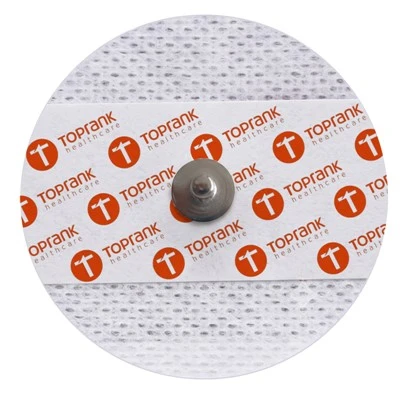
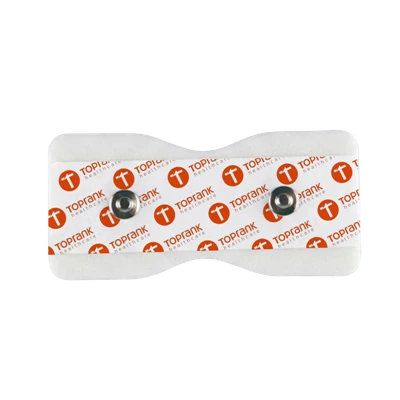
| Footprint Formats | Teardrop with Offset Snap / Φ 50mm Round | Integrated leadwire strain relief |
| Snap Terminal | Solid Stainless Steel 4.0mm Button Stud | Low-noise mechanical retention |