OEM Resting ECG Tab Electrodes | Fish-Tail Diagnostic Pads | TOP-RANK
High-volume contract manufacturing for resting ECG tab electrodes. Engineered with tear-resistant PET carriers, Ag/AgCl ink traces, fast-coupling conductive hydrogels, and universal alligator clip compatibility. Compliant with ANSI/AAMI EC12.
Clinical Rationale & Operating Profile
Routine 12-lead diagnostic resting electrocardiography across outpatient cardiology departments, emergency triage bays, and high-throughput health checkup centers operates on tight procedural timing. Unlike multi-day telemetry in the ICU, a resting ECG examination is a brief, high-volume procedure: the clinician has a narrow 10-second acquisition window to capture baseline cardiac electrical activity, calculate PR/QT intervals, and rule out acute myocardial infarction. In this high-turnover environment, clinicians cannot waste minutes on abrasive skin prep or fumbling with rigid metal snap studs.
Standard snap-on electrodes are ill-suited for rapid resting exams: pushing female leadwire sockets onto metal studs presses uncomfortably into the patient's intercostal spaces. Furthermore, standard multi-patient snap cables are heavy, pulling downward and loosening electrodes during deep inspiration. When low-grade tab electrodes are substituted, other failure modes emerge: paper or low-tensile polymer backings buckle under the mechanical clamping weight of alligator clips, while cheap silver inks scratch and flake off beneath clip teeth, causing high contact impedance, baseline wandering, and 50/60 Hz mains interference.
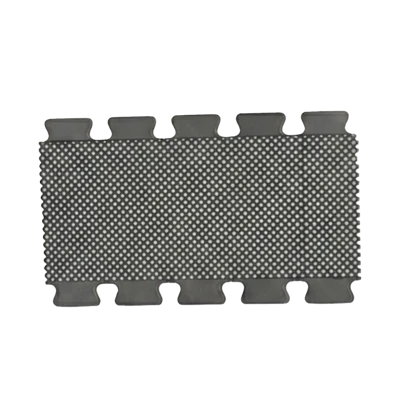
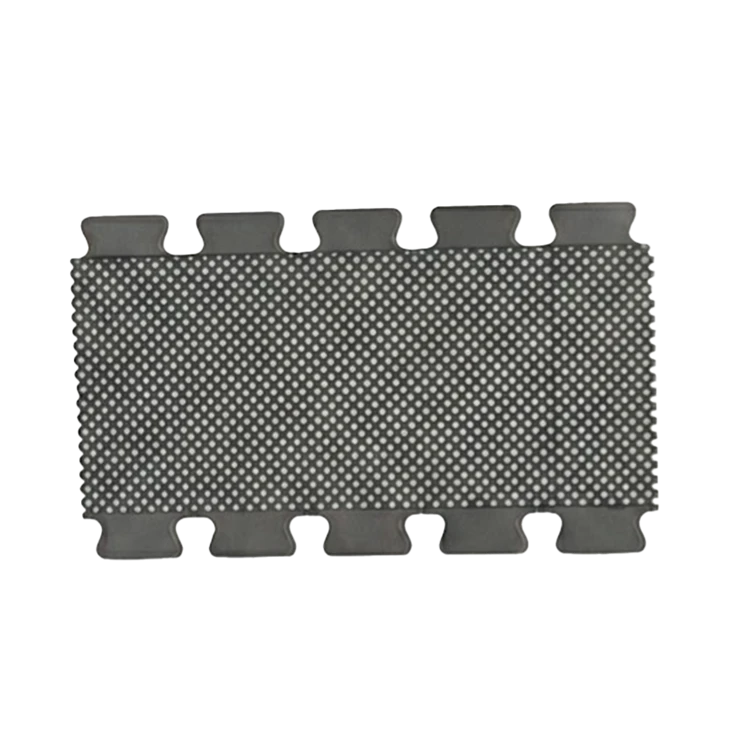
This resting ECG tab electrode platform replaces bulky metal studs with a flat, tabbed profile engineered for universal alligator and crocodile clip adapters. Built on a dimensionally stable, biaxially-oriented polyester (PET) film printed with a micro-sputtered or thick-film stoichiometric silver/silver-chloride (Ag/AgCl) conductive ink, the sensor pairs with an instant-wetting ionic solid hydrogel. The assembly establishes sub-100 Ohm contact impedance within 2 seconds of placement without skin abrasion. After recording, the pad peels away cleanly (2.5N to 3.8N/25mm) with zero sticky residue. We manufacture these disposable diagnostic consumables in 10-pad procedural strip cards for hospital procurement networks, physical examination chains, and ECG machine OEMs globally.
Roll-to-Roll Printing & Converting Workflow
The industrial fabrication of resting ECG tab electrodes takes place on high-speed roll-to-roll (R2R) printing and converting lines inside ISO 13485-certified Class 8 cleanrooms. The base substrate is optical-grade, heat-stabilized polyester (PET) film (75μm to 100μm caliper). The top surface receives an inline corona pre-treatment to raise its critical surface energy (>48 dynes/cm), ensuring molecular-level bonding with conductive inks.
The web passes into multi-station rotary screen or precision rotogravure printing decks. A conductive ink compounded with sub-micron silver flake and stoichiometric silver chloride particles in a thermoplastic resin binder is printed in continuous stripes. This ink layer is formulated for high mechanical ductility, enabling the dried conductive trace to flex beneath alligator clips without micro-fracturing. The moving web travels through a multi-zone, clean-air impingement drying tunnel (120℃ to 140℃) to drive off organic solvent vehicles while preventing thermal shrinkage in the PET carrier.
A fast-wetting, skin-friendly solid hydrogel is slot-die extruded across the lower sensing zone of the Ag/AgCl stripe, leaving the upper 10mm bare to serve as the non-adhesive conductive connection tab. The hydrogel web is covered with a fluorosilicone-coated PET release liner. High-speed rotary converting dies slit, perforate, and kiss-cut the web into standard clinical strip cards-typically 10 electrodes per sheet card.
The finished cards pass through automated optical inspection (AOI) systems that monitor silver layer continuity, coating boundaries, and hydrogel placement tolerances before being sealed into airtight multi-layer barrier foil pouches. The minimum OEM contract production run is 300,000 units.
Core Engineering Assets
-
High-Tenacity PET Backbone & Micro-Anchored Ag/AgCl Ink (Zero Flaking Under Serrated Clip Clamping)
During 12-lead diagnostic recording, nurses attach spring-loaded alligator or crocodile clips onto the electrode tab. On low-cost paper tabs, the clip's serrated teeth bite through the carrier, severing the conductive trace. On cheap plastic tabs, brittle silver ink flakes away under clamping force, breaking electrical continuity and creating an open-circuit failure. We engineer our tab electrodes with a high-modulus, biaxially-oriented 75μm PET substrate coated with a highly flexible Ag/AgCl ink system. The ink's polymeric binder forms an interpenetrating mechanical bond with the corona-treated PET surface, creating a ductile conductive layer. The tab withstands heavy alligator clamping force (>5.0N) and axial lead tugging without paint peeling, trace fracturing, or electrical resistance spikes.
-
Instant-Wetting Ionic Hydrogel Matrix (Instantaneous Signal Acquisition Without Skin Abrasion)
Standard monitoring hydrogels are thick and slow-hydrating, often requiring up to two minutes to wet the high-impedance stratum corneum before baseline noise settles down-a delay that slows down high-throughput diagnostic wards. Our resting tab formulation uses a low-crosslink, fast-wetting solid hydrogel balanced with active ionic chloride carriers (>3.5% NaCl equivalent). Upon skin contact, the hydrogel displaces air pockets and flows into microscopic skin fissures within seconds, establishing an ionic bridge with epidermal electrolytes. It drops AC contact impedance below 100Ω at 10Hz almost instantaneously, suppressing baseline drift (<1.5mV) and 50/60Hz mains interference without requiring abrasive skin pastes or alcohol skin wipes.
-
Snapless Low-Profile Tab Geometry (Rapid Peel-and-Stick Ergonomics for High-Throughput Diagnostic Suites)
Pushing conventional snap cables onto snap studs delivers an uncomfortable downward thrust (>15N) against an infant's or frail elderly patient's ribs. Our flat tab design completely eliminates vertical impact forces during lead hookup. Alligator clips glide horizontally onto the tab in a single motion without pushing down against the patient's skin. The electrode features an optimized rectangular footprint (23× 34mm) that fits narrow intercostal spaces across V1 through V6 precordial placements, even on small pediatric or cachectic chests. The low-profile geometry eliminates skin pressure bruising while preventing adjacent precordial leads from short-circuiting against each other.
Clinical & Commercial Deployments
Hospital Outpatient Cardiology Clinics & High-Throughput Health Checkup Centers
High-volume disposable electrodes deployed for standardized 12-lead resting diagnostic ECG acquisitions, supporting hundreds of patient checkups per day with rapid peel-and-stick application and clean removal.
Emergency Departments (ED) & Rapid Chest Pain Units (CPU)
Immediate-response diagnostic electrodes stocked in triage carts and crash kits for rapid STEMI identification and immediate door-to-balloon time optimization in suspected coronary syndrome patients.
Ambulance Fleets & Pre-Hospital Emergency Care Networks
Disposable diagnostic tab strips stored alongside portable 12-lead diagnostic telemetry units for quick out-of-hospital resting ECG acquisition and cellular telemetry transmission to receiving emergency facilities.
Packaging Configurations & Transnational Logistics
-
Procedural 10-Pad Strip Cards & Zero-MVTR Hermetic Pouching : Diagnostic 12-lead resting exams follow strict 10-electrode setups (4 limb leads plus 6 precordial leads). Tab electrodes are packaged as 10-pad kiss-cut strips on silicone-coated PET cards. Ten cards (100 electrodes total) are sealed inside puncture-resistant multi-layer PET/AL/PE foil pouches with 8mm hermetic heat seals. This packaging keeps Moisture Vapor Transmission Rates (MVTR) near zero, preventing volatile hydrogel desiccation and guaranteeing a 36-month shelf life.
-
Transnational Logistics Resilience : Base high-tensile PET corona treating, precision Ag/AgCl conductive ink gravure printing, and fast-wetting hydrogel synthesis execute natively inside our primary China facility. High-speed multi-track rotary kiss-cutting, strip-card slitting, cleanroom barrier packaging, and export master palletization route through our Vietnam hub, shielding international B2B diagnostic distributors from regional medical consumable import tariffs.
Regulatory, Pediatric Safety & Quality Systems
-
ANSI/AAMI EC12 Comprehensive Electrical Clearance : Master production lots undergo testing in accredited independent laboratories confirming strict compliance with ANSI/AAMI EC12:2000/(R)2020 requirements, verifying AC impedance (<100Ω), DC offset voltage (<1.5mV), baseline noise floor (<15μVp-p), and rapid offset drift recovery.
-
ISO 10993 Dermal Biocompatibility Profile : Adhesives and hydrogels undergo continuous testing in certified clinical laboratories against ISO 10993-5 (Cytotoxicity Grade 0), ISO 10993-10 (Sensitization: 0% allergic response), and ISO 10993-23 (Primary Dermal Irritation Index = 0.0). The entire assembly is 100% natural rubber latex-free, DEHP-free, and leaves zero sticky residue upon rapid removal.
-
MDSAP & ISO 13485 Certified Manufacturing Controls : Ink compounding rooms, continuous slot-die decks, and rotary converting lines operate strictly within facilities certified to ISO 13485:2016 and MDSAP regulatory frameworks, delivering unbroken lot-serialization from raw PET resin and silver precursors to outbound shipping cartons.
Technical FAQ
Q: Why do tab electrodes serve as the clinical gold standard for resting 12-lead diagnostic ECGs rather than conventional snap electrodes?
A: Resting diagnostic ECG workflows are defined by procedural speed and zero patient discomfort. Standard snap electrodes introduce clinical friction: nurses must press downward with substantial force (>15N) to snap lead cables onto metal studs, which can cause pain in frail or elderly patients. Furthermore, heavy multi-lead snap cables drag downward on the chest, often peeling electrodes away during deep inspiration. Resting tab electrodes solve these issues. Alligator clips slide horizontally onto the thin, non-metallic PET tabs in a fraction of a second with zero downward thrust against the patient's ribs. The flat profile (<1.0mm) conforms to intercostal contours without pinching or levering, and the integrated 10-pad strip format enables instant bedside distribution, reducing total prep and examination time by over 50% compared to individual snap pads.
Q: How does the fast-transduction hydrogel maintain a stable baseline without abrasive skin prep paste?
A: Conventional monitoring electrodes use high-crosslink hydrogels that require minutes to soften and absorb epidermal moisture to reach full ionic conductivity; without abrasive prep paste to strip off the oily, high-impedance stratum corneum, they suffer from high contact resistance (>2,000Ω) and pronounced baseline wander. Our resting tab electrode employs a low-crosslink, fast-wetting solid hydrogel matrix saturated with mobile, physiological chloride electrolytes (>3.5% NaCl equivalent). When pressed against unprepared skin, the soft gel matrix immediately deforms into microscopic dermal valleys, displacing interfacial micro-air bubbles and establishing an ionic bridge with cutaneous sweat ducts within seconds. This rapid ionic transfer provides an AC contact impedance below 100Ω at 10Hz and limits DC offset voltage to less than 1.5mV. The stoichiometric Ag/AgCl ink interface operates with near-zero chemical overpotential, preventing baseline drift and blocking 50/60 Hz mains interference without requiring abrasive pastes.
Hospital cardiology diagnostic heads, outpatient physical examination procurement directors, and electrocardiograph hardware OEMs can request ANSI/AAMI EC12 compliance test dossiers, alligator-clip pull-force testing logs, and unbranded 10-pad evaluation sample cards.
👉 [Request Resting ECG Tab Electrode Samples]
Hot Tags: resting ecg tab electrodes, China resting ecg tab electrodes manufacturers, suppliers, factory, Ecg Electrode, Ecg Electrode Stickers, electrode stickers
Technical Specifications
| Analytical Parameter | Engineering Baseline | Testing Standard |
| Diagnostic Mandate | ANSI/AAMI EC12:2000/(R)2020 | Disposable ECG electrodes |
| Substrate Carrier | 75μm - 100μm Biaxially-Oriented PET Film | Anti-buckling tensile strength |
| Electrochemical Core | Thick-Film Stoichiometric Ag/AgCl Ink Matrix | Sheet resistance < 0.2Ωsq |
| Electrolyte Medium | Instant-Wetting Fast-Transduction Solid Gel | High-hydration acrylic network |
| AC Contact Impedance | < 100 Ohms at 10Hz | AAMI EC12 limit < 3,000Ω |
| DC Offset Voltage | < 1.5 mV | AAMI EC12 limit < 100 mV |
| Combined Noise Floor | < 15μVp-p (0.05Hz to 150Hz) | High-gain diagnostic amplifier |
| Alligator Clamp Retention | Withstands > 5.0N Clamping \& Pull Force | Zero flaking under serrated teeth |
| Dermal Dynamic Peel | 2.5N - 3.8N / 25mm (Gentle Release) | ASTM D3330 |
| Footprint Formats | 23× 34mm (Tab Area: 23× 10mm) | Universal diagnostic format |