OEM Neonatal Pre-Wired ECG Electrodes | NICU EKG Pads | TOP-RANK
B2B contract manufacturing for neonatal pre-wired ECG electrodes. Engineered with snap-free flexible leadwires, non-trauma hydrogels, radiotranslucent options, and sub-60 Ohm impedance.
Clinical Rationale & Physiological Operating Profile
Continuous cardiovascular and respiratory telemetry inside Neonatal Intensive Care Units (NICU) presents severe physiological constraints. Extremely low birth weight (ELBW, <1,000g) premature infants possess an underdeveloped stratum corneum barely two to three cell layers thick, completely lacking mature dermal-epidermal anchoring fibrils. Standard adult or pediatric snap electrodes introduce severe clinical hazards in this setting: the raised metal snap stud creates a localized pressure point that, when an infant lies supine or prone on the connector, generates high focal pressure (>32 mmHg) that rapidly triggers ischemic decubitus ulcers and permanent tissue necrosis. Furthermore, pushing snap-on leadwires directly downward onto an infant's chest delivers dangerous mechanical blunt force to cartilaginous ribs and underlying pulmonary structures.
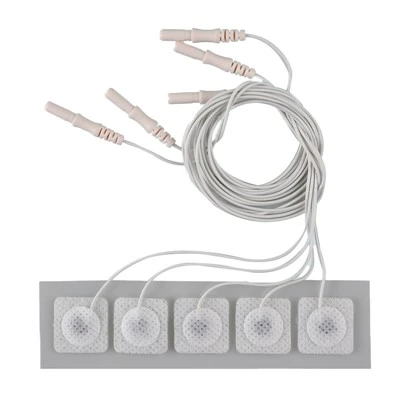
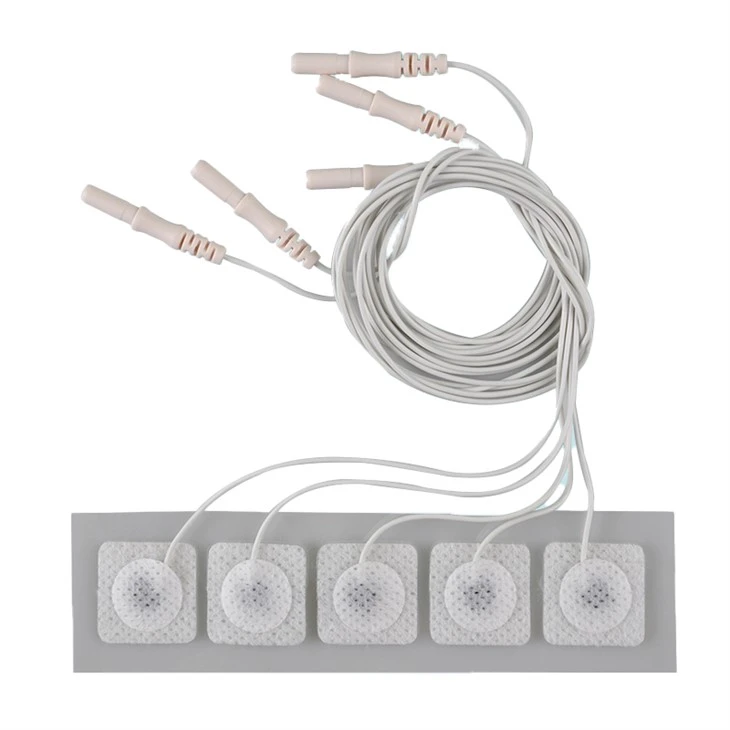
This pre-wired neonatal electrode completely eliminates rigid metal hardware. Fine, multi-strand flexible tinsel wires are bonded directly into the conductive substrate during lamination. Paired with a low-shear, skin-friendly ionic hydrogel (1.2Nto 2.2N/25mm peel strength) and a breathable spunlace non-woven or hydrocolloid carrier, the sensor conforms to tiny chest walls (22× 22mm footprint) without causing Medical Adhesive-Related Skin Injury (MARSI), epidermal stripping, or cable-drag displacement. We contract-manufacture these specialized neonatal consumables for children's hospital supply networks, patient monitoring OEMs, and pediatric kit packagers worldwide.
Micro-Bonding & Cleanroom Converting Kinetics
Industrial manufacturing of neonatal pre-wired ECG electrodes requires ultra-clean handling, micro-crimping automation, and low-tension rotary converting inside ISO 13485 cleanroom suites. A carrier web of hydro-entangled 45g/m² spunlace non-woven or ultra-thin medical hydrocolloid is pattern-coated with a hypoallergenic, skin-friendly acrylic adhesive. In parallel, multi-strand silver-plated copper tinsel wires or carbon-filled conductive filaments are unspooled through precision tension-control feeders. The conductive strands are fanned out and mechanically staked onto a micro-sputtered silver/silver-chloride (Ag/AgCl) conductive vinyl eyelet using automated low-clearance ultrasonic welding or conductive silver adhesive bonding.
To eliminate sharp edges that could bruise an infant's skin, a soft elastomeric low-profile strain boot is laminated over the junction point, spreading pulling forces across the flexible fabric backing rather than the electrical connection. A gentle, high-water polyacrylamide hydrogel or skin-protective solid gel loaded with physiological electrolyte buffers is dispensed through slot-die heads onto the sensing core at an exact thickness of 0.8mm to 1.0mm.
Servo-driven rotary dies cut final neonatal footprints with smooth, rounded corners. The electrodes are routed into sets of three (or four), bundled with non-adhesive silicone ties to prevent cable knotting, mounted onto siliconized release film, and sealed in airtight zero-MVTR foil barrier pouches. The minimum contract manufacturing threshold is 10,000 sets.
Core Engineering Assets
-
Zero-Profile Snapless Architecture (Decubitus Ulcer & Blunt Pressure Elimination)
Standard adult and pediatric electrodes rely on an elevated metal stud (4mm to 6mm tall) designed to accept female snap cables. If a tiny infant rolls or is placed prone on a conventional snap, the hard metal connector concentrates the infant's entire localized body weight onto a tiny point, collapsing dermal capillary blood flow and causing deep decubitus pressure sores within 4 to 6 hours. Our neonatal architecture completely eliminates the metal snap post. The micro-tinsel leadwire is bonded horizontally inside the thin laminates, maintaining a flat, flexible top profile under 1.5mm total thickness. When the infant lies on the pad, mechanical pressure is distributed across the entire soft foam or spunlace surface area, eliminating pressure sores and avoiding any downward blunt force during lead attachment.
-
Low-Shear Bio-Friendly Hydrogel Chemistry (Zero-Avulsion MARSI Defense for ELBW Skin)
The anchoring fibrils connecting the epidermis to the dermis in preterm neonates are sparse and weak; aggressive medical adhesives pull the entire epidermis away with the pad upon removal, creating painful weeping wounds that expose the infant to sepsis. We formulate our neonatal hydrogel with an engineered balance of high internal cohesion and low dynamic peel strength (1.2N to 2.2N/25mm). The gel flows into skin micro-fissures to establish low-noise biopotential contact, but releases smoothly under gentle peel angles without separating the stratum corneum or stripping vellus hairs. The non-toxic, non-irritating matrix maintains a stable ionic contact impedance (<60Ω) throughout extended monitoring shifts while preserving dermal integrity during routine dressing changes.
-
Incubator Radiolucent Lead Option & Micro-Strain Boot (Uninterrupted X-Ray & Cable Drag Defense)
Critically ill neonates undergo frequent portable bedside X-rays inside incubators to verify endotracheal tube depth, umbilical venous catheters, or central line positioning. Standard metallic leadwires and copper eyelets cast dense, opaque white shadows that obscure tiny lungs and cardiac borders, forcing nurses to repeatedly remove and replace electrodes. We offer a fully radiotranslucent configuration utilizing metal-free carbon-composite leadwires and silver-free polymer traces that are virtually invisible under 60kV diagnostic radiation. Additionally, each wire-pad transition is reinforced with an automatedly molded elastomeric strain collar, withstanding over 15N of continuous axial tension when cables snag on incubator access ports, preventing lead separation.
NICU & Pediatric Inpatient Deployments
Level III & Level IV Neonatal Intensive Care Units (NICU)
Standardized 3-lead monitoring sets used by NICU nurses for continuous heart rate, apnea, and impedance respiration telemetry in micro-preemie and low-birth-weight infants.
Pediatric Intensive Care & Congenital Cardiac Surgery (PICU)
Low-profile, high-signal-fidelity pre-wired electrodes applied during post-operative stabilization following neonatal cardiac repairs to capture clean waveforms without baseline artifact.
Neonatal Transport Incubators & Air-Ambulance Fleets
Tangle-resistant, pre-wired electrode packs deployed by neonatal transport teams for rapid patient hookup inside cramped transport pods during ground and helicopter emergency transfers.
Precision Packaging & Global Supply Routing
-
Tangle-Free Lead Grouping & Zero-MVTR Hermetic Pouching : In high-acuity resuscitation, nurses cannot waste seconds untangling knotted leadwires. Each set of 3 or 4 color-coded leads is wound using automated winding fixtures and secured with soft silicone bands onto siliconized PET release carriers. The assemblies are hermetically sealed into puncture-resistant multi-layer PET/AL/PE foil pouches with 8mm solid perimeter seals, driving Moisture Vapor Transmission Rates (MVTR) near zero to preserve hydrogel moisture and electrical parameters over a 36-month sterile shelf life.
-
Transnational Logistics Resilience : Base sensor Ag/AgCl coating, gentle hydrogel chemical formulation, and ultra-flexible tinsel wire extrusion run natively inside our primary China facility. Sub-miniature leadwire ultrasonic welding, DIN safety socket termination, cleanroom packaging, and master carton palletization execute through our Vietnam hub, protecting global B2B procurement networks from regional medical component import tariffs.
Pediatric Safety, Regulatory & Quality Systems
-
Pediatric ISO 10993 Dermal Biocompatibility Clearance : Finished neonatal electrode assemblies undergo continuous testing in accredited independent clinical laboratories against ISO 10993-5 (Cytotoxicity Grade 0), ISO 10993-10 (Sensitization: 0% allergic response), and ISO 10993-23 (Primary Dermal Irritation Index = 0.0), confirming zero erythema, zero cellular toxicity, and 100% latex-free, phthalate-free (DEHP-free), and BPA-free compliance for fragile neonates.
-
MDSAP & ISO 13485 Manufacturing Oversight : Micro-wire termination lines, gel dosing machines, and sealing bays operate under certified ISO 13485:2016 and MDSAP regulatory frameworks. Testing guarantees strict electrical continuity, pull-out force validation, and ANSI/AAMI EC12 compliance, backed by unbroken electronic batch records from bare copper spool to outbound shipping pallets.
Technical FAQ
Q: Why are pre-wired electrodes clinically mandatory for premature infants instead of standard snap-on electrodes?
A: Standard snap electrodes present two distinct mechanical hazards for premature infants. First, the elevated metal snap stud (4mm - 6mm profile) acts as a rigid localized block; when an infant lies on it, the pressure exceeds capillary closure pressure, cutting off blood flow and causing ischemic decubitus ulcers within hours. Second, connecting a snap leadwire requires nurses to press down with significant thumb force directly onto the infant's chest, which can bruise fragile ribs or cause respiratory distress. Our pre-wired electrodes bond flexible leadwires flat within the pad substrate with zero raised hardware, eliminating focal pressure points and avoiding any downward push forces during clinical hookup.
Q: How does the radiotranslucent leadwire option eliminate visual interference during portable incubator X-ray imaging?
A: Traditional ECG electrodes utilize copper wires, tin-plated brass snaps, and metallic eyelets. Because these dense metals have high atomic numbers, they absorb X-ray photons and cast bright, radio-opaque shadows across the radiographic film, frequently obscuring the carina, endotracheal tube tips, and catheter pathways in tiny infant chests. Our radiotranslucent model replaces all metallic components with conductive carbon-composite fiber bundles and conductive carbon-impregnated polymer eyelets. These carbon-based materials match the radio-density of biological soft tissue, becoming virtually invisible under standard diagnostic X-ray radiation (50kV to 70kV), allowing physicians to evaluate cardiopulmonary structures and line placements clearly without removing electrodes.
Neonatal intensive care procurement directors, pediatric hospital network buyers, and patient monitoring hardware OEMs can request ANSI/AAMI EC12 electrical validation dossiers, ISO 10993 pediatric biocompatibility reports, and unbranded evaluation sample sets in multiple footprint configurations.
👉 [Request Neonatal Pre-Wired ECG Electrode Samples]
Hot Tags: neonatal pre-wired ecg electrodes, China neonatal pre-wired ecg electrodes manufacturers, suppliers, factory, Ecg Electrode, Ecg Electrode Stickers, electrode stickers
Technical Specifications
| Analytical Parameter | Target Baseline | Testing Standard |
| Footprint Dimensions | 22×22mm Square / Φ 25mm Round | Pre-term & full-term thoracic anatomy |
| Terminal Integration | Snap-Free Direct Pre-Wired Lead | Bonded multi-strand tinsel wire |
| Leadwire Specifications | 45cm or 60cm Length / Ultra-Flexible PVC | Stranded tinsel wire |
| Connector Standard | DIN 42802 Φ 1.5mm Safety Socket | Sub-miniature touch-proof connector |
| Color Coding | AHA (White/Black/Red) or IEC (Red/Yellow/Green) | Extruded solid-color insulation |
| AC Contact Impedance | < 60 Ohms at 10Hz | ANSI/AAMI EC12 electrode performance |
| Dermal Peel Adhesion | 1.2N - 2.2N / 25mm (Low Shear) | ASTM D3330 delicate-skin protocol |
| Radiolucency Rating | Fully Radiotranslucent (Carbon Leadwire Option) | Near-zero radiopacity under 60kV X-ray |
| DC Offset Voltage | < 2.0 mV | Micro-sputtered stoichiometric Ag/AgCl |