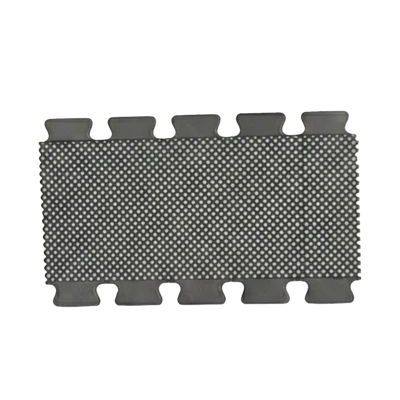

OEM Holter ECG Monitoring Electrodes | 24-72h Ambulatory Pads | TOP-RANK
Medical B2B contract manufacturing of 24-to-72-hour Holter ECG monitoring electrodes. Formulated with sebum-resistant crosslinked acrylic adhesives, low-polarization Ag/AgCl sensors, non-desiccating hydrogels, and sub-70 Ohm impedance across extended daily ambulation.
Product Overview
Holter electrocardiography monitors cardiac biopotentials across extended, uncontrolled timeframes (24, 48, or 72 continuous hours) while outpatients go about daily routines-walking, working, sleeping, and perspiring. In B2B cardiovascular supply channels, these sensors fulfill automated diagnostic capture for paroxysmal atrial fibrillation, transient ischemic episodes, unexplained syncope, and post-cardiac ablation stability.
Generic diagnostic pads fail in outpatient ambulatory settings:
- Sebum-Induced Adhesive Dissolution: Over 24 to 72 hours, sebaceous glands continuously secrete natural skin lipids (triglycerides, squalene, and free fatty acids). These lipids dissolve standard linear acrylic adhesives, liquefying the pad border and causing nocturnal edge peel when clothing rubs against the sensor.
- Hydrogel Desiccation & Impedance Spikes: Open-sponge liquid gels or poorly crosslinked hydrogels lose moisture into ambient air, driving contact impedance from 50 Ohm to over 1,500 Ohm. This spike generates baseline wander within the 0.05 Hz to 1.0 Hz bandwidth, causing automated Holter analysis software to record false-positive pauses, dropped QRS complexes, or artifact-induced ST depressions.
- Electrode Displacement During Sleep: Involuntary rolling and mattress friction exert lateral shear forces against lead snaps. If the carrier lacks mechanical dampening, the motion moves the electrochemical boundary, causing signal dropouts that ruin diagnostic runs.
This Holter ECG monitoring electrode platform combines a crosslinked, sebum-resistant pressure-sensitive acrylic adhesive perimeter with an anti-desiccating, solid-phase conductive hydrogel and an ultra-low-polarization silver/silver-chloride (Ag/AgCl) sensor core. The electrode holds contact impedance below 70 Ohm at 10Hz and restricts DC baseline drift below 0.1 mV per 24 hours. We contract-manufacture these multi-day ambulatory consumables for cardiology diagnostic services, Holter recorder manufacturers, and clinical trial research networks.
Raw Keywords: Holter ECG electrodes, 24-48 hour ambulatory monitoring pads, dynamic electrocardiography sensor.
Technical & Engineering Description
The industrial manufacturing of Holter ECG monitoring electrodes combines automated roll-to-roll (R2R) web processing, high-density terminal cold-staking, precision slot-die hydrogel extrusion, and high-speed rotary die-cutting inside ISO 13485-certified Class 8 cleanrooms. The structural sequence starts with a 1.0mm crosslinked closed-cell polyethylene (PE) foam substrate (65 kg/m³ density) or a hydrophobic-treated polyester-viscose spunlace textile.
The skin-contact face is pattern-coated with a lipophilic-resistant, medical-grade pure acrylic pressure-sensitive adhesive. The adhesive polymer is crosslinked using multi-functional monomers that build an interconnected matrix, preventing natural skin sebum and squalene from plasticizing the polymer chains.
The web passes into an automated punching bay where central sensor eyelet openings are pierced. Precision pneumatic indexing heads feed solid 304 stainless steel 4.0mm studs and vacuum-sputtered stoichiometric silver/silver-chloride (Ag/AgCl) ABS eyelets. A multi-ton cold-staking press flares the eyelet barrel into a wide mechanical flange, crimping the metal stud, conductive eyelet, and carrier backing into an airtight seal that eliminates intermittent contact noise.
A solid-phase, non-desiccating hydrogel-synthesized with pharmaceutical-grade glycerin humectants, purified water, non-residual crosslinkers, and physiological sodium chloride electrolyte buffers-is extruded into the eyelet well via a temperature-controlled slot-die manifold at a calibrated thickness of 0.90mm to 1.05mm. The formulation depresses water activity (Aw < 0.65), slowing moisture evaporation when exposed to warm skin for multiple days. High-speed rotary converting dies cut finished anatomical geometries with rounded corners to resist snagging on clothing. Finished electrodes are mounted on siliconized PET release liners in sets of 5, 7, or 10 pads, pass through automated optical inspection (AOI) to verify stud concentricity and gel boundaries, and are sealed into airtight multi-layer barrier foil pouches. The minimum OEM contract production run is 300,000 units.
Key Features
-
Sebum-Lipid Resistant Cross-Linked Adhesive Matrix (Zero Nocturnal Edge Delamination on Sebaceous Skin)
Natural sebum secretion across the sternum and intercostal spaces presents an aggressive chemical environment for medical adhesives: squalene and fatty acids diffuse into ordinary linear acrylics, acting as plasticizers that soften the adhesive and destroy shear cohesion. During sleep, bedsheet friction and body rolling easily peel loosened pads off the patient's skin. We address this by formulating the adhesive with a thermoset crosslinking system that builds an interconnected polymer network. The crosslink density blocks hydrophobic lipid infiltration, maintaining an active shear bond (5.0N to 6.8N / 25mm) through 72 hours of exposure to sebaceous perspiration. The pad perimeter stays anchored against patient movement without rolling up at the edges.
-
Stoichiometric Sputtered Ag/AgCl with Low DC Drift (<0.10mV/24h for Algorithmic Arrhythmia Detection)
Automated Holter analysis software evaluates thousands of cardiac complexes, relying on mathematical baseline stability to detect transient ST-segment depressions (>= 0.1mV) and pauses. Chemical impurities or thin non-stoichiometric chloride layers on sensor eyelets generate unstable galvanic half-cell potentials that drift continuously across the test period. When the DC baseline drifts, automated analysis software registers false ischemic episodes or loses track of tiny P-waves. We eliminate this by depositing a stoichiometric Ag/AgCl alloy via controlled vacuum magnetron sputtering over micro-porous ABS eyelets, establishing a uniform 2.5-micron chloride layer depth. The non-polarizable semi-cell supports reversible redox exchange, holding DC baseline drift below 0.10 mV per 24 hours. The monitor records a flat diagnostic trace, preventing false algorithmic artifact triggers.
-
Osmotic-Balanced Anti-Desiccation Hydrogel Formulation (Sub-70 Ohm Impedance through 72-Hour Ambient Exposure)
Open-pore sponge liquid gels cannot support multi-day Holter monitoring: ambient air circulation and patient body heat evaporate water out of the foam matrix within 18 to 24 hours, causing contact impedance to spike and terminating signal capture. Furthermore, mechanical pressure during sleep squeezes free liquid gel out of the sponge reservoir, pooling across the skin and shorting adjacent leads. Our formulation utilizes a solid-phase viscoelastic hydrogel loaded with pharmaceutical glycerin humectants. The glycerin molecules form tight hydrogen bonds with the water phase, depressing water activity (Aw < 0.65) to slow ambient evaporation on warm skin. The hydrogel micro-wets skin crevices without liquefying under body heat, maintaining an AC contact impedance below 70 Ohm at 10Hz through 72 hours of open-air wear.
Applications
Outpatient 24/48-Hour Holter Diagnostic Services
Standard disposable electrodes deployed alongside portable 3-lead, 5-lead, and 12-lead Holter recorders (compatible with GE SEER, Mortara H3+, Philips DigiTrak, and Schiller platforms) to record ambulatory arrhythmias and syncope events during unsupervised everyday activities.
Post-Cardiac Ablation & Structural Heart Intervention Follow-Up
Extended 72-hour monitoring electrodes prescribed for patients recovering from atrial fibrillation ablation, watchman left atrial appendage closure, or TAVR to catch late-onset atrioventricular blocks and paroxysmal tachycardia without hospital readmission.
Pharmaceutical Clinical Trials & Cardiac Safety Pharmacology
High-fidelity biopotential sensors deployed in multi-center Phase I-III clinical drug studies, tracking QT/QTc interval variations and pro-arrhythmic drug effects over 48 to 72 hours of continuous baseline recording.
OEM & Private Label
-
Multi-Lead Channel Packaging : Holter diagnostic procedures require structured multi-lead applications. Electrodes are supplied in clinical configurations: 5-pad, 7-pad, or 10-pad strips mounted on fluorosilicone PET release cards. Sealed in puncture-resistant multi-layer PET/AL/PE foil pouches with 8mm perimeter heat welds and airtight reclosable zip locks, the packaging maintains zero moisture vapor transmission, preventing hydrogel dry-out and terminal tarnishing over a 36-month shelf life.
-
Two-Center Supply Chain Mechanics : Base polymer compounding, lipophilic-resistant acrylic adhesive synthesis, Ag/AgCl thin-film magnetron sputtering, and high-cohesion hydrogel UV polymerization execute natively inside our primary China facility. Automated multi-track rotary converting, snap staking, card strip assembly, cleanroom pouch hermetic sealing, and master export carton palletization route through our Vietnam hub, shielding international B2B buyers from regional medical consumable tariffs and Section 301 duties.
Certifications
-
ANSI/AAMI EC12 Stringent Compliance : Master production lots undergo testing in accredited independent testing laboratories confirming strict compliance with ANSI/AAMI EC12:2000/(R)2020 requirements, verifying AC impedance (< 70 Ohm), DC offset voltage (< 0.8 mV), defibrillation overload recovery (residual < 12 mV within 2.0 seconds), and multi-day DC drift limits.
-
ISO 10993 Dermal Biocompatibility Profile : Direct-contact adhesives and hydrogels undergo continuous testing against ISO 10993-5 (Cytotoxicity Grade 0), ISO 10993-10 (Sensitization: 0% allergic response), and ISO 10993-23 (Primary Dermal Irritation Index = 0.0). The entire assembly is 100% natural rubber latex-free, DEHP-free, and leaves zero gummy residue upon removal after 72 hours.
-
MDSAP & ISO 13485 Certified Manufacturing Controls : Synthesis reactors, automated slot-die coating lines, and cleanroom converting decks operate strictly within facilities certified to ISO 13485:2016 and MDSAP regulatory frameworks, delivering unbroken electronic lot-traceability from raw acrylic resins to outbound master cartons.
Technical FAQ
Q: Why does automated Holter analysis software generate excessive false-positive arrhythmia alarms when using standard resting or monitoring electrodes?
A: Automated Holter analysis algorithms evaluate 24-hour recordings using mathematical morphological filters to identify QRS complexes, calculate RR intervals, and evaluate ST-segment changes. Standard resting or monitoring electrodes use light adhesives and thin, non-stoichiometric chloride layers. As patients walk and sweat, the electrode-skin interface generates polarization potentials that drift within the 0.05 Hz to 1.0 Hz frequency bandwidth-the exact frequency window occupied by normal P-waves and ST-segments. When the electrical baseline swings up or down by more than 0.1 mV, the algorithm misinterprets the voltage offset as an ischemic ST-segment depression or misidentifies wandering baselines as prolonged pauses and ventricular premature beats. Holter ECG electrodes resolve this by pairing a vacuum-sputtered Ag/AgCl sensor half-cell with a low baseline drift rate (<0.10 mV / 24h). The electrical baseline stays flat throughout multi-day ambulation, enabling analysis algorithms to detect genuine ventricular ectopy and pauses without generating artifact-induced false alarms.
Q: Why is liquid gel contraindicated for 48-to-72-hour Holter monitoring, and how does high-cohesion solid hydrogel maintain electrical contact without desiccation?
A: Liquid gel relies on an open-cell sponge reservoir to deliver fluid electrolyte to the stratum corneum. In an outpatient setting over 48 to 72 hours, two failure modes occur: first, ambient airflow and skin warmth evaporate the water out of the open sponge within 18 to 24 hours, spiking contact resistance above 1,500 Ohm and causing signal dropouts; second, mechanical pressure during sleep compresses the sponge, squeezing free fluid past the adhesive perimeter, dissolving the border tack, and creating electrical bridges between adjacent precordial leads. Our Holter electrode utilizes a viscoelastic solid-phase hydrogel crosslinked into a high-cohesion polymer network. The formula is saturated with pharmaceutical-grade glycerin humectants that form multi-point hydrogen bonds with water molecules, depressing water activity (Aw < 0.65). This internal chemical bonding holds moisture inside the gel matrix through 72 hours of open-air exposure, while the elastic polymer lattice resists compressive displacement during sleep, maintaining a continuous sub-70 Ohm ionic bridge without leakage or desiccation.
Cardiology department directors, diagnostic Holter service managers, and cardiac monitoring hardware OEMs can request ANSI/AAMI EC12 full electrical validation dossiers, 72-hour dynamic skin peel test logs, and unbranded evaluation sample packs in 5-lead, 7-lead, or 10-lead strip configurations.
👉 [Request Holter ECG Electrode Evaluation Samples]
Hot Tags: holter ecg monitoring electrodes, China holter ecg monitoring electrodes manufacturers, suppliers, factory, Ecg Electrode, Ecg Electrode Stickers, electrode stickers
Specifications
| Analytical Parameter | Engineering Baseline | Testing Standard |
| Diagnostic Clearance | ANSI/AAMI EC12:2000/(R)2020 | Ambulatory biopotential sensors |
| Wear Duration | 24 to 72 Hours Continuous Ambulatory Wear | Outpatient multi-day protocol |
| Footprint Formats | Teardrop (45x50mm, 50x55mm) or Round (dia 48mm) | Low-profile edge contour |
| Substrate Carrier | 1.0mm Micro-Cell PE Foam / Coated Spunlace Cloth | Density 65 kg/m3 |
| Electrochemical Core | Stoichiometric Sputtered Ag/AgCl on ABS Core | Low polarizability |
| Electrolyte System | Anti-Desiccating Viscoelastic Solid Hydrogel | Low water activity Aw < 0.65 |
| AC Contact Impedance | < 70 Ohms at 10Hz | AAMI EC12 limit < 3,000 Ohm |
| DC Baseline Drift | Drift Rate < 0.10 mV / 24 Hours | Long-term DC stability |
| Lipid Shear Adhesion | 5.0N - 6.8N / 25mm on Sebum-Exudative Skin | ASTM D3330 modified |
| Terminal Stud | 4.0mm Solid 304 Stainless Steel Button Stud | Low-noise terminal |
| Packaging Barrier | Multi-Layer PET/AL/PE Foil with Resealable Zip | 36-Month shelf life |