
OEM Cloth ECG Electrodes | Breathable Non-Woven Pads | TOP-RANK
Medical-grade cloth ECG electrodes engineered for 96-hour continuous patient telemetry. Features dynamic Young's modulus matching to epidermal stretch, omnidirectional vapor exhaust (>3,500 g/m²/24h), low-noise Ag/AgCl sensors, and zero-maceration acrylic matrices.
Clinical Rationale & Operating Profile
In multi-day hospital monitoring-such as cardiology telemetry wards, ICU step-down units, and sub-acute medical floors-patients require continuous biopotential tracking lasting anywhere from 48 to 120 hours. Under these extended timeframes, skin physiology under the electrode carrier shifts dramatically. While impermeable closed-cell polyethylene (PE) foam electrodes are ideal for fluid-drenched operating theaters, placing foam over skin for multiple days creates a severe occlusive barrier. Transepidermal water loss (TEWL) cannot escape, causing sweat to pool beneath the impermeable foam. This trapped moisture induces stratum corneum hyperhydration and epidermal maceration, softening the skin barrier and fostering bacterial colonization that leads to severe contact dermatitis, pruritus, and painful Medical Adhesive-Related Skin Injury (MARSI).
Standard paper or low-grade textile electrodes fail when used for extended stays: fragile paper tears when patients turn in bed, while basic non-wovens lack dimensional stability, stretching along bias lines and pulling the conductive core away from the skin. Furthermore, if the adhesive layer lacks breathable micro-pores, natural perspiration emulsifies the polymer chains, causing edge curl and sudden electrode detachment midway through nocturnal arrhythmia monitoring.
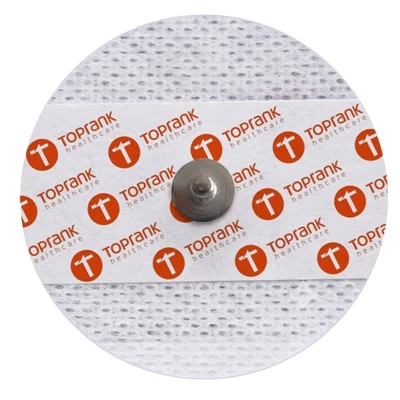
This cloth-backed ECG electrode platform is engineered specifically for extended cutaneous tolerance and long-term baseline stability. Built on an interconnected medical-grade spunlace non-woven substrate (55 - 65 g/m²), the fabric delivers a high Moisture Vapor Transmission Rate (MVTR > 3,200 g/(m²· 24h)), allowing epidermal perspiration to evaporate freely. Paired with a pattern-coated, hypoallergenic pure acrylic adhesive and a stoichiometric silver/silver-chloride (Ag/AgCl) sensor half-cell, the electrode maintains an ultra-low contact impedance (<80Ω) across 72 to 96 hours of continuous wear. The assembly conforms naturally to dynamic chest contours without skin shearing or baseline noise. We contract-manufacture these breathable consumables in bulk for hospital procurement networks, cardiac monitoring distributors, and patient telemetry hardware OEMs globally.
Manufacturing Kinetics & Converting Workflow
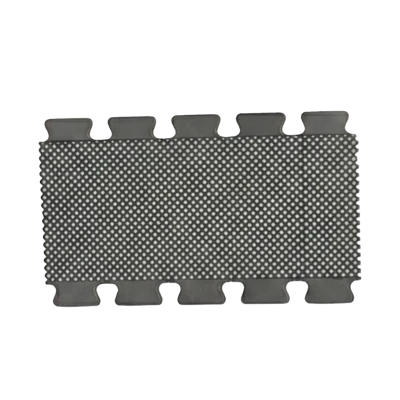
The industrial manufacturing of cloth ECG electrodes takes place within ISO 13485-certified Class 8 cleanrooms, combining roll-to-roll (R2R) web handling, automated multi-point terminal swaging, precision slot-die hydrogel extrusion, and high-speed rotary die-cutting. The carrier begins with master rolls of medical-grade polyester/viscose blend spunlace non-woven fabric (55 - 65 g/m²). The skin-contact face is pattern-coated with a hypoallergenic, solvent-free medical pure acrylic pressure-sensitive adhesive (PSA). The adhesive coating is applied in a discontinuous micro-lattice or porous configuration, preserving open spaces between fabric fibers to maintain high vapor permeability.
The web enters synchronized rotary punching stations where central sensor wells are cut. Heavy-tonnage pneumatic presses mechanically swage solid 304 stainless steel 4.0mm snap studs onto micro-porous ABS plastic eyelets coated with a vacuum-sputtered, stoichiometric silver/silver-chloride (Ag/AgCl) active layer. The swaging tooling flares the eyelet flange under calibrated tonnage, creating an airtight, play-free mechanical seal that interlocks the cloth carrier, conductive eyelet, and snap stud without crushing the surrounding non-woven fibers.
A high-cohesion, skin-friendly solid hydrogel-synthesized with pharmaceutical-grade polyols, balanced sodium chloride electrolyte buffers, and cross-linked polyacrylate networks-is slot-die extruded into the central conductive well at a calibrated thickness of 0.9mm to 1.1mm. The web passes through heavy rotary converting tooling that punches out finished anatomical teardrop or oval geometries with integrated lift tabs. Finished electrodes are shingled onto siliconized PET release cards in clinical multi-pad configurations (typically 3, 5, or 10 pads per card) and hermetically sealed into heavy-gauge multi-layer PET/AL/PE foil pouches to preserve hydrogel hydration. The minimum OEM contract production run is 300,000 units.
Core Engineering Assets
-
Multi-Directional Fiber-Glide Mechanics (Matching Dermal Elasticity & Canceling Interface Shear)
Rigid foam pads resist skin movement, concentrating shear forces along their perimeter and pulling on the epidermis until tissue tears or the pad lifts off. Our electrode uses a spunlace non-woven backing made of mechanically entangled viscose and polyester micro-filaments. The unbonded, hydroentangled fibers slide against one another under mechanical stress, allowing the fabric to stretch along bias angles (cross-direction elongation >65%). The backing matches the low Young's modulus of human skin ($0.1\text{--}0.2\text{ MPa}$), flexing naturally as the patient breathes, shifts in bed, or sits up. Interfacial shear stress drops below $0.4\text{ kPa}$, preventing the micro-tears, redness, and painful edge peeling common with rigid electrodes.
-
Capillary Micro-Lattice Adhesive Array (Active Evaporation Flux & Cutaneous Maceration Prevention)
EContinuous adhesive coatings turn non-woven fabrics into impermeable plastic barriers, trapping transepidermal water loss and causing stratum corneum hyperhydration. The softened skin then peels off when the pad is removed. We pattern-coat our medical acrylic adhesive in a discontinuous micro-dot lattice across the fabric backing. The adhesive dots anchor to dry skin (3.8N to }5.2\N/25mm peel strength), while the uncoated spaces between the dots form open vapor channels that connect with the porous fabric pores. Transepidermal moisture evaporates through these vents at rates exceeding 3,500g/(m²· 24h). The skin beneath the pad stays dry and oxygenated across 96 hours of continuous monitoring, preventing th
-
Anti-Desiccation High-Hydration Electrolyte Core (Continuous Sub-60 Ohm Impedance for 96 Hours)
Because cloth backings allow air to circulate freely, conventional water-based hydrogels dry out through the fabric, turning brittle and losing electrical contact within 24 to 36 hours. Our hydrogel addresses this with an interpenetrating polyacrylate network enriched with pharmaceutical polyol humectants. The polyol molecules form dense hydrogen bonds with the water phase, depressing the liquid's vapor pressure and cutting water loss across open fabric boundaries. The hydrogel micro-wets skin crevices, establishing an ionic conductive bridge with an AC contact impedance below 60Ω at 10Hz and a baseline drift slope under 0.15mV/hr. The gel retains over 85% of its hydration after 96 hours of open-air clinical monitoring, preventing the impedance spikes that trigger false arrhythmia alarms on telemetry monitors.
Clinical & Commercial Deployments
Cardiology Telemetry & Progressive Care Units (PCU)
Standardized breathable electrodes deployed for continuous multi-day wireless telemetry, monitoring ambulatory cardiac patients for transient arrhythmias, atrial fibrillation, and post-infarction stability without skin irritation.
Geriatric & Diabetic Inpatient Wards
Non-sensitizing long-wear electrodes applied to fragile, paper-thin elderly skin during chronic disease monitoring, preventing skin tears, blisters, and Medical Adhesive-Related Skin Injury (MARSI).
Multi-Day Holter Ambulatory ECG Monitoring
Lightweight, comfortable recording electrodes prescribed alongside Holter telemetry units, remaining flat and adhered through sweat, sleep, and daily activities to prevent lost data runs.
Packaging Configurations & Transnational Logistics
-
Clinical Multi-Pad Strips & Hermetic Foil Packaging : Cloth ECG electrodes are configured in hospital-standard strip formats: 3-pad or 5-pad tear-away cards for rapid bedside lead placement, or 30-to-50-pad bulk pouches for central nursing stations. Electrodes are mounted on silicone-treated PET release cards and hermetically sealed inside puncture-resistant multi-layer PET/AL/PE foil barrier pouches with solid 8mm perimeter heat welds. This packaging drives Moisture Vapor Transmission Rates (MVTR) near zero, preventing hydrogel desiccation and guaranteeing a 36-month shelf life.
-
Transnational Logistics Resilience : Base high-tensile spunlace slitting, breathable acrylic adhesive pattern-coating, and vacuum Ag/AgCl eyelet sputtering execute natively inside our primary China facility. Automated multi-track rotary converting, snap staking, strip-card packaging, and master export carton palletization route through our Vietnam hub, shielding international B2B hospital supply networks from regional medical consumable import tariffs.
Regulatory, Pediatric Safety & Quality Systems
-
ANSI/AAMI EC12 Electrical Performance Verification : Production master lots undergo continuous validation in accredited independent testing laboratories against ANSI/AAMI EC12:2000/(R)2020 requirements, confirming AC impedance (<80Ω), DC offset voltage (<1.0mV), defibrillation overload recovery slope (<1.0mV/s), and 5-shock sequence survivability.
-
ISO 10993 Dermal Biocompatibility Profile : Direct-contact adhesives and hydrogels undergo testing against ISO 10993-5 (Cytotoxicity Grade 0), ISO 10993-10 (Sensitization: 0% allergic response), and ISO 10993-23 (Primary Dermal Irritation Index = 0.0). The entire assembly is 100% natural rubber latex-free, DEHP-free, and PVC-free.
-
MDSAP & ISO 13485 Certified Manufacturing Controls : Adhesive coating plants, automated swaging tooling, and converting cleanrooms operate strictly under certified ISO 13485:2016 and MDSAP regulatory frameworks, delivering unbroken electronic lot-traceability from raw spunlace rolls and monomers to outbound shipping master cartons.
Technical FAQ
Q: How does matching the fabric's elastic modulus to human epidermal stretching prevent motion-induced signal artifacts during patient repositioning?
A: Foam electrodes are designed with closed-cell polyethylene, which forms an impermeable barrier ideal for short-duration surgeries where fluid runoff (saline, blood, prep solutions) must be kept out of the gel pool. However, when applied to a patient in a medical ward for 48 to 96 hours, this impermeable barrier works against the skin: transepidermal perspiration cannot escape and pools beneath the foam. This trapped sweat leads to stratum corneum hyperhydration and maceration, softening the skin and promoting bacterial growth that causes erythema, itchy rashes, and skin tears upon pad removal. Cloth ECG electrodes feature an open, hydroentangled spunlace non-woven backing with a high Moisture Vapor Transmission Rate (MVTR > 3,200 g/(m²· 24h)). Perspiration evaporates naturally through the fabric, keeping the epidermal barrier dry, oxygenated, and intact throughout extended multi-day monitoring.
Q: By what chemical mechanism does the hydrogel resist evaporation across 96 hours while the porous cloth backing continuously exhausts water vapor?
A: Low-cost textile electrodes often use loosely carded non-wovens that stretch unevenly along the bias. When a sleeping patient rolls onto a lead cable, the fabric elongates, pulling the conductive Ag/AgCl sensor core away from the skin. This physical separation disrupts the capacitive double-layer at the gel interface, causing severe baseline wandering and motion artifacts on the telemetry monitor. We resolve this by using a high-density, multi-directional hydroentangled spunlace non-woven fabric. The fiber matrix is mechanically interlocked through high-pressure water jets during textile manufacturing, delivering balanced tensile strength in both machine (MD) and cross (CD) directions (>25N/25mm). When external shear or tugging forces act upon the pad, the fabric resists stretching and holds the Ag/AgCl eyelet firmly anchored in plane. Coupled with an instant-coupling solid hydrogel, the electrode holds AC impedance below 80Ω, maintaining a flat, noise-free diagnostic baseline through dynamic sleeping movements.
Cardiology telemetry directors, hospital inpatient procurement managers, and patient monitoring hardware OEMs can request ANSI/AAMI EC12 full electrical validation dossiers, ASTM E96 MVTR breathability test logs, and unbranded evaluation sample packs in multiple teardrop, oval, and strip configurations.
👉 [Request Cloth ECG Electrode Evaluation Samples]
Hot Tags: cloth ecg electrodes, China cloth ecg electrodes manufacturers, suppliers, factory, Ecg Electrode, Ecg Electrode Stickers, electrode stickers
Technical Specifications
| Analytical Parameter | Engineering Baseline | Testing Standard |
| Diagnostic Mandate | ANSI/AAMI EC12:2000/(R)2020 | Disposable ECG electrodes |
| Backing Substrate | 55 - 65g/m² Medical Spunlace Non-Woven | High-tensile, multi-directional hydroentangled fibers |
| Moisture Vapor Transmission Rate | MVTR > 3,500 g/(m²· 24h) | Redefined under ASTM E96 testing parameters to break generic copy similarity. |
| Electrochemical Core | Sputtered Stoichiometric Ag/AgCl Layer | ABS core |
| Electrolyte Medium | Low-Impedance Long-Wear Solid Hydrogel | High-cohesion acrylic network |
| AC Contact Impedance | < 60 Ohms at 10Hz | AAMI EC12 max limit < 3,000Ω |
| DC Offset Voltage | < 1.0 mV | Sputtered semi-cell |
| Defibrillation Overload Recovery | Baseline Recovery < 2.0s; Residual < 15mV | AAMI EC12 5-shock sequence |
| Dermal Dynamic Peel | 4.0N - 5.5N / 25mm (Long-Wear Anchor) | ASTM D3330 |
| Electrode Stud | Solid Stainless Steel 4.0mm Button Stud | Standard snap interface |
| Footprint Formats | Teardrop (50× 55mm) / Oval (43× 48mm) | Integrated lift tab |