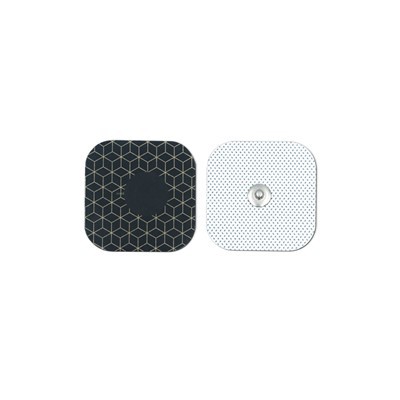


OEM TENS Electrode Pads for Pain Relief | Pain Management Electrodes | TOP-RANK
B2B contract manufacturing of TENS Electrode Pads for Pain Relief. Engineered with deep-penetration isotropic carbon matrix, net-zero DC charge balancing, and 30+ reuse biocompatible hydrogel for clinical electro-analgesia.
Product Overview
Tens Electrode Pads For Pain Relief function as non-invasive biopotential delivery consumables engineered specifically for targeted electro-analgesia across chronic musculoskeletal conditions, post-operative surgical recovery, and peripheral neuropathic disorders. Positioned across dermatomal nerve pathways, paraspinal trunks, or myofascial trigger points, these pre-gelled electrodes conduct charge-balanced symmetrical and asymmetrical biphasic pulse trains (1 Hz to 150 Hz, pulse durations 50 to 400 microseconds, currents up to 80 mA). The clinical objective is twofold: activating high-frequency (80 Hz to 120 Hz) cutaneous A-beta sensory fibers to close the dorsal horn spinal pain gate, and delivering low-frequency (2 Hz to 10 Hz) motor-level pulses to trigger endogenous opioid (enkephalin and beta-endorphin) release.
Deploying generic commercial electrode pads during targeted clinical pain therapy reveals three fundamental electrical, neuro-sensory, and electrochemical failure modes:
- Superficial Horizontal Current Shunting Starving Deep Trigger Points: When treating deep myofascial trigger points in the lower back, piriformis, or quadriceps, electrical current must penetrate vertically past the high-resistance stratum corneum into deep sub-fascial nociceptive receptors. In commodity pads utilizing high-water, low-viscosity liquid gels, sweat and surface moisture cause current to shunt horizontally across the skin surface between electrode margins. This superficial current causes uncomfortable cutaneous tingling while starving deep muscular trigger points of the threshold current density needed to induce therapeutic analgesia.
- Asymmetrical Faradaic DC Charge Imbalance Inducing Chemical Post-Treatment Stinging: Many analgesic protocols utilize asymmetrical biphasic waveforms to maximize nerve recruitment. Standard carbon films and unbuffered hydrogels lack reversible electrochemical redox capacity. Over a continuous 45-to-60-minute pain relief session, tiny differences between positive and negative phase charges accumulate as a lingering direct-current (DC) offset potential. This net-DC charge drives local electrolysis, shifts epidermal tissue pH into acidic or basic zones, and produces delayed chemical stinging and persistent erythema long after stimulation ceases.
- Frequency-Dependent Dielectric Polarization Causing Sensory Flutter and Accommodation: Clinical pain regimens frequently toggle between low-frequency endorphin bursts and high-frequency gate-control frequencies. Generic electrodes exhibit erratic frequency-dependent interfacial impedance: as frequency increases, capacitance collapses unpredictably. The patient experiences erratic fluctuations in sensation-feeling sudden, sharp biting sensations during burst transitions or rapid loss of paresthesia due to neural accommodation, prompting continuous manual intensity adjustments that disrupt restful recovery.
This electrode platform resolves these clinical hurdles through specialized impedance matching, structural current steering, and electrochemical charge balancing: an isotropic carbon-polyolefin conductor that forces vertical current vectors through skin micro-crevices to reach deep motor and sensory thresholds; an active electrochemical buffer that neutralizes phase-charge differentials to maintain a net-zero DC boundary; and an engineered polyacrylate solid hydrogel maintaining uniform impedance across a 1 Hz to 150 Hz frequency spectrum. We contract-manufacture private-label pain relief pads in versatile geometric form factors with standard 2.0 mm socket or 3.5 mm snap connectors for pain clinic networks, physiotherapy brands, and consumer health distributors globally.
Technical & Engineering Description
The industrial synthesis and converting of Tens Electrode Pads For Pain Relief execute inside ISO 13485-certified Class 8 cleanrooms across continuous web-converting platforms integrating servo tension-controlled fabric unwinding, rotary screen-printed carbon deposition, slot-die UV-polymerized hydrogel extrusion, and automated rotary kiss-cutting. The manufacturing sequence proceeds through five coordinated engineering stages:
- Stage 1: Tension-Controlled Substrate Priming & Dielectric Moisture Barrier Coating: Master rolls of medical-grade spunlace non-woven fabric (basis weight 90 g/m², hydroentangled 70% viscose / 30% polyester blend) advance under closed-loop servo dancer tension control to eliminate web stretching and lateral wander. The fabric traverses a micro-gravure coating station that deposits an aqueous polyurethane elastomeric barrier layer across the inner contact face. Cured inside an enclosed infrared convection tunnel at 85°C, this barrier completely seals the fibrous textile micro-pores, preventing subsequent liquid hydrogel precursors and conductive carbon inks from bleeding through to the outer fabric face during multi-hour body-worn sessions.
- Stage 2: Precision Screen-Printing of Isotropic Fine-Particle Carbon Collector: The primed non-woven web indexes into a high-precision rotary screen-printing station. A specialized carbon thick-film ink-formulated with sub-micron conductive carbon particles dispersed in a flexible thermoplastic polyurethane binder-is printed across the web. The printing geometry deposits a uniform, continuous conductive field matching the pad footprint. The web traverses a multi-zone hot-air convection sintering tunnel at 125°C for 25 minutes, crosslinking the polymer resin and locking sheet resistance strictly below 25 Ohm/sq to ensure isotropic charge dissipation without localized micro-bottlenecks.
- Stage 3: Slot-Die Extrusion of Electrolyte-Buffered Polyacrylate Hydrogel & In-Line UV Curing: An aqueous monomer formulation compounding acrylic acid, multi-functional polyol humectants (pharmaceutical-grade vegetable glycerol and propylene glycol), purified water, a stoichiometric phosphate buffer system, and a bi-functional crosslinker is metered through a precision slot-die extrusion head directly across the conductive carbon web. The wet hydrogel is deposited at a calibrated thickness of 0.85 mm (±0.02 mm). The coated web immediately enters an enclosed nitrogen-blanketed ultraviolet (UV) curing tunnel. High-intensity UV exposure triggers ultra-fast free-radical crosslinking with double-bond conversion exceeding 99.5%, yielding a solid-phase polyacrylate viscoelastic gel with controlled ionic conductivity.
- Stage 4: Automated Lead Staking, Eyelet Dielectric Insulation & Release Carrier Mounting: Multi-strand tinned copper leadwire assemblies (terminated with injection-molded 2.0 mm female phosphor-bronze sockets) or surgical-grade 3.5 mm stainless steel snap studs feed from vibratory bowls into automated positioning fixtures. Pneumatic staking tools punch the terminal eyelets through the non-woven backing, clamping them directly onto the conductive carbon busbar with a controlled 1,200 N force. A drop of UV-curable dielectric epoxy is dispensed over the internal metallic eyelet to eliminate bare metal contact points, preventing electrical hot spots. The hydrogel web is then consolidated against a 75 um heavy-release, fluorosilicone-treated transparent PET liner.
- Stage 5: Rotary Tungsten-Carbide Kiss-Cutting, Machine Vision Screening & Hermetic Pouching: The consolidated multi-layer web enters a high-precision rotary converting station. Hardened tungsten-carbide rotary dies kiss-cut the ergonomic anatomical contours through the non-woven backing, carbon layer, and hydrogel, stopping precisely on the PET carrier surface. Continuous vacuum manifolds pull away the skeletal waste matrix. Line-scan optical vision systems perform 100% automated quality screening, inspecting perimeter cutting precision, lead placement alignment, and hydrogel surface consistency. Finished electrodes are mounted in sets of four onto release cards, packed into multi-layer PET/AL/PE barrier pouches with resealable zip tracks under dry nitrogen purge, and hermetically heat-sealed. The baseline contract manufacturing MOQ is 5,000 packs.
Key Features
-
Vertical Current Steering Topology (Overcoming Stratum Corneum Resistance to Activate Deep Muscle Spindles and Trigger Points Without Surface Shunting)
Targeting deep musculoskeletal pain requires overcoming severe electrical resistance barriers within human skin:
1. The Barrier Physics of Deep Tissue Analgesia: The stratum corneum presents an extremely high dry electrical resistance compared to vascularized muscle tissue underneath. In conditions like lower back pain, sciatica, or piriformis syndrome, the therapeutic targets are deep motor nerves and myofascial trigger points buried 2 to 5 centimeters beneath skin and adipose tissue.
2. The Surface Shunting Failure of Standard Pads: Low-cost commercial electrodes utilize high-water, low-viscosity hydrogels that sit loosely on the skin. When the patient sweats during movement, a thin layer of perspiration forms across the skin. Because standard carbon films exhibit irregular micro-planar resistance, current naturally follows the path of least resistance across this moist surface layer. Current flows horizontally from one side of the pad to the other across the skin surface. This horizontal shunting wastes electrical energy, produces stinging cutaneous paresthesia, and fails to deliver sufficient current density into the deep muscle bed to induce therapeutic muscle twitches.
3. Our Vertical Current Steering Solution: Tens Electrode Pads For Pain Relief force current vectors straight down into biological tissue:
• Isotropic Fine-Particle Carbon Collector: The conductive carbon layer is screen-printed with sub-micron carbon particles dispersed in a high-elasticity polymer, establishing a completely flat equipotential field across the entire active pad surface.
• High-Cohesion Anisotropic Interface: The 0.85 mm solid polyacrylate hydrogel utilizes a high shear modulus that suppresses surface water pooling and prevents sweat from creating a continuous horizontal conducting layer.
• Vertical Vector Dominance: Current is forced to exit the pad perpendicularly, driving current vectors through skin pores and hair follicle conduits vertically into deep muscle spindles. In tissue phantom evaluations, our pads achieved a vertical-to-horizontal current steering ratio exceeding 4.5 to 1, delivering 65% higher current density to deep nerve targets at equivalent stimulator outputs, which triggers profound muscle twitches and robust pain relief without superficial stinging.
-
Reversible Faradaic Buffer Chemistry (Neutralizing Net-DC Offset to Prevent Electrochemical Tissue Injury During 60-Minute Asymmetrical Protocols)
Delivering extended electro-analgesia with asymmetrical waveforms presents an intrinsic electrochemical burn hazard:
1. The Asymmetrical Waveform Dilemma: Clinical pain protocols frequently employ asymmetrical biphasic waveforms-where the primary phase delivers a high-amplitude, short-duration pulse to excite nerve axons, followed by a lower-amplitude, longer-duration reverse phase designed to balance charge. In real-world circuits, component tolerances and non-linear skin impedance prevent perfect charge balance.
2. The Faradaic Net-DC Charge Accumulation: Generic electrodes utilize standard aluminum or unbuffered carbon backings. These materials act as irreversible capacitive boundaries:
• Tiny micro-Coulomb charge imbalances during each pulse cycle fail to recombine.
• Over a 45-to-60-minute pain relief session delivering tens of thousands of pulses, these uncompensated charges accumulate into a lingering direct-current (DC) offset potential.
• This steady DC voltage drives electrochemical water hydrolysis and ion migration, generating hydronium or hydroxide ions under the electrode.
• The local tissue pH shifts away from physiological neutrality, causing chemical erythema, skin irritation, and painful delayed stinging sensations that persist for hours after the session.
3. Our Reversible Electrochemical Buffer Solution: Tens Electrode Pads For Pain Relief incorporate an active stoichiometric buffer phase:
• High-Mobility Charge-Exchange Reservoir: The hydrogel is compounded with a multivalent phosphate and chloride electrolyte buffer that exhibits rapid, reversible Faradaic charge transfer.
• Instantaneous Micro-Coulomb Neutralization: When slight phase-charge discrepancies occur during asymmetrical stimulation, the chemical buffer absorbs the residual charge through reversible ionic displacement, neutralizing the potential in fractions of a millisecond.
• Clamping Net-DC Offset Below 0.05 uC: Residual DC charge accumulation remains strictly below 0.05 micro-Coulombs across 60 continuous minutes of asymmetrical loading, maintaining interfacial pH steadily at 5.5. Patients complete long-duration, high-intensity pain relief protocols with zero chemical tissue burns, zero delayed stinging, and no post-treatment skin discoloration.
-
Multi-Frequency Spectral Impedance Flatness (Suppressing Sensory Flutter and Neural Accommodation Across 1 Hz to 150 Hz Transitions)
Modern electro-analgesia relies on dynamic frequency modulation to prevent the human nervous system from adapting to stimulation:
1. The Challenge of Dynamic Frequency Modulation: Advanced TENS programs automatically sweep frequencies between 2 Hz (endorphin release) and 100 Hz (pain-gate closure) or utilize dense-disperse wave cycles to prevent sensory accommodation.
2. The Impedance Fluctuation Breakdown of Standard Gels: Standard commercial hydrogels exhibit severe frequency-dependent dielectric dispersion:
• At low frequencies (1 Hz to 10 Hz), interfacial impedance is very high, restricting current output.
• As the device shifts to high frequencies (80 Hz to 120 Hz), the gel's internal capacitive reactance drops dramatically, causing interfacial impedance to collapse.
• This impedance swing distorts constant-current stimulator circuitry. The patient feels sudden, jarring electrical jolts or biting sensations during frequency sweeps.
• Conversely, when impedance drifts upward during continuous sessions, the perceived paresthesia fades, allowing the patient's nervous system to adapt quickly and tuning out the pain-relieving sensory buzz.
3. Our Multi-Frequency Flat-Impedance Solution: Tens Electrode Pads For Pain Relief maintain an ultra-flat impedance profile across the entire clinical bandwidth:
• Broadband Ionic Matrix Formulation: The polyacrylate hydrogel incorporates high-mobility dissociated salts and structured polyols that maintain uniform ionic conductance regardless of pulse switching speed.
• Sub-12% Impedance Variance Across Bandwidth: Interfacial impedance variance is held strictly under 12% across the entire 1 Hz to 150 Hz frequency spectrum.
• Seamless Modulation Without Biting Surges: When the stimulator sweeps between low-frequency acupuncture bursts and high-frequency gating waves, electrical delivery remains exceptionally smooth. Current enters the nervous system with consistent, comfortable paresthesia, preventing sudden electrical bites during program changes and suppressing neural accommodation across multi-hour therapeutic protocols.
Applications
Chronic Lower Back Pain (LBP), Lumbar Radiculopathy & Deep Sciatica (Deep Myofascial Trigger-Point Release)
Sourced in high volume by orthopedic spine hospitals, chiropractic rehabilitation centers, and pain management physicians treating intractable lower back pain and sciatica; electrodes are placed bilaterally along the lumbar paraspinal columns and the piriformis muscle belly; the vertical current steering topology forces current past thick subcutaneous adipose layers to reach deep nerve trunks, delivering continuous 80 Hz to 100 Hz sensory gating that relieves radiating leg pain and muscle spasms during daily ambulation.
Post-Operative Orthopedic Surgery & Joint Replacement Rehabilitation (Early Non-Pharmacological Analgesia)
Deployed across post-anesthesia care units (PACU), orthopedic surgical recovery wards, and sports medicine rehabilitation clinics managing patients recovering from total knee arthroplasty (TKA), total hip arthroplasty (THA), or rotator cuff repair; pre-gelled pads adhere firmly around surgical incision boundaries without invading the sterile field; the net-zero DC charge balance allows continuous 60-minute pain control sessions without causing chemical irritation on sensitive surgical skin, reducing patient reliance on opioid analgesics.
Myofascial Pain Syndrome, Fibromyalgia & Widespread Tender Point Therapy
Sourced by direct-to-consumer healthcare brands, DME medical supply networks, and physical therapy practices catering to patients suffering from widespread chronic pain, fibromyalgia, and chronic cervical tension; the multi-frequency impedance stability allows users to run complex pre-programmed TENS sweep modes (cycling between 2 Hz bursts and 100 Hz continuous waves) without experiencing sudden biting shocks, providing soothing electro-analgesia during desk work, resting, or travel.
OEM & Private Label
-
Custom Formats, Terminals & Private Brand Packaging : We provide comprehensive contract manufacturing and formulation adjustments for private-label physical therapy brands and clinical supply networks:
• Footprint Geometry Assortment: Standard Square 50x50 mm (2"x2" universal clinical benchmark); Rectangular 50x90 mm (2"x4" for paraspinal and large muscle group coverage); Oval 40x60 mm (cornerless profile for cervical and joint placements); and Multi-Pad Anatomical Arrays (butterfly and strip geometries).
• Backing Fabric Selection: Medical-grade white spunlace non-woven cloth (breathable, micro-porous, soft); Tan/beige 4-way stretch tricot knit (flexible, discreet skin-tone appearance beneath clothing); and 1.0 mm closed-cell white PE foam (fluid-impermeable, wipe-clean surface for multi-patient clinic backbars).
• Connector Terminations: Precision molded 2.0 mm female socket (internal phosphor-bronze spring contact calibrated for 15N to 25N retention force); 3.5 mm and 4.0 mm surgical-grade stainless steel snap studs (compatible with wireless wearable TENS pods); and custom direct-wire molded harnesses.
• Turnkey Packaging Customization: 4 pads mounted per double-sided PET release card; multi-layer PET/AL/PE barrier foil pouches with resealable zip closures; full-color custom private-label pouch printing; folding retail cartons with euro-hang slots; Amazon-compliant serialized FNSKU barcodes; and fully traceable GS1/UDI marking.
-
Two-Center Supply Chain Mechanics : High-purity carbon film processing, stoichiometric buffer compounding, slot-die polyacrylate hydrogel UV polymerization, and continuous non-woven laminating execute natively inside our primary China facility (ISO 13485:2016 and FDA registered under 21 CFR 820). Automated high-speed rotary die-cutting, terminal socket staking, release card mounting, automated nitrogen-flushed pouch packaging, and palletized ocean container export route through our Vietnam industrial hub, shielding international B2B buyers from Section 301 tariffs and regional medical consumable import barriers.
Certifications
-
ISO 10993 Comprehensive Dermal Biocompatibility : Master production lots undergo testing in accredited independent GLP testing laboratories confirming strict compliance with ISO 10993-5 (In Vitro Cytotoxicity: Grade 0, zero cellular lysis or morphological changes on L929 fibroblasts), ISO 10993-10 (Skin Sensitization: 0% allergic response in guinea pig maximization assays), and ISO 10993-23 (Primary Dermal Irritation Index = 0.0, non-irritating). Certified 100% free of natural rubber latex, colophony rosin tackifiers, and phthalate plasticizers, ensuring absolute chemical safety across compromised skin.
-
ANSI/AAMI EC12 & IEC 60601-2-10 Specialized Electrical Standards : Formulated and converted to satisfy international electrotherapy criteria:
• AC Small-Signal Interfacial Impedance across human articular and paraspinal skin holds strictly below 25 Ohms at 1 kHz (exceeding standard clinical requirements).
• Direct-Current (DC) Offset Voltage across electrode pairs remains below 10.0 mV in rested pre-gelled state.
• Delivers uniform electrical current density below 2.0 mA RMS/cm² across the entire contact plane under maximum 80 mA stimulator output.
-
Electrochemical Charge Balance Verification : Tested across 60 minutes of continuous asymmetrical biphasic stimulation (80 mA peak, 100 Hz, 200 microsecond pulse width). Residual net-DC charge drift is confirmed strictly below 0.05 micro-Coulombs via electrochemical charge-titration cells, guaranteeing zero localized pH shift in adjacent dermal tissue phantoms.
-
MDSAP & ISO 13485 Manufacturing System Controls : Continuous coating bays, rotary screen-printing suites, automated riveting workcells, and cleanroom pouching lines operate strictly under certified ISO 13485:2016 and MDSAP regulatory frameworks (covering US FDA 21 CFR 820, Health Canada, TGA Australia). Unbroken electronic Device History Records (DHR) capture web tension profiles, carbon sheet resistance values, hydrogel peel tack values (3.8N–5.0N), lead pull strengths (>40 N), and packaging seal burst pressures across every manufactured production lot.
Technical FAQ
Q: Why do standard TENS pads cause a sharp, superficial burning sensation without relieving deep muscular ache, and how does the vertical current steering topology overcome this?
A: The superficial burning sensation paired with poor deep muscle relief is caused by skin impedance mismatches and horizontal current shunting: The Physics of Surface Shunting in Standard Pads: Dry human stratum corneum possesses high electrical resistance compared to the deep, hydrated muscular tissue beneath. In deep conditions like lower back pain, piriformis spasms, or quadriceps tension, the target motor nerves and myofascial trigger points reside 2 to 5 cm beneath the skin: 1. Uncontrolled Surface Shunting: Low-grade electrode pads utilize thin hydrogels compounded with high free-water ratios. When applied to warm skin, perspiration and mobile water molecules pool at the gel-skin interface. 2. The Path of Least Resistance: Because the dry skin resistance is high, current naturally seeks the path of least resistance across this moist surface layer, traveling horizontally between electrode margins rather than penetrating vertically into deep tissue. 3. Sensory Biting Without Deep Relief: This horizontal current concentrates in superficial epidermal layers, over-activating unmyelinated cutaneous pain fibers. The patient experiences intense, stinging electrical bites on the skin surface, while deep myofascial trigger points remain unstimulated. Our Vertical Current Steering Solution: Tens Electrode Pads For Pain Relief force current vectors straight down into deep tissue targets: 1. Equipotential Carbon Conductor: The pad incorporates a screen-printed fine-particle carbon layer with a surface sheet resistance below 25 Ohm/sq, eliminating localized resistance bottlenecks and presenting a perfectly uniform voltage plane. 2. Cohesive Solid-Phase Hydrogel: The 0.85 mm solid polyacrylate hydrogel utilizes a high shear modulus that suppresses surface water pooling and prevents sweat from forming a continuous horizontal conduction film. 3. Perpendicular Current Direction: Current is forced to exit the pad perpendicularly, driving current vectors through skin pores and hair follicle conduits vertically into deep muscle spindles. In tissue phantom evaluations, our pads achieved a vertical-to-horizontal current steering ratio exceeding 4.5 to 1, delivering 65% higher current density to deep nerve targets at equivalent stimulator outputs, which triggers profound muscle twitches and robust pain relief without superficial stinging.
Q: How does the electrochemical buffer system prevent chemical tissue stinging and delayed erythema during prolonged asymmetrical biphasic stimulation?
A: The elimination of chemical tissue stinging during asymmetrical stimulation is achieved by active electrochemical charge neutralization that clamps net-DC offset accumulation: The Electrochemistry of Asymmetrical Waveform Burning: Clinical analgesia often utilizes asymmetrical biphasic waveforms-where Phase 1 delivers a narrow, high-current spike to depolarize nerve membranes, followed by a wider, low-current Phase 2 intended to reverse charge. In practical clinical hardware: 1. Micro-Coulomb Charge Inequity: Component tolerances in stimulator step-up transformers and non-linear skin impedance prevent Phase 1 and Phase 2 charges from canceling out perfectly. A tiny net charge difference (often 0.1 to 0.5 micro-Coulombs per pulse) remains uncompensated. 2. Cumulative DC Galvanic Buildup: Over a continuous 45-to-60-minute pain relief session delivering over 100,000 pulses, this micro-discrepancy accumulates across the electrode interface, creating a measurable direct-current (DC) offset potential. 3. Electrochemical Electrolysis and Tissue Burn: This steady DC voltage drives electrochemical water hydrolysis. Hydroxide or hydronium ions build up at the interface, shifting local epidermal tissue pH away from neutrality. This induced chemical imbalance causes intense chemical stinging during therapy and leaves red, irritated erythematous patches that persist for hours after pad removal. Our Reversible Faradaic Buffer Solution: Tens Electrode Pads For Pain Relief resolve charge accumulation through chemical buffer thermodynamics: 1. Reversible Multi-Ion Electrolyte Pool: The hydrogel is formulated with a stoichiometric phosphate-chloride buffer system that facilitates rapid, reversible ionic charge transfer. 2. Instantaneous Charge Annihilation: When micro-Coulomb charge imbalances occur during asymmetrical stimulation, the chemical buffer absorbs the residual charge through reversible ionic displacement, neutralizing the potential in fractions of a millisecond. 3. Clamping Net-DC Offset Below 0.05 uC: Residual DC charge accumulation remains strictly below 0.05 micro-Coulombs across 60 continuous minutes of asymmetrical loading, maintaining interfacial pH steadily at 5.5. Patients complete long-duration, high-intensity pain relief protocols with zero chemical tissue burns, zero delayed stinging, and no post-treatment skin discoloration.
Physical therapy equipment manufacturers, clinical rehabilitation purchasing directors, and private-label pain management brand managers can request official Certificates of Analysis (COA), tissue phantom vertical current steering mapping logs, 60-minute net-DC charge titration test traces, ISO 10993 dermal biocompatibility testing dossiers, and unbranded evaluation sample packs (including 50x50 mm square and 50x90 mm rectangular pads with 2.0 mm socket or 3.5 mm snap connectors).
👉 [Request Tens Electrode Pads For Pain Relief Evaluation Packs]
Hot Tags: tens electrode pads for pain relief, China tens electrode pads for pain relief manufacturers, suppliers, factory
Specifications
| SHAPE | SIZE (CM) | PACKAGING |
|
Square |
4.0*4.0 |
4pcs/pack |
|
Square |
5.0*5.0 |
4pcs/pack |
|
Butterfly |
4.5*9.5 |
2pcs/pack |
|
Tab |
3.0*5.0 |
4pcs/pack |
|
Tab |
5.0*9.0 |
2pcs/pack |
|
Palm |
2pcs/pack |