

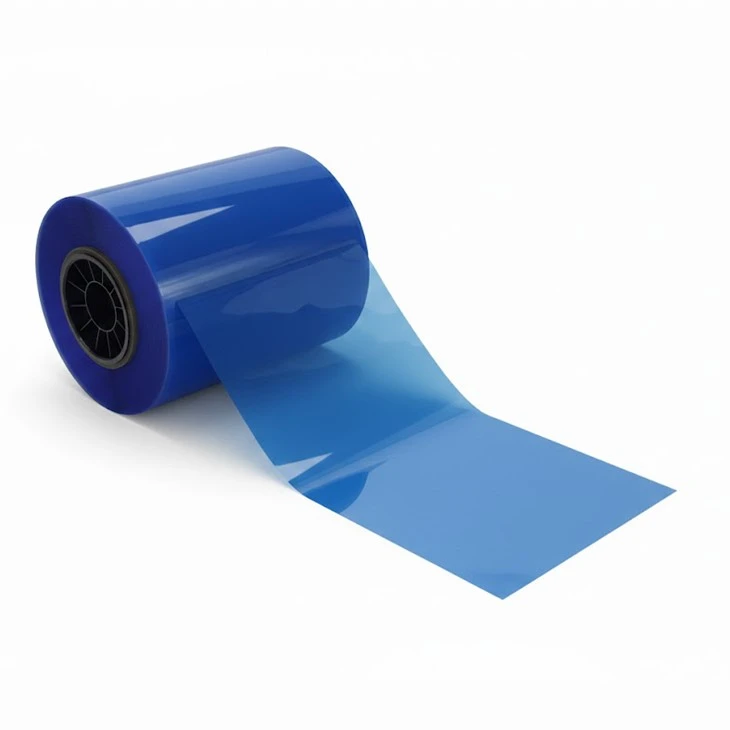
OEM Hydrogel Master Roll | Spool-Resilient Matrix | TOP-RANK
Bulk hydrogel roll stock for medical converters. Engineered with high storage modulus to resist core compression thinning and thermodynamic humectants to block edge desiccation during global transit
Product Overview
This hydrogel master roll is a raw industrial biopolymer web engineered specifically for heavy-duty secondary converting. Delivered in massive continuous spools, this substrate forms the active adhesive and conductive foundation for downstream OEM medical devices. Operating at the raw-material level, the primary engineering challenge shifts from localized skin adhesion to macro-scale mechanical stability. We chemically reinforce the polymer lattice to withstand multi-tonnage spooling pressure, aggressive automated web-tension, and trans-oceanic climate fluctuations, ensuring converters receive a dimensionally flawless substrate from the outer wrap down to the cardboard core.
Technical/Engineering Description
The core matrix utilizes a glycerol-plasticized polyacrylamide or pHEMA network. Ionic mobility is established by titrating specific chloride salts into the aqueous base. During the continuous web coating process, the liquid monomer is extruded through a closed-loop slot-die head. The cross-linking density is then thermally triggered and UV-cured to lock the molecular structure. This polymerization phase prevents monomer migration during extended warehouse storage. The water-to-humectant ratio is mathematically locked at a thermodynamic equilibrium to resist desiccation in 40°C / 20% RH environments. Standard wholesale runs require a minimum continuous volume of 100 linear meters.
Key Features
-
Core Compression Thinning Resistance
When a converter unrolls a 500-meter spool of cheap hydrogel, they often discover the inner 100 meters are significantly thinner than the outer layers. This occurs because the massive accumulated weight of the roll physically squashes the internal gel over months of storage. This thickness variance ruins the electrical impedance and die-cut precision of the final electrodes. We heavily reinforce the covalent bonds within our polymer matrix to achieve exceptional structural memory. The gel defies continuous Z-axis compression, ensuring the 1.0mm thickness remains mathematically identical from the first meter to the absolute core.
-
Edge Desiccation Blockade
Master rolls present exposed hydrogel edges on the left and right sides of the spool. During trans-oceanic shipping or warehouse storage, dry ambient air attacks these exposed flanks. If the edges lose water, they calcify into a hard, non-conductive crust that shatters when struck by a cutting die. Our chemical engineers titrate a proprietary blend of macromolecular humectants into the base fluid. This creates a powerful thermodynamic binding effect, locking the water molecules deep within the matrix. The exposed roll edges remain fully hydrated, pliable, and die-cut ready for up to 24 months.
-
High-Tension Web Recovery
Modern converting lines yank the raw material web at violent speeds, subjecting the hydrogel to severe longitudinal strain (machine-direction tension). Weak gels will mechanically elongate, thinning out and breaking their ionic pathways. This substrate utilizes an elastomeric framework bonded closely to its PET carrier films. It absorbs the aggressive mechanical pull of automated unspooling gears and instantly recovers its original dimensions without micro-fracturing or delaminating from the protective liners.
Applications
TENS/EMS Consumables
The foundational conductive substrate for stamping millions of carbon-film or silver-grid stimulator pads.
Diagnostic ECG/EKG Substrates
Low-impedance gel formulations integrated into snap-based disposable cardiovascular sensors.
Cosmetic Microcurrent
Bare gel sheets die-cut into facial lifting pads compatible with 1MHz RF outputs.
OEM & Private Label
-
Core Formatting : Master rolls are supplied on standard 3-inch or 6-inch rigid cores to match industrial unwinding shafts. To arrest moisture exchange during ocean freight, the rolls are vacuum-sealed inside heavy-gauge AL/PE foil bags with engineered desiccant limiters.
-
Origin Routing : Multi-ton bulk polymerization and roll coating execute strictly in our China facilities. Bonded warehousing and secondary master web slitting (cutting wide rolls into narrow production spools) are available via our Vietnam hub for material call-offs.
Certifications
-
Raw Material Compliance : The cross-linked polymer matrix meets REACH, RoHS, and FDA biocompatibility mandates for intact skin contact.
-
Facility Audits : Coating lines operate under ISO 13485:2016 and MDSAP certified frameworks.
-
Lot Traceability : Each master roll is shipped with a dedicated batch report logging specific gravity, pre-coat viscosity, and final peel force limits.
FAQ
A: This indicates a cohesive failure where the internal polymer bonds of the gel are weaker than its adhesion to your metal tooling. It is caused by an under-cured matrix. Our thermal-UV dual curing profile polymerizes the gel well past the cohesive failure threshold, forcing a clean physical release from steel cutting surfaces.
A: The structural integrity of the master roll relies entirely on the 75-micron PET release liner, not the gel matrix itself. The PET liner sustains up to 25 N/cm of web tension without mechanical elongation. This prevents the hydrogel from thinning out in the machine direction (MD) during automated lamination.
B2B converters and die-cutting facilities can request master roll samples and lot-specific COA data for running machine trials.
👉 [Request Hydrogel Master Roll Samples]
Hot Tags: hydrogel master roll, China hydrogel master roll manufacturers, suppliers, factory
Specifications
| Parameter | Metric Configuration | Engineering Detail |
| Web Width | 200mm - 450mm | Slit to converter specs |
| Coating Thickness | 0.8mm - 1.2mm (± 0.05) | Slot-die precision |
| Volume Resistivity | < 100 Ohm-cm | Measured at 1kHz |
| Peel Adhesion | 4.0N - 6.5N / 25mm | ASTM D3330 (Stainless Steel) |
| Release Liner | 75-micron PET | Differential silicone coating |


