
OEM Silver TENS Electrodes | Low-Impedance Pads | TOP-RANK
B2B silver-printed electrodes for high-mA EMS and microcurrent hardware. Engineered with thermal-cured silver flake matrices to block ion migration and maintain < 20 Ohm absolute impedance.
Product Overview
These specialized transdermal electrodes replace standard carbon-based conductive films with a highly concentrated silver-ink (Ag) matrix. Standard carbon pads exhibit natural electrical resistance, which causes focal thermal heating under high-current loads or signal degradation during low-voltage microcurrent therapies. By utilizing the near-zero electrical resistance of metallic silver, this substrate functions as an absolute conductive plane. We supply these premium low-impedance blanks to B2B clinical distributors, sports science brands, and aesthetic microcurrent hardware OEMs requiring strict electrical fidelity without voltage bottlenecks.
Technical/Engineering Description
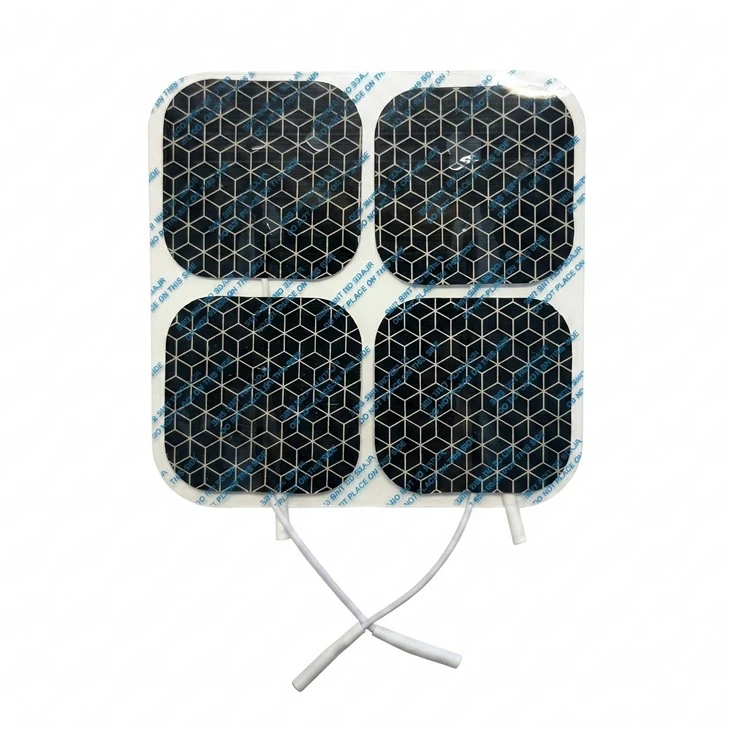
Printing a functional silver electrode is a thermal and chemical challenge. The process involves screen-printing a proprietary ink-heavily loaded with micronized silver flakes-onto a flexible PET or spunlace carrier. Unlike carbon, silver ink must undergo aggressive thermal curing (typically moving through a 120°C to 150°C extended tunnel oven). This extreme heat burns off the organic solvents and physically fuses the silver flakes into an unbroken, highly conductive metallic sheet. Once cooled, a calibrated ionic hydrogel is laminated over the silver matrix. Due to the high cost of precious metal precursors and specific oven tooling times, minimum order quantities (MOQ) for full-silver pads typically start at 20,000 units.
Key Features
-
Sheet Resistance Flattening (Zero-Bite Logic)
When pushing extreme currents (e.g., 100mA+ for heavy EMS tetany) through standard carbon film, the inherent sheet resistance (measured in Ohms/square) causes electrons to bottleneck around the lead wire insertion point. This manifests as a sharp, biting pain on the patient's skin. The volume resistivity of our cured silver ink is exponentially lower than carbon. Electrons instantly flood the entire geometric footprint of the pad with zero resistance delay. This perfectly uniform current density eliminates focal hotspots, allowing physical therapists to ramp up stimulation to maximum intensity without patient discomfort.
-
Silver Ion Migration Blockade
A catastrophic failure mode of cheap silver electrodes is "silver migration." When raw silver is constantly exposed to the salty, high-humidity environment of the hydrogel, an electrical current forces the silver ions Ag+ to physically migrate and form dendritic shorts, rapidly degrading the pad's impedance and turning the gel a toxic dark brown. Our conductive formulation utilizes a proprietary hydrophobic binding resin. During thermal curing, this resin cross-links around the silver flakes, creating a chemical cage. It permits electron transfer but strictly halts physical ion migration, maintaining pristine < 20 Ohm conductivity across a 24-month shelf life.
-
Microcurrent (µA) Fidelity
In cosmetic facial lifting or advanced wound healing, pulse generators output extremely delicate microcurrents (measured in microamperes, µA). Standard carbon electrodes act as a resistive barrier, dampening these weak signals before they can penetrate the stratum corneum. The silver matrix provides a zero-threshold transmission bridge. It guarantees that 100% of the ultra-low-voltage waveform generated by the host PCBA is delivered accurately into the epidermal tissue without amplitude loss or signal distortion.
Applications
Elite Sports EMS
Manages aggressive >100mA continuous bursts required for professional athlete muscle hypertrophy without thermal pad breakdown.
Facial Microcurrent Aesthetics
Lossless interface for anti-aging beauty hardware utilizing low-voltage, sub-sensory waveform protocols.
Hypersensitive Neuropathy
Zero-bite pain gating for diabetic neuropathy patients whose compromised nerve endings cannot tolerate the localized current spiking of carbon pads.
OEM & Private Label
-
Silver-Grid Hybrid Customization : For brands balancing extreme performance with cost, we offer Hybrid Carbon-Silver printing. By screen-printing a conductive silver "grid" or "busbar" over a standard carbon film, we can lower the pad's impedance to ~30 Ohms while reducing the total precious metal consumption by 60%.
-
Logistics Routing : The high-temperature silver curing ovens and base lamination operate exclusively in our China plant. Final pad die-cutting, snap crimping, and barrier pouch sealing are routed through our Vietnam facility to manage supply chain continuity and optimize medical hardware import tariffs for North American B2B partners.
Certifications
-
Systems : Silver ink formulation, high-temperature oven calibration, and converting lines operate under MDSAP and ISO 13485:2016 quality architectures.
-
Biocompatibility : Although pure silver is inherently antimicrobial, the complete hydrogel-silver-PET laminate stack is strictly tested against ISO 10993-5 (Cytotoxicity) limits to confirm zero biological reactivity.
FAQ
A: Cost scales directly with the bill of materials (BOM) and the energy required for manufacturing. The ink utilizes actual micronized silver, a precious metal traded on global commodities markets. Furthermore, silver ink requires extended processing time in specialized 150°C tunnel ovens to cure the conductive lattice, whereas carbon cures rapidly at much lower temperatures.
A: No. The silver is not applied as a solid sheet of metal foil. It is a flexographic ink containing silver flakes suspended in a proprietary elastomeric resin. Once cured, the silver layer bends and stretches in unison with the non-woven or PU backing without cracking, ensuring complete kinematic conformity over moving joints.
B2B clinical hardware developers can request bare silver-printed substrate samples and absolute sheet resistance comparison reports.
👉[Request Silver Electrode Prototypes]
Hot Tags: silver tens electrodes, China silver tens electrodes manufacturers, suppliers, factory, Rehabilicare TENS Unit Pads, self adhesive electrode, Self Adhesive Electrodes for TENS Unit, TENS electrode, TENS Gel Pads, TENS sticky pads
Specifications
| Parameter | Metric Configuration | Engineering Detail |
| Conductive Layer | 100% Silver Paste Extrusion | Overlapping silver flake lattice |
| Impedance | < 20 Ohms | Prevents baseline voltage spikes |
| Current Deviation | < 5% across total footprint | Isotropic electron dispersion |
| Silver Migration | Resin-encapsulated | Stable in high-humidity hydrogels |
| Interface | 2.0mm Pin / 3.5mm Snap | Mechanically anchored to silver trace |