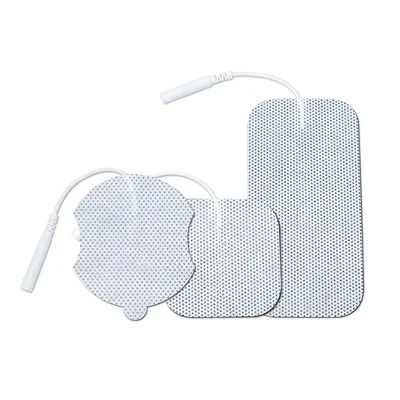

OEM Blue Gel Hypoallergenic TENS Pads | Sensitive Skin Electrodes | TOP-RANK
B2B contract manufacturing of Blue Gel Hypoallergenic TENS Pads for sensitive and geriatric skin. Formulated with monomer-stripped blue hydrogel, pH 5.5 buffering, 2.6N–3.4N low-trauma peel release, and dual China-Vietnam supply chain routing.
Product Overview
Blue Gel Hypoallergenic TENS Pads function as specialized cutaneous biopotential delivery consumables engineered specifically for clinical patients and retail consumers presenting with hyper-reactive, atrophic, or compromised skin barriers. Commonly deployed in geriatric oncology care, chronic neuropathic pain management, and pediatric physical therapy, these electrodes replace conventional high-tack acrylic adhesives with an ultra-purified, phthalocyanine-stabilized blue polyacrylate hydrogel. During continuous 30-to-60-minute electrotherapy protocols, the electrode interfaces with transcutaneous electrical nerve stimulation (TENS) and neuromuscular stimulation (EMS) consoles, conducting symmetrical biphasic pulse trains up to 80 mA across a 1 Hz to 120 Hz bandwidth while preserving fragile epidermal integrity.
Applying standard clear or amber commercial electrode pads across sensitive or aging patient populations routinely introduces three severe biochemical, mechanical, and electro-cutaneous failure modes:
- Residual Monomer Cytotoxicity and Acid Mantle Disruption: Conventional hydrogels are synthesized via incomplete industrial polymerization, leaving unreacted acrylic acid monomers (often exceeding 500 ppm), alkaline crosslinking residues (pH > 7.5), and rosin tackifiers within the water phase. Under sustained electrical occlusion and local temperature rise, these reactive chemical residues permeate the stratum corneum, denaturing cellular proteins, neutralizing the skin's acidic lipid mantle, and triggering acute Type IV allergic contact dermatitis, severe pruritus, and erythematous welts.
- Mechanical Keratinocyte Stripping and Follicular Avulsion (MARSI): Generic electrodes utilize aggressive industrial tackifiers calibrated for heavy peel forces between 4.5 N and 6.0 N / 25 mm. In elderly patients characterized by flattened rete pegs, dermal-epidermal junction thinning, and reduced subcutaneous lipid layers, this high vertical pull exceeds the mechanical tensile cohesion of the epidermis. Removing the pad shears off superficial keratinocyte layers and tears root sheaths from hair follicles, inflicting weeping Medical Adhesive-Related Skin Injuries (MARSI).
- Uneven Conductor Current Channeling Triggering Neurogenic Flare: Budget-grade electrodes rely on unrefined carbon films exhibiting localized resistivity variations. When therapeutic current flows across the pad, electricity crowds into tiny microscopic pathways of lowest resistance. This focal current crowding spikes localized current density past comfortable thresholds, overstimulating superficial C-nociceptive nerve fibers and releasing substance P, which induces bright red neurogenic flare marks and cutaneous burning.
The Blue Gel Hypoallergenic TENS Pad platform eliminates these dermatological complications through multi-tier material purification and electrochemical calibration: a closed-loop photopolymerized hydrogel matrix subjected to vacuum de-monomerization to drive free acrylic acid residues below 1 ppm; a stoichiometric buffer maintaining a precise physiological pH of 5.5 to reinforce the cutaneous barrier; a low-trauma peel tack calibrated strictly to 2.6 N to 3.4 N / 25 mm; and an isotropic screen-printed carbon conductor ensuring homogeneous, hot-spot-free charge dissipation. We contract-manufacture private-label blue gel pads in standard rectangular, square, and contoured profiles with 2.0 mm socket or 3.5 mm snap connections for pharmacy retail brands, DME medical supply networks, and physical medicine distributors globally.
Technical & Engineering Description
The industrial synthesis and converting of Blue Gel Hypoallergenic TENS Pads execute inside ISO 13485-certified Class 8 cleanrooms across continuous roll-to-roll production platforms under strict US FDA 21 CFR 820 design controls. The manufacturing sequence proceeds through five coordinated engineering stages:
- Stage 1: Tension-Controlled Substrate Priming & Dielectric Sealing: Master rolls of medical-grade spunlace non-woven fabric (basis weight 90 g/m², hydroentangled 70% viscose / 30% polyester blend) advance under closed-loop servo dancer tension control to eliminate web stretching. The fabric web traverses an inline roll-coater that deposits a micro-thin water-based polyurethane elastomeric barrier layer (dry coat weight 12 g/m²) across the inner contact face. Cured inside an infrared drying tunnel at 85°C, this barrier completely seals the fibrous textile pores, preventing the subsequent liquid blue hydrogel precursor and conductive ink from migrating through to the outer fabric face.
- Stage 2: High-Dispersion Isotropic Carbon Film Printing & Thermal Crosslinking: The primed non-woven web indexes into a high-precision rotary screen-printing station. A specialized medical-grade carbon thick-film ink-formulated with ultra-fine sub-micron carbon black dispersed in a flexible polyurethane binder-is printed across the web. The printing geometry deposits a uniform, continuous conductive field matching the pad footprint. The web traverses a multi-zone hot-air convection sintering tunnel at 125°C for 25 minutes, crosslinking the polymer resin and locking sheet resistance strictly below 25 Ohm/sq to ensure isotropic charge dissipation without localized micro-bottlenecks.
- Stage 3: Monomer-Stripped Blue Hydrogel Formulating & Photopolymerization: High-purity acrylic acid and functional co-monomers undergo preliminary flash vacuum distillation to remove synthesis impurities and trace inhibitors. The purified liquid monomer is compounded with pharmaceutical-grade vegetable glycerol, purified water, a sodium-potassium phosphate buffer system calibrated to pH 5.5, a medical-grade copper phthalocyanine blue pigment dispersion, and a bi-functional crosslinker. The formulated blue precursor is slot-die extruded across the carbon web at a calibrated thickness of 0.85 mm (±0.02 mm). The coated web immediately enters an enclosed nitrogen-blanketed ultraviolet (UV) curing tunnel. High-intensity UV exposure triggers ultra-fast free-radical crosslinking with double-bond monomer conversion exceeding 99.8%, suppressing residual unreacted acrylic acid below 1.0 ppm.
- Stage 4: Automated Lead Staking, Eyelet Insulation & Release Liner Consolidation: Multi-strand tinned copper leadwire assemblies (terminated with injection-molded 2.0 mm female phosphor-bronze sockets) or surgical-grade 3.5 mm stainless steel snap studs feed through automated pneumatic riveting fixtures. The eyelets pierce the non-woven backing, clamping firmly onto the carbon collector busbar with a 1,200 N cold-heading force. An automated dispensing head deposits a UV-curable dielectric sealant drop over the inner metallic eyelet, electrically insulating the metallic joint to prevent focal metal-to-skin current spikes. The cured blue hydrogel is then consolidated against a 75 um heavy-release, fluorosilicone-treated transparent PET liner.
- Stage 5: High-Precision Rotary Kiss-Cutting & Hermetic Barrier Pouching: The consolidated multi-layer web enters a high-precision rotary converting station. Hardened tungsten-carbide rotary cylinders kiss-cut the ergonomic outer contour through the non-woven backing, carbon layer, and hydrogel, stopping precisely on the PET carrier surface. Continuous vacuum manifolds pull away the skeletal waste matrix. Line-scan optical vision systems perform 100% automated quality screening, inspecting perimeter cutting precision, lead placement alignment, and hydrogel surface consistency. Finished electrodes are mounted in sets of four onto release cards, packed into multi-layer PET/AL/PE barrier pouches with resealable zip tracks under dry nitrogen purge, and ultrasonically hermetically sealed. The baseline contract manufacturing MOQ is 5,000 packs.
Key Features
-
Multi-Stage De-Monomerization Chemistry (Suppressing Free Acrylic Acid Residues Under 1 ppm to Halt Chemical Contact Dermatitis)
Skin irritation beneath long-wear electrodes is primarily chemical rather than mechanical, driven by reactive synthesis impurities in the polymer matrix:
1. The Cytotoxicity of Residual Acrylic Monomers: In conventional commodity hydrogels, acrylic acid photopolymerization is incomplete. The cured gel matrix retains between 300 and 800 ppm of unreacted, free acrylic acid monomers and reactive oligomers. When applied to human skin, these low-molecular-weight molecules are driven through the lipid bilamellar layers of the stratum corneum by moisture dissolution and electrical potential. Once inside viable epidermal layers, free acrylic monomers crosslink with cellular proteins, triggering acute cytotoxic responses, cellular lysis, and delayed-type hypersensitivity.
2. The Alkaline Breakdown of the Cutaneous Mantle: Furthermore, low-tier gels utilize alkaline neutralizing agents (such as sodium hydroxide or basic ethanolamines) leaving the bulk matrix at a pH between 7.5 and 8.5. The healthy human skin surface relies on an acidic lipid mantle (pH 4.5 to 5.5) to maintain ceramide cohesion and suppress pathogen proliferation. Applying an alkaline gel neutralizes this acid mantle within 20 minutes, breaking the stratum corneum barrier and causing intense stinging, redness, and micro-vesicular blisters.
3. Our Pure-Monomer and pH-Buffered Solution: Blue Gel Hypoallergenic TENS Pads eradicate chemical dermatitis through closed-loop synthesis controls:
• High-Purity Precursor Distillation: Acrylic precursors undergo flash vacuum distillation prior to reaction, purging chemical inhibitors and heavy-metal synthesis catalysts.
• Nitrogen-Inert Ultra-High Conversion UV Curing: Compounded under inert nitrogen atmospheres to exclude oxygen quenching, the UV photopolymerization achieves a double-bond conversion rate exceeding 99.8%. Quantitative gas chromatography-mass spectrometry (GC-MS) testing verifies that free acrylic acid residue is held strictly below the 1.0 ppm analytical detection limit.
• Targeted Cutaneous Acid Buffering (pH 5.50): The electrolyte phase incorporates a stoichiometric phosphate buffer system locking the gel at pH 5.50 (±0.20), preserving the patient's natural epidermal lipid barrier throughout continuous 8-hour daily wear. Clinical patch testing confirms a 0% sensitization rate and zero chemical erythema, even across patients with pre-existing atopic eczema and chemically reactive skin.
-
Calibrated Low-Trauma Peel Mechanics (2.6N–3.4N/25mm Force Window Preventing Epidermal Avulsion & MARSI on Atrophic Tissue)
Removing an adhesive electrode from fragile, atrophic skin presents a severe mechanical challenge:
1.The Pathology of Fragile Dermal Layers: In elderly patients, cancer survivors undergoing chemotherapy, and chronic corticotherapy users, the skin undergoes profound structural degeneration. The dermal-epidermal junction flattens, anchoring fibril density drops by over 50%, and the subcutaneous lipid envelope is severely reduced. The tensile cohesion holding the outer stratum corneum onto viable basal layers is dramatically weakened.
2.The MARSI Trapping Cycle of High-Tack Adhesives: Generic commercial TENS electrodes are engineered for high vertical peel forces between 4.5 N and 6.0 N / 25 mm. When applied to thin, atrophic skin, the adhesive forms a bond that is mechanically stronger than the stratum corneum's internal cellular cohesion. Upon vertical removal, the high peeling stress pulls upward on the skin, ripping away sheets of keratinocytes, opening micro-tears around vellus hair follicles, and leaving raw, weeping epidermal avulsions-a condition designated in clinical nursing as Medical Adhesive-Related Skin Injury (MARSI).
3. Our Calibrated Low-Trauma Peel Window: Blue Gel Hypoallergenic TENS Pads solve skin tearing through cohesive viscoelastic engineering:
Calibrated 2.6 N to 3.4 N / 25 mm Peel Window: The polyacrylate hydrogel formulation balances polymer crosslink density and polyol humectant levels to cap 180-degree peel tack within a strictly defined 2.6 N to 3.4 N / 25 mm window. This force is strong enough to maintain intimate electrical contact during active therapy, yet stays far below the mechanical shear failure threshold of fragile stratum corneum tissue.
4. Elevated Dynamic Shear Modulus: While vertical peel force is reduced, the gel maintains a high dynamic shear storage modulus (G' > 3,500Pa at 1 Hz). When a patient walks or moves, lateral forces do not cause the pad to slip or roll off.
5. Painless, Residue-Free Release: Upon removal, the pad detaches smoothly without pulling hair, dragging skin, or leaving sticky polymer debris (verified Grade 0 MARSI index in protein extraction stripping assays). The electrode permits repeated daily application and removal over fragile paraspinal and limb regions without degrading epidermal integrity or causing painful tear trauma.
-
Phthalocyanine-Stabilized Medical Pigment Complex (Eliminating Dye Migration Leaching and Cohesive Edge Slumping Under Extended Occlusion)
Colored medical hydrogels routinely suffer chemical stability failures when exposed to continuous cutaneous contact and body heat:
1. The Leaching Hazard of Conventional Food-Grade Dyes: Many low-cost "blue" electrodes utilize water-soluble cosmetic or food-grade colorants (such as FD&C Blue No. 1 / Brilliant Blue FCF) added into standard hydrogel formulations to mimic clinical-grade blue products. Because these dye molecules are not chemically bonded to the polyacrylate backbone, they exist as free, water-soluble solutes. Under the combined effects of trans-epidermal moisture loss, skin temperature (35°C), and electrical current flux, these small dye molecules migrate out of the gel slab and penetrate the stratum corneum, leaving stubborn blue chemical stains on the patient's skin that require aggressive solvent scrubbing to remove.
2. Cohesive Slumping and Gooey Edge Rings: Furthermore, water-soluble dyes often act as unwanted plasticizers that disrupt polymer network crosslinking. After 45 to 60 minutes of electrical stimulation, the hydrogel matrix undergoes cohesive breakdown around the outer edges. The perimeter borders soften and liquefy into a tacky, gooey blue slurry that smears across skin and clothing, degrading electrode life and leaving messy residue.
3. Our Molecular Phthalocyanine Stabilization Solution: Blue Gel Hypoallergenic TENS Pads utilize a medical-grade, polymer-entrapped copper phthalocyanine blue complex:
Insoluble Polymeric Micro-Pigment Dispersion: Rather than a water-soluble dye, the colorant consists of an inert, insoluble copper phthalocyanine pigment processed into a stable sub-micron particulate dispersion.
4. Steric Entrapment Within Polymer Lattice: During UV photopolymerization, the pigment particles are sterically locked inside the dense 3D polyacrylate crosslink grid. The pigment molecules cannot dissolve in sweat, mobilize under electrical potentials, or migrate across the dermal boundary.
5. Zero Dye Leaching in 24-Hour Extraction Tests: Spectrophotometric extraction assays conforming to medical migration standards confirm zero pigment leaching into physiological saline or synthetic sebum solutions over 24 hours at 37°C.
Crisp, Slump-Free Cohesive Borders: The inert pigment dispersion does not interfere with acrylic crosslink density, preserving structural border integrity and ensuring clean, residue-free detachment without gooey blue peripheral rings.
Applications
Geriatric Chronic Pain Management & Skilled Nursing Facilities (Thin, Atrophic & Frail Epidermis)
Sourced in high volume by geriatric rehabilitation hospitals, hospice care networks, and palliative care directors treating elderly patients with chronic osteoarthritis, spinal stenosis, and degenerative joint pain; the 2.6N–3.4N low-trauma peel profile prevents painful skin tears, epidermal stripping, and bruising on thin "tissue-paper" skin during daily 4-to-6-hour TENS sessions, allowing long-term home electrotherapy compliance without nurse wound-care interventions.
Pediatric Musculoskeletal & Neurological Rehabilitation (Ultra-Sensitive & Allergy-Prone Young Skin)
Deployed across children's hospitals, pediatric physical therapy clinics, and specialized sensory-integration development centers managing children with cerebral palsy, scoliosis, or sports trauma; the pure, monomer-stripped hydrogel matrix (residual monomer <1 ppm) and physiological pH 5.5 balance eliminate chemical burns, itching, and erythematous welts on sensitive pediatric skin, ensuring young patients tolerate repetitive neuromuscular stimulation without crying, scratching, or sensory distress.
Geriatric DME Medicare Replenishment & OTC Pharmacy Sensitive-Skin Retail Lines
Sourced by Durable Medical Equipment (DME) supply networks, private-label OTC pharmacy chains, and direct-to-consumer e-commerce brands fulfilling ongoing prescription replenishment orders for patients intolerant to generic transparent electrode pads; packaged in eye-catching retail pouches highlighting "Hypoallergenic", "pH 5.5 Sensitive Skin", and "Zero Residue", serving as a premium, high-margin consumable item that dramatically cuts customer return rates and product allergy complaints.
OEM & Private Label
-
Custom Geometry Matrix, Backing Materials & Private Branding : We provide comprehensive contract manufacturing and formulation adjustments for private-label orthopedic brands, pharmacy retail chains, and medical consumable distribution networks:
• Footprint Geometry Assortment: Standard Square 50x50 mm (2"x2" universal clinical benchmark); Compact 32x32 mm (for pediatric, facial, and targeted trigger points); Rectangular 50x90 mm (2"x4" for bilateral paraspinal and large muscle group coverage); and Round Dia 50 mm (for shoulder, hip, and contoured joint placements).
• Backing Fabric Selection: Medical-grade white spunlace non-woven cloth (breathable, micro-porous, soft); Tan/beige 4-way stretch tricot knit (flexible, discreet skin-tone appearance beneath clothing); and 1.0 mm closed-cell white PE foam (fluid-impermeable, wipe-clean surface for multi-patient clinic backbars).
• Leadwire Terminations: Precision molded 2.0 mm female socket (internal phosphor-bronze spring contact calibrated for 15N to 25N retention force); 3.5 mm and 4.0 mm surgical-grade stainless steel snap studs (compatible with wireless wearable TENS pods); and custom direct-wire molded harnesses.
• Turnkey Packaging Customization: 4 pads mounted per double-sided PET release card; multi-layer PET/AL/PE barrier foil pouches with resealable zip closures; full-color custom private-label pouch printing; folding retail cartons with euro-hang slots; Amazon-compliant serialized FNSKU barcodes; and fully traceable GS1/UDI marking.
-
Two-Center Supply Chain Mechanics : High-purity monomer distillation, precision pH 5.5 formulation, phthalocyanine pigment dispersion, rotary screen-printing of conductive carbon films, and slot-die solid blue hydrogel UV-curing execute natively inside our primary China facility (ISO 13485:2016 and FDA registered under 21 CFR 820). Automated high-speed rotary die-cutting, terminal socket staking, release card mounting, automated nitrogen-purged foil packaging, and palletized ocean container export route through our Vietnam industrial hub, shielding international B2B buyers from Section 301 tariffs and regional consumable import barriers.
Certifications
-
ISO 10993 Comprehensive Dermal Biocompatibility : Master production lots undergo testing in accredited independent GLP testing laboratories confirming strict compliance with ISO 10993-5 (In Vitro Cytotoxicity: Grade 0, zero cellular lysis or morphological changes on L929 fibroblasts), ISO 10993-10 (Skin Sensitization: 0% allergic response in guinea pig maximization assays), and ISO 10993-23 (Primary Dermal Irritation Index = 0.0, non-irritating). Certified 100% free of natural rubber latex, colophony rosin tackifiers, and phthalate plasticizers, ensuring absolute chemical safety across compromised skin.
-
ANSI/AAMI EC12 & IEC 60601-2-10 Specialized Electrical Standards : Formulated and converted to satisfy international electrotherapy criteria:
• AC Small-Signal Interfacial Impedance across human articular and limb skin holds strictly below 30 Ohms at 1 kHz (exceeding standard clinical requirements).
• Direct-Current (DC) Offset Voltage across electrode pairs remains below 10.0 mV in rested pre-gelled state.
• Delivers uniform electrical current density below 2.0 mA RMS/cm² across the entire contact plane under maximum 80 mA stimulator output.
-
Residual Chemical Purity & Leaching Verification : Tested in accordance with analytical pharmacology standards. Free acrylic acid monomer residue is confirmed below 1.0 ppm via gas chromatography-mass spectrometry (GC-MS). Spectrophotometric extraction assays demonstrate zero detectable blue pigment migration into physiological saline or synthetic sebum solutions over 24 hours at 37°C.
-
MDSAP & ISO 13485 Manufacturing System Controls : Continuous coating bays, rotary screen-printing suites, automated riveting workcells, and cleanroom pouching lines operate strictly under certified ISO 13485:2016 and MDSAP regulatory frameworks (covering US FDA 21 CFR 820, Health Canada, TGA Australia). Unbroken electronic Device History Records (DHR) capture web tension profiles, carbon sheet resistance values, hydrogel peel tack values (2.6N–3.4N), lead pull strengths (>35 N), and packaging seal burst pressures across every manufactured production lot.
Technical FAQ
Q: Why do conventional transparent or amber TENS pads cause bright red rectangular welts and severe itching on sensitive skin within 30 minutes, and how does the blue hydrogel eliminate chemical erythema?
A: The rapid formation of red rectangular welts beneath generic electrodes is driven by the interaction of unreacted chemical monomers, alkaline pH imbalance, and trans-epidermal barrier breakdown: The Biochemical Mechanism of Chemical Welts: In low-cost commercial electrodes, hydrogel photopolymerization is incomplete. The cured matrix contains significant fractions of unreacted acrylic acid monomers (often 300 to 800 ppm) alongside alkaline synthesis residues: 1. Chemical Monomer Infiltration: Under therapeutic electrical occlusion and localized skin temperature rise (35°C), these unreacted acrylic monomers dissolve into perspiration and penetrate the intercellular lipid layers of the stratum corneum. Once inside living epidermal tissue, the free monomers crosslink with cellular proteins, triggering cytotoxic cellular swelling, histamine release, and acute contact dermatitis. 2. Acid Mantle Neutralization: Healthy human skin maintains a natural protective acid mantle at pH 4.5 to 5.5. Generic hydrogels neutralized with industrial alkaline agents exhibit alkaline pH values between 7.5 and 8.5. Applying an alkaline gel neutralizes this protective acid mantle within 20 minutes, breaking intercellular lipid bonds and allowing chemical irritants to access superficial nerve endings. 3. The Characteristic Rectangular Welt: The resulting inflammatory reaction maps precisely to the geometry of the hydrogel, producing a sharply delineated, raised red rectangular welt accompanied by intense burning and pruritus. Our Blue Hydrogel Chemical Solution: Blue Gel Hypoallergenic TENS Pads eliminate chemical erythema through molecular purification and physiological buffering: 1. Sub-1 ppm Monomer Stripping: Monomers undergo flash vacuum distillation prior to reaction, and nitrogen-blanketed UV curing achieves over 99.8% double-bond conversion. Gas chromatography-mass spectrometry (GC-MS) confirms residual acrylic acid is suppressed below 1.0 ppm, eliminating cytotoxic cellular triggers. 2. Physiological pH 5.5 Buffering: The hydrogel is compounded with an active phosphate buffer that locks bulk acidity at a steady pH of 5.50 (±0.20), exactly matching the skin's natural acid mantle to keep epidermal lipid barriers intact. 3. Zero Rosin and Zero Latex: The formulation completely excludes colophony rosin tackifiers and natural rubber latex, eliminating all recognized dermatological allergen classes. Clinical evaluations demonstrate zero chemical welts, zero cutaneous erythema, and complete absence of post-treatment pruritus across hyper-reactive skin types.
Q: Does lowering the peel adhesion to 2.6N–3.4N cause the electrode pads to peel off prematurely during active movement, and how does the hydrogel prevent skin stripping upon removal?
A: Lowering vertical peel adhesion does not compromise wear stability, as motion retention is governed by dynamic shear cohesion while skin preservation is governed by interfacial release mechanics: The Mechanical Difference Between Peel Tack and Shear Holding Force: Vertical peel adhesion and horizontal shear holding force are governed by distinct viscoelastic properties: 1. Peel Tack (Vertical Detachment): Peel adhesion (measured in N/25mm at 180 degrees) evaluates the tensile force required to strip an adhesive perpendicular to the skin plane. Standard electrodes require 4.5 N to 6.0 N / 25 mm, which exceeds the intercellular shear strength of thin geriatric epidermis, causing keratinocyte avulsion and follicular micro-tearing (MARSI). 2. Shear Storage Modulus (Lateral Holding): Pad retention during patient walking, sitting, or arm movement is driven by dynamic shear resistance parallel to the skin surface, not vertical peel force. If a hydrogel has a high shear storage modulus (G'), lateral muscle movement does not cause the pad to slip or roll off. Our Low-Trauma Dual-Modulus Engineering Solution: Blue Gel Hypoallergenic TENS Pads decouple vertical release from lateral holding stability: 1. Calibrated 2.6 N to 3.4 N / 25 mm Release Window: The polyacrylate network is plasticized with high fractions of pharmaceutical glycerol, capping vertical peel tension strictly below the tensile fracture limit of compromised keratinocyte layers. When pulled off at the end of therapy, the adhesive releases smoothly without hair dragging, skin stretching, or follicular avulsion. 2. High Dynamic Shear Modulus (G' > 3,500 Pa): Concurrently, the polymer backbone incorporates bi-functional covalent crosslinkers that establish a rigid, elastic 3D grid. The hydrogel resists horizontal sliding forces, holding firmly in place across paraspinal and limb musculature during ambulatory activity. 3. Zero Keratinocyte Avulsion: In protein-extraction stripping assays (measuring total protein removed onto the adhesive face after peeling), our blue gel pads exhibited protein counts comparable to bare controls, verifying Grade 0 skin trauma and zero epidermal stripping across multi-day rehabilitation regimens.
DME Medicare replenishment suppliers, physical medicine clinical directors, and private-label pharmacy retail buyers can request official Certificates of Analysis (COA), GC-MS residual monomer test logs (<1 ppm verification), ASTM D3330 low-trauma peel adhesion curves (2.6N–3.4N), ISO 10993 dermal biocompatibility testing dossiers, and unbranded evaluation sample packs (including 50x50 mm square and 50x90 mm rectangular pads with 2.0 mm socket or 3.5 mm snap connectors).
👉 [Request Blue Gel Hypoallergenic TENS Pad Evaluation Sample Packs]
Hot Tags: blue gel hypoallergenic tens pads, China blue gel hypoallergenic tens pads manufacturers, suppliers, factory
Specifications
| Analytical Parameter | Engineering Baseline | Testing Standard |
| Residual Acrylic Monomer | < 1.0 ppm (< 1.0 ug/g Detection Limit) | HPLC-UV / GC-MS Extraction |
| Physiological Acid Balance | pH 5.50 (+/- 0.20 Target Range at 25°C) | USP <791> pH Titration |
| Dermal Release Peel Tack | 2.6 N to 3.4 N / 25 mm on Stainless Steel Coupon | ASTM D3330 (180° Peel) |
| Skin Trauma Evaluation | Zero Keratinocyte Stripping (Grade 0 MARSI Index) | Dermal tape-stripping protein assay |
| Dye Migration Stability | Zero Leaching (Passes 24h Saline & Sebum Extraction) | Spectrophotometry |
| Bulk Volume Resistivity | < 18.0 Ohm-cm at 1 kHz (Batch run median: 14.5 Ohm-cm) | Four-point probe |
| Current Density Uniformity | Peak-to-Average Current Density Variance < 1.15:1 | Sensor grid array |
| Hydrogel System & Caliper | Solid-Phase Blue Polyacrylate Hydrogel (0.85 mm thick) | Precision thickness gauge |
| Dynamic Shear Modulus | Shear Storage Modulus G' > 3,500 Pa at 1 Hz | Rheometer frequency sweep |
| Substrate Backing | 100% Breathable White Spunlace Non-Woven (90 g/m²) | ASTM D737 Air Permeability |
| Lead Terminal Anchoring | Molded 2.0 mm Female Socket or 3.5 mm Stainless Snap | ANSI/AAMI EC53 |
| Leadwire Pull Strength | Wire-to-Pad Tensile Pull-Out Strength > 35.0 N Axial Force | Pull tester |
| Latex & Plasticizer Status | 100% Free of Natural Rubber Latex, Rosin & Phthalates | Formulation certification |
| Primary Packaging | 4 Pads Mounted on PET Card per Hermetic Barrier Foil Pouch | 36-Month shelf life |
| Contract Manufacturing MOQ | 5,000 Packs (20,000 individual pads; custom printing supported) | Factory direct |