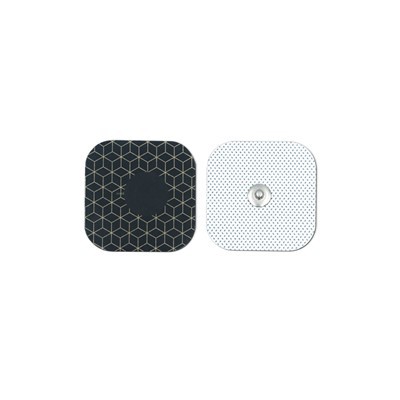


OEM Silicone Electrodes | Reusable TENS Rubber Pads | TOP-RANK
B2B silicone electrodes for clinical TENS/EMS. Vulcanized with a homogeneous carbon black matrix to provide low-impedance electrical dispersion and extreme mechanical durability for high-volume physiotherapy wards.
Product Overview
This silicone electrode is a non-adhesive, highly durable transdermal conductor. Unlike consumable hydrogel patches that degrade after 20 uses, this solid elastomer substrate is designed for thousands of continuous cycles in professional clinical environments. It requires an external liquid conductive gel to bridge the epidermal impedance gap and physical elastic straps to maintain positional contact. We manufacture these heavy-duty conductive rubber pads for physical therapy franchises, chiropractic hardware OEMs, and veterinary rehabilitation networks.
Technical/Engineering Description
The manufacturing protocol utilizes High Consistency Rubber (HCR) silicone. Raw, insulating silicone gum is mechanically kneaded with high concentrations of conductive carbon black nanoparticles. This compounding phase dictates the final electrical resistance; the carbon particles must form a continuous physical chain within the polymer lattice. The mixed compound is loaded into steel molds and subjected to high-temperature compression molding (typically above 170C). This thermal vulcanization permanently cross-links the elastomer, locking the carbon matrix in place and embedding the brass 2.0mm pin receptacle directly into the rubber architecture. Standard OEM tooling sets dictate a 20,000-unit minimum order quantity (MOQ) per geometric shape.
Key Features
-
Homogeneous Carbon Dispersion Mechanics
If conductive carbon aggregates unevenly during the silicone kneading phase, the finished pad will possess internal dielectric dead zones and focal current spikes. When a 50mA TENS pulse hits a carbon aggregate, the electrical density concentrates into a localized pinpoint, causing severe thermal burns on the patient's skin. Our mixing lines utilize high-shear two-roll mills to physically crush carbon agglomerates. This forces an equidistant distribution of conductive particles throughout the 3D silicone volume, plotting a mathematically flat impedance curve across the entire emission surface.
-
High-Tear Strength Polymer Cross-Linking
Clinical electrodes are subjected to severe mechanical abuse: they are stretched around joints, tightly compressed by Velcro straps, and repeatedly pulled by their lead wires. Standard synthetic rubbers dry-rot and micro-fracture under continuous kinetic stress. Once the rubber fractures, the internal carbon chains break, instantly increasing the pad's electrical resistance. The high-temperature vulcanization process of this specific silicone matrix maximizes the Si-O-Si backbone cross-link density. It achieves a high tensile and tear strength threshold, preventing micro-fissures during multi-axis mechanical elongation.
-
Hydrophobic Chemical Washability
Hospital protocols require transdermal hardware to be sanitized between patients. Hydrogel electrodes melt and disintegrate when exposed to water or clinical disinfectants. The solid vulcanized silicone substrate is inherently hydrophobic (repels water) and chemically inert. It survives continuous immersion in liquid conductive gels during therapy and withstands post-treatment scrubbing with hospital-grade chlorhexidine wipes (CaviWipes) without surface degradation or carbon leaching.
Applications
High-Volume Physiotherapy Clinics
Deployed as the primary transdermal vector for continuous back and shoulder TENS/EMS sessions, drastically reducing the consumable overhead cost associated with disposable hydrogel pads.
Galvanic Bath / Hydrotherapy
Solid carbon-silicone structures operate flawlessly underwater during galvanic bath protocols without structural dissolution.
Veterinary Electrostimulation
Applied to animals where fur prevents the use of adhesive hydrogels. The heavy rubber pad pushes through the coat when secured with straps and conductive liquid.
OEM & Private Label
-
Compression Mold Tooling : We cut raw steel molds to output customized physical footprints (e.g., 4x6 inch large lumbar rectangles or 2-inch circular facial nodes). The internal brass 2.0mm pin receptacles can be modified to 4.0mm banana plug sockets based on the OEM's hardware ecosystem.
-
Supply Chain Logic : Raw silicone compounding, vulcanization molding, and deflashing execute in our China facility. Final QA impedance sorting, custom kit assembly (pairing pads with elastic straps), and dispatch route through our Vietnam hub to secure supply chain resilience and bypass specific hardware import tariffs.
Certifications
-
Biocompatibility: Cured silicone batches are independently validated against ISO 10993-5 (Cytotoxicity) limits, verifying that no unreacted vulcanization agents leach into the patient's dermis under heavy sweat or mechanical compression.
-
Systems: Mold cavity temperature control, physical deflashing, and batch impedance measurements operate strictly within audited ISO 13485:2016 frameworks.
FAQ
Q: Can a patient use these silicone electrodes dry, without any conductive gel or water?
A: No. Carbon-loaded silicone is a conductive solid, but it is rigid. When placed on human skin, microscopic air gaps remain between the rubber and the epidermis. Air acts as a dielectric insulator. Attempting to pass a TENS current through these air gaps will cause micro-arcing and immediate skin burns. A liquid conductive medium is strictly required to displace the air and create a continuous ionic bridge.
Q: Why does the impedance of a silicone pad gradually increase after 12 months of heavy clinic use?
A: While silicone resists chemical degradation, it is susceptible to mechanical fatigue. Thousands of bending cycles and the compression pressure from straps cause microscopic internal tears in the elastomer matrix. These micro-fissures physically sever the internal chains of carbon nanoparticles. As fewer carbon pathways remain intact, the overall electrical resistance of the pad permanently rises.
B2B physical therapy hardware brands and clinical distributors can request vulcanized silicone prototypes and electrical impedance documentation.
👉 [Request Silicone Electrode Prototypes]
Hot Tags: silicone electrodes for tens, China silicone electrodes for tens manufacturers, suppliers, factory
Specifications
| Parameter | Metric Configuration | Engineering Detail |
| Material Base | Medical-Grade Silicone Rubber | Inherently hydrophobic |
| Conductive Agent | Nano-Carbon Black | Forms internal electron pathways |
| Impedance | < 80 Ohms (at 10Hz) | Volumetric conductivity |
| Connector | 2.0mm Pin | Hardened brass receptacle |
| Sterilization | Autoclave or Chemical | Resists material degradation |