Abdominal EMS Gel Pads | Anti-Hydration Matrix | TOP-RANK
OEM hydrogel interfaces for wearable abdominal stimulators. Calibrated with an anti-hydration matrix and 1.5mm thickness for mechanical vibration dampening.
Product Overview
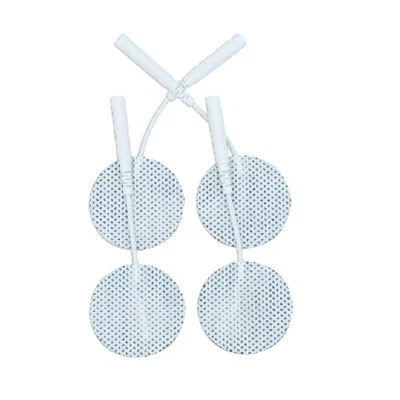
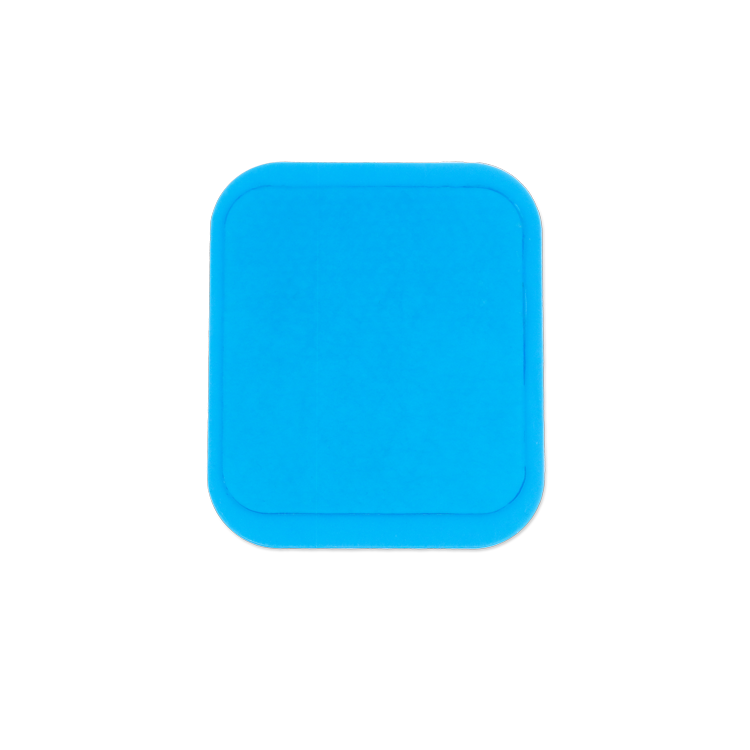
Abdominal EMS gel pads are replacement conductive interfaces for wearable rectus abdominis stimulators. The pads utilize a multi-electrode coplanar layout to transfer continuous electrical pulses under conditions of high-frequency mechanical vibration and active diaphoresis (sweating). We provide OEM fabrication of these consumables for B2B fitness device brands and hardware distributors.
Key Features
-
Anti-Hydration Polymer Matrix
Abdominal EMS protocols induce local perspiration. Standard hydrogels absorb this sweat, swell, and lose cohesive strength, leaving a sticky residue on the skin. The internal cross-linking density of this specific gel formulation restricts continuous water uptake. It sustains its physical geometry and peel force (5.0N) after 30 minutes of skin contact in a diaphoretic environment.
-
Coplanar Silver-Grid Printing
Wearable abdominal belts often drive 3 to 8 discrete gel pads from a single central MCU. To balance the current load across a broad lateral surface, the PET substrate utilizes screen-printed silver traces. This establishes a low-resistance electrical busbar across the matrix, preventing the individual pads closest to the MCU from outputting a disproportionate current density.
-
Mechanical Vibration Dampening Thickness
Consumer stimulators frequently generate 50Hz-100Hz mechanical vibrations alongside the electrical pulse. A standard 0.8mm TENS gel transmits this lateral shear stress directly to the epidermis, causing mechanical erythema. These EMS pads are coated at 1.0mm to 1.5mm. The added hydrogel mass functions as a mechanical shock absorber between the rigid ABS hardware and the abdominal tissue.
Applications
Rectus Abdominis Belts
Broad-surface multi-pad consumables for core muscle recruitment.
Oblique Stimulators
Wing-shaped layouts targeting lateral abdominal walls.
Post-Partum Devices
Low-intensity stimulation interfaces for abdominal recovery hardware.
OEM & Private Label
-
Packaging Specs: Individual kits are sealed in PET/AL/PE foil pouches to lock the hydrogel's thermodynamic equilibrium. Custom 4-color rotary printing is available for brand graphics.
-
Supply Chain Routing: Base conductive film printing and SMT are handled in China. Rotary die-cutting, final hydrogel lamination, and automated pouching are executed in our Vietnam hub to manage US consumer electronics tariffs.
Certifications
Quality Systems: Facilities audited to ISO 13485:2016 and MDSAP standards.
Regulatory: Supported documentation for OTC consumer device registrations (FDA/CE).
QC Tracking: Optical inspection for silver-trace continuity and batch-level 180-degree peel adhesion testing.
FAQ
Q: Why do the pads lose tackiness after 10 uses during high-intensity workouts?
A: Salt accumulation from sweat physically coats the ionic polymer bonds on the surface layer. While the anti-hydration matrix prevents internal structural collapse, the superficial salt crust acts as a dielectric barrier, increasing impedance and reducing the available adhesive surface area.
Q: What is the die-cutting tolerance for complex multi-pad layouts?
A: For coplanar designs requiring precise hardware alignment (e.g., magnetic snap posts or rigid pin headers), the optical registration during rotary die-cutting maintains a pitch tolerance of +/- 0.2mm between the conductive centers.
CTA
B2B hardware developers can request custom die-cut dimensional files and anti-hydration batch testing data.
👉 [Request EMS Pad Prototypes]
Hot Tags: abdominal ems gel pads, China abdominal ems gel pads manufacturers, suppliers, factory
Specifications
| Parameter | Metric | Engineering Detail |
| Layout | Multi-point coplanar | 3 to 8 pad configurations |
| Impedance | < 50 Ohms | Silver-ink reinforced carbon |
| Thickness | 1.0mm - 1.5mm | Vibration dampening profile |
| Peel Force | 5.0N - 7.5N | High-tack against lateral shear |
| Shelf Life | 24 Months | Sealed in high-barrier foil |