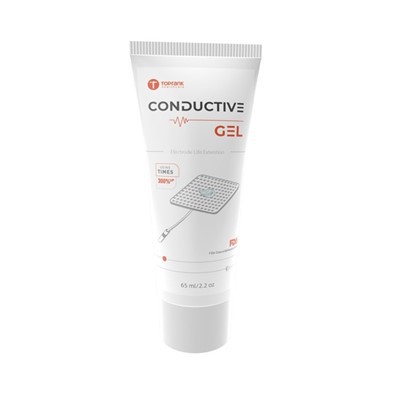


OEM Conductive Gel for Face | Facial RF & Microcurrent Coupling Medium | TOP-RANK
B2B contract manufacturing of conductive gel for facial electrotherapy devices. Formulated for multi-polar RF, microcurrent, and facial EMS, featuring controlled conductivity (<3.5 mS/cm), zero-drag shear thinning, 25-minute non-drying glide, non-comedogenic ISO 10993 compliance, and turnkey OEM packaging.
Product Overview
Conductive gel for face serves as a targeted acoustic, dielectric, and electro-conductive coupling medium engineered specifically for non-invasive facial rejuvenation hardware, including multi-polar radiofrequency (RF) skin-tightening systems, microcurrent toning units (100 uA to 500 uA), and facial electrical muscle stimulation (EMS) applicators. Applied across delicate facial contours, the gel displaces microscopic air gaps between moving metallic treatment probes and the stratum corneum. It establishes a uniform, non-capacitive impedance pathway across facial tissue planes, enabling controlled current entry while facilitating continuous probe glide without mechanical traction on fragile periorbital and perioral tissues.
Generic medical coupling media (such as standard abdominal ultrasound gels or high-salt TENS electrolytes) fail when applied to facial electrotherapy due to three distinct physical and physiological mismatches:
- Surface Current Shunting and Epidermal Overheating in RF Fields: Standard ECG and TENS electrolytes contain high concentrations of dissociated ionic salts (>2.0% sodium chloride) to minimize resistance. In high-frequency radiofrequency fields (1 MHz to 4 MHz), this high ionic conductivity causes electrical current to short-circuit laterally across the wet surface of the gel. The energy concentrates at the skin surface, spiking epidermal temperatures past 43°C and triggering superficial thermal pain, while starving deep dermal collagen networks of the targeted volumetric heating (40°C to 42°C) needed for neocollagenesis.
- Rheological Breakdown, Flash Drying, and Skin Traction: The human face has a surface temperature of 33°C to 35°C and continuous ambient air exposure. Standard cellulose- or carbomer-based gels dry within 3 to 5 minutes under device friction. Once water evaporates, the polymer chains collapse and aggregate into abrasive, dry white flakes ("pilling"). The treatment probe begins to stutter and drag across the skin, applying shear traction that stretches delicate elastin fibers and causes dermal inflammation.
- Follicular Occlusion, Comedogenesis, and Ocular Stinging: Facial skin contains a high density of sebaceous follicles (up to 900 glands per square centimeter on the T-zone) and delicate periorbital tissue. Standard industrial gels formulated with heavy mineral oils, low-grade glycols, or harsh amine neutralizers penetrate and clog follicular infundibula, triggering acute acneiform eruptions. Volatile components also vaporize during thermal RF treatments, causing conjunctival irritation and stinging tears if applied near the orbital rim.
This facial conductive gel platform overcomes these clinical hurdles through a multi-tier polymer formulation: an electrolyte-buffered acrylate cross-polymer network that stabilizes electrical conductivity below 3.5 mS/cm, preventing RF surface shunting while preserving microcurrent pulse delivery; a ternary polyol humectant phase providing over 25 minutes of continuous slip without drying or pilling; and a completely non-comedogenic, oil-free, physiological pH 5.5 matrix certified safe for sensitive facial dermis. We contract-manufacture private-label squeeze tubes, airless pump dispensers, and clinic-size refill containers for beauty tech OEMs, professional aesthetic clinics, and retail skincare brand operators globally.
Technical & Engineering Description
The industrial synthesis and filling of conductive gel for facial devices are conducted within Class 8 (ISO 14644-1) sanitary cleanrooms utilizing closed-loop vacuum emulsification and automated rotary packaging lines. The production sequence executes across five controlled chemical engineering phases:
- Phase 1: Multi-Stage Deionized Water Polishing & Conductivity Balancing: The water phase uses pharmaceutical-grade purified water polished via dual-pass reverse osmosis (RO) combined with continuous electrodeionization (EDI), driving baseline electrical conductivity below 0.1 uS/cm. The polished water is heated to 75°C to 80°C inside 316L stainless steel jacketed reactors. A specialized pharmaceutical-grade sodium chloride and potassium phosphate buffer is metered in micro-quantities to establish a controlled ionic carrier density, ensuring bulk electrical conductivity remains stabilized strictly between 1.8 and 3.2 mS/cm.
- Phase 2: Polymer Matrix Dispersion & Hydration: An advanced crosslinked polyacrylate polymer (hydrophobically modified crosslinked acrylic acid copolymer) is introduced into the aqueous vortex through high-speed powder induction injectors. The polymer particles are dispersed at 2,800 RPM without clumping. The slurry undergoes continuous planetary agitation for 60 minutes under high thermal stabilization, allowing the polymer chains to fully untangle and hydrate into a uniform, clear suspension with zero fish-eyes or unhydrated cores.
- Phase 3: High-Shear Vacuum Planetary Homogenization & Deaeration: The polymer mixture is neutralized to a physiological pH of 5.80 using a high-purity, non-amine alkaline buffering agent (pure food-grade sodium hydroxide solution), triggering immediate molecular swelling into a rigid 3D hydrogel grid. The vessel is sealed and drawn down to an ultra-high vacuum level of -0.095 MPa while the bottom-mounted homogenizer shears the bulk matrix at 3,200 RPM for 45 minutes. This process completely evacuates micro-air bubbles and dissolved oxygen pockets, ensuring 100% optical clarity and eliminating micro-cavitation voids that cause electrical arcing during RF operations.
- Phase 4: Low-Temperature Humectant Consolidation & Active Infusion: The deaerated gel matrix is cooled via jacketed chilled water circulation to 35°C. A specialized ternary humectant system-combining ultra-pure vegetable-derived glycerol, bio-fermented 1,3-propanediol, and multi-molecular-weight sodium hyaluronate (10 kDa to 1.8 MDa)-is metered under gentle helical ribbon mixing. The formulation retains its high elastic cohesion while building a transdermal moisture barrier. Skin-soothing and conditioning actives (such as water-soluble peptides, dipotassium glycyrrhizinate, or Centella Asiatica extracts) are homogenized into the bulk at low shear without altering the dielectric baseline.
- Phase 5: Micro-Filtration, Inline Optical Inspection & Automated Clean Filling: The degassed gel is pressurized through a 10 um sanitary stainless steel mesh filter directly to automated rotary tube-filling or airless-pump packaging stations. Squeeze tubes (medical-grade multi-layer PE or PCR with EVOH barrier layers) are indexed, bottom-filled with zero product tailing via servo-driven volumetric ceramic pistons, and ultrasonically sealed with date/lot stamping. Filled units pass inline optical fill-level verification, automatic check-weighing, and UV leak detection before automated carton boxing. The baseline contract manufacturing run is 50,000 units.
Key Features
-
Pseudoplastic Shear-Thinning Rheology (Zero-Drip High Rest Viscosity Transitioning to Ultra-Low Gliding Drag without Skin Tugging)
Generic body gels exhibit Newtonian or weakly thixotropic flow: if made viscous enough not to drip off the face, they feel sticky and heavy, creating severe drag during device movement; if formulated light enough to glide smoothly, they run down the patient's neck and temples within seconds. We engineer a pseudoplastic shear-thinning rheological network using hydrophobically modified acrylic cross-polymers. At rest (shear rate approaching zero), the gel polymer chains entangle into an elastic 3D grid, exhibiting a high static viscosity between 75,000 and 90,000 cP and an elevated yield stress (>120 Pa). When dispensed onto the face, the product maintains a tall, dome-shaped dollop that adheres securely to vertical cheekbones and foreheads without dripping into the hairline or eyes. However, the moment an electrotherapy probe begins moving across the skin (shear rates of 50 to 100 s^-1), the physical entanglement points uncoil and align along the shear vectors. Apparent viscosity drops by over 85%, dropping to an ultra-fluid 8,000 to 12,000 cP gliding film. The treatment probe glides across the facial planes with near-zero frictional resistance, eliminating mechanical shear stress on thin epidermal layers, preventing skin bunching ahead of the probe, and completely stopping treatment-induced erythema.
-
Controlled Dielectric Permittivity & Surface Shunt Suppression (Balancing RF Subdermal Heat Focusing and Microcurrent Pulse Integrity)
Facial electrotherapy presents an acute electrochemical compromise: multi-polar radiofrequency (1 MHz to 4 MHz) requires an electrically resistive, high-dielectric medium to drive displacement currents deep into the reticular dermis, whereas microcurrent (100 uA to 500 uA) requires mobile charge carriers to cross high-impedance dry stratum corneum. High-electrolyte body gels dump RF energy along the skin-gel interface, causing painful superficial overheating while starving deep collagen networks; conversely, zero-salt cosmetic creams act as electrical insulators, blocking microcurrent pulses entirely. Our platform balances this dual-modality need through an engineered dielectric-ionic equilibrium. By holding bulk electrical conductivity within a narrow 1.8 to 3.2 mS/cm band and tuning the relative dielectric permittivity between 68 and 74 at RF frequencies, the gel suppresses surface RF short-circuit shunting. The high-frequency RF displacement field bypasses the thin gel layer, focusing thermal energy into the target dermal tissue at depths of 1.5 mm to 3.5 mm to achieve therapeutic collagen tightening temperatures (40°C to 42°C). Simultaneously, the dissociated phosphate-buffered ions provide a steady ionic pathway that lowers skin contact impedance below 1,500 Ohms, allowing microcurrent square waves to penetrate sub-sensory muscle motor points without triggering epidermal stinging or waveform distortion.
-
Non-Comedogenic, pH 5.5 Osmotic Equilibrium Barrier (Preventing Follicular Occlusion, Transepidermal Moisture Strip, and Ocular Stinging)
Facial electrotherapy accelerates skin temperature and opens epidermal barriers, making facial tissue exceptionally vulnerable to chemical irritation and pore clogging. Standard ultrasound and conductive gels utilize non-physiological pH levels (pH 7.0 to 8.5) and harsh triethanolamine (TEA) neutralizers, which strip the protective skin acid mantle, dissolve epidermal ceramides, and leave the skin dry and vulnerable to post-treatment contact dermatitis. Furthermore, heavy synthetic thickeners and mineral oils slip into open pores, causing acute comedogenic breakouts within 48 hours of treatment. Our formulation establishes a physiological buffer using an ultra-pure, oil-free polyacrylate network neutralized with non-amine bases to maintain a skin-identical pH of 5.80 (+/- 0.40). The osmotic pressure is balanced at 290 to 320 mOsm/kg using bio-fermented propanediol and hyaluronic acid humectants. The gel prevents reverse osmotic dehydration of the stratum corneum during long 25-minute sessions. In certified dermatological evaluation, the formula achieved a Grade 0 Comedogenic Rating (completely non-comedogenic), passes ocular tolerance testing (HET-CAM score = 0.0, zero eye irritation), and rinses clean with plain water without leaving sticky films, keeping pores unblocked and preserving the delicate skin barrier.
Applications
Handheld Home-Use Beauty Devices & E-Commerce Device Bundling
Sourced in high volume by consumer beauty tech brands as the mandated primary contact medium packaged inside retail device gift sets (RF face lifters, handheld microcurrent rollers, LED-EMS facial toning devices); supplied in branded 100 ml or 150 ml soft-touch squeeze tubes with tamper-evident induction foil seals, driving recurring monthly re-orders across e-commerce channels.
Professional Medical Aesthetics Clinics & MedSpas
Deployed across professional medical aesthetic suites for multi-polar RF skin tightening, fractional electro-mesotherapy, galvanic iontophoresis nutrient infusion, and ultrasonic SMAS contouring; packaged in 250 ml hygienic airless pump bottles or 1000 ml clinic refill containers with calibrated dosing dispensers, ensuring seamless probe glide and zero skin redness across back-to-back 30-minute patient protocols.
Clinical Dermatology & Post-Procedure Skin Rehabilitation
Utilized by dermatologists and plastic surgeons for transdermal electro-poration and soothing non-thermal energy treatments; the ultra-pure, fragrance-free, pH 5.5 buffered formulation provides deep hydration without triggering stinging or inflammation on sensitized, compromised, or post-laser skin barriers.
OEM & Private Label
-
Viscosity Tiers, Active Infusions & Packaging Customization : We provide comprehensive contract manufacturing and formulation customization for global device brands:
· Custom Viscosity Tiers: Standard Glide (75,000 cP for rapid microcurrent gliding), High-Density Cushion (90,000 cP for multi-polar RF heat retention), or Ultra-Fluid Light (50,000 cP for high-frequency ultrasonic facial spatulas).
· Functional Active Enrichment: Support cold-process blending of functional skincare actives, including Multi-Molecular Hyaluronic Acid (hydration retention), Acetyl Hexapeptide-8 (anti-wrinkle expression line reduction), Niacinamide (brightening and barrier reinforcement), and Centella Asiatica / Dipotassium Glycyrrhizinate (anti-inflammatory skin calming).
· Packaging Configurations: Squeeze tubes from 50 ml to 200 ml (multi-layer PE, post-consumer recycled PCR, or soft-touch coating with flip-caps or acrylic screw tops); luxury 150 ml to 250 ml airless pump bottles; and 1-liter to 5-liter clinic back-bar containers with heavy-duty dispensing pumps. Full-service custom packaging includes silk-screen printing, metallic hot-stamping, soft-touch matte lamination, serialized UDI/GS1 barcodes, and FSC-certified retail cartons.
-
Two-Center Supply Chain Mechanics : High-purity bulk chemical synthesis, vacuum planetary deaeration, automated cleanroom tube filling, and in-process rheological/analytical testing execute natively inside our primary China facility (ISO 13485:2016 and FDA registered). Final assembly, secondary retail kit packaging with localized device accessories, cleanroom carton sealing, and direct container logistics can be seamlessly routed through our Vietnam manufacturing hub, shielding international B2B purchasers from Section 301 tariffs and regional medical consumable import barriers.
Certifications
-
ISO 10993 Dermal Biocompatibility Testing : Master production batches undergo certified testing in accredited independent GLP laboratories confirming strict compliance with ISO 10993-5 (In Vitro Cytotoxicity: Grade 0 non-cytotoxic), ISO 10993-10 (Skin Sensitization: 0% allergic response in guinea pig maximization assays), and ISO 10993-23 (Primary Dermal Irritation Index = 0.0, non-irritating). The formula is certified 100% free of natural rubber latex, parabens, phthalates, artificial colorants, mineral oil, and synthetic fragrances.
-
Clinical Dermatological & Ocular Safety Approvals : Validated through 50-subject Human Repeat Insult Patch Testing (HRIPT) confirming zero induction of contact allergy across diverse Fitzpatrick skin types. Evaluated under the Hen's Egg Test-Chorioallantoic Membrane (HET-CAM) and EpiOcular tissue model assays, achieving a 0.0 non-irritant classification, certifying clinical safety for treatments applied directly up to the orbital bone margins.
-
Microbiological Purity & Preservative Efficacy : Formulated in compliance with USP <51> Antimicrobial Effectiveness Testing, proving rapid 28-day challenge eradication of bacteria, yeasts, and molds without relying on aggressive sensitizing biocides. Certified compliant with USP <61>/<62> microbiological limits: Total Aerobic Microbial Count (TAMC) < 10 CFU/g, Total Yeast and Mold Count (TYMC) < 10 CFU/g, and verified total absence of Staphylococcus aureus, Pseudomonas aeruginosa, Escherichia coli, and Candida albicans.
-
MDSAP & ISO 13485 Manufacturing System Controls : Synthesis reactors, cleanroom storage bays, and automated filling lines operate under certified ISO 13485:2016 and MDSAP regulatory frameworks (covering US FDA 21 CFR 820, Health Canada, TGA Australia). Unbroken electronic Device History Records (DHR) capture bulk deaeration vacuum levels, rheological viscosity curves, pH potentiometric assays, and fill-weight data across every manufactured lot for full traceability.
Technical FAQ
Q: Why do conventional body ultrasound and TENS conductive gels cause epidermal burning and lack of dermal heating when used with facial radiofrequency (RF) devices?
A: The mismatch between generic conductive media and high-frequency radiofrequency skin tightening stems from fundamental differences in electrical physics: 1.The Operating Physics of Radiofrequency Energy: Facial RF units operate at frequencies between 1 MHz and 4 MHz, using alternating electrical fields to induce oscillation of intracellular and extracellular polar molecules (primarily water dipoles). This continuous molecular friction generates volumetric resistive heating within tissue: Thermal Dissipation = Electric Current Squared times Biological Tissue Impedance. To achieve collagen denaturation and neocollagenesis without epidermal injury, RF current must pass directly through the epidermis into the deeper reticular dermis (1.5 mm to 3.5 mm depth) where tissue impedance is higher, safely elevating target dermal temperatures to 40°C–42°C while the cooled surface remains below 40°C. 2.The Failure Mechanism of Generic High-Salt Gels: Standard TENS and ECG gels are engineered for direct-current or low-frequency pulses (1 Hz to 150 Hz). To minimize skin impedance, manufacturers load these gels with 2.0% to 5.0% sodium chloride or potassium chloride, creating an electrical conductivity exceeding 15 mS/cm. When high-frequency RF fields encounter this liquid layer, the high ionic conductivity provides a path of minimal electrical resistance. Current takes the path of least resistance: rather than penetrating the high-impedance epidermal barrier into the dermis, the RF current short-circuits horizontally across the surface of the gel slab. This phenomenon, known as "surface current shunting," produces rapid, localized Joule heating directly at the skin surface. Surface temperatures spike past 44°C within seconds, causing painful epidermal prickling and thermal hot-spot burns. At the same time, because current is trapped on the surface, the deeper target collagen layers receive negligible RF flux, rendering the skin-tightening treatment completely ineffective. 3.The Insulating Flaw of Cosmetic Creams: Conversely, generic skincare moisturizers and natural oils possess negligible ionic conductivity (<0.05 mS/cm) and low dielectric constants. They act as electrical insulators: when RF probes touch an oil-coated skin surface, capacitive impedance spikes, forcing the device to escalate output driving voltage, which generates high-voltage micro-arcing sparks that snap against the epidermis. 4.Our Dielectric-Ionic Balance Solution: We resolve this dilemma by formulating our facial gel with a tightly controlled conductivity window (1.8 to 3.2 mS/cm) and a high relative dielectric permittivity (68 to 74 at 1 MHz). The balanced conductivity is sufficient to extinguish capacitive air-gap arcing, while the controlled ionic resistance suppresses horizontal surface shunting. The RF field bypasses the thin gel layer, directing energy deep into the dermal matrix. Surface skin temperatures remain safely below 40°C, eliminating thermal stinging, while deep dermal tissues reach therapeutic 41°C heating levels for effective skin tightening.
Q: How does the formulation achieve an extended 25-minute wet open-time on warm facial skin without relying on heavy occlusive oils or drying into flaky crusts?
A: Prolonging glide duration on facial skin while maintaining clean water-rinsability requires balancing chemical hydration bonding against evaporative kinetics: 1.The Evaporation Breakdown of Generic Gels: Standard hydrogels rely on simple cellulose (e.g., CMC, HEC) or loosely crosslinked Carbomer homopolymers held in a simple water matrix. When spread in a 1.0 mm thin film across facial skin (surface temperature 33°C to 35°C), ambient air movement and continuous frictional shear accelerate water loss. In standard formulas, over 60% of free water evaporates within 5 minutes. As free water departs, the linear polymer chains are forced into proximity, forming irreversible crystalline hydrogen bonds. The gel structure collapses, transforming into sticky, dry clumps that roll across the skin ("pilling" or "crusting"). The aesthetician or patient is forced to repeatedly stop treatment, wipe off the debris, and reapply fresh gel, quadrupling consumable usage and disrupting clinical workflows. 2.The Problem with Oil-Based Occlusives: While adding mineral oil, petrolatum, or silicones can slow water evaporation through physical occlusion, oils introduce fatal operational defects: they coat the metallic probe face with an insulating dielectric barrier, interfere with microcurrent and RF conduction, and penetrate facial sebaceous pores to cause comedogenesis (acne breakouts) and folliculitis. 3.Our Ternary Water-Bound Polymer Architecture: We achieve a 25-minute wet open-time through an oil-free, water-retaining molecular network: Multi-Point Crosslinked Hydrophobic Acrylate Backbone: Instead of simple linear cellulose, we utilize an advanced acrylate cross-polymer synthesized with multi-branched hydrophilic segments. This 3D molecular mesh forms structural "water cages" that mechanically trap mobile water molecules against thermal volatilization. Ternary Polyol Humectant Shunt: We integrate a synergistic tri-component humectant phase combining ultra-pure vegetable glycerin, bio-fermented 1,3-propanediol, and pharmaceutical-grade low-molecular-weight sodium hyaluronate. These humectants possess strong chemical hygroscopic dipole moments that establish hydrogen bonds with surrounding water molecules. Water shifts from volatile "free water" into thermally stable "bound water." Even as the outer surface warms to 38°C under continuous RF probe movement, water retention remains above 85% at the 25-minute mark. Anti-Pilling Elastic Cohesion: Because the polymer crosslinks are covalent and permanently spaced by flexible polyol chains, the gel matrix cannot crystallize or agglomerate as moisture is slowly consumed. It remains an isotropic, cohesive fluid film throughout the entire protocol. In standardized clinical evaporative gravimetric testing, our facial gel sustains active pseudoplastic glide for 25 to 30 minutes without drying, skin drag, or flake formation. At the end of the treatment, the entire layer remains completely water-soluble, washing away with a simple wet wipe without clogging pores or requiring surfactant cleansers.
Medical aesthetic device OEMs, professional beauty technology brands, and dermatology clinic networks can request complete regulatory qualification dossiers, bulk formulation samples, and private-label packaging evaluation sets (including 100 ml soft tubes, 250 ml airless pump dispensers, and 1000 ml clinic refill bottles).
👉 [Request Conductive Gel For Face Evaluation Packs]
Hot Tags: conductive gel for face, China conductive gel for face manufacturers, suppliers, factory, Microcurrent Conductive Gel for Face, conductive gel for cavitation, Ultrasound Conductive Gel for Face, Conductive Gel for Radio Frequency, best conductive gel for face, best conductive gel for microcurrent
Specifications
| No. | Item No | Volume | Package |
| 1 | TG-65ML | 65ml/2.3oz | 200pcs/carton, Carton dimession: 43cm*36cm*28cm, Gross weight: 14.5kgs |
| 2 | TG-90ML | 90ml/3.2oz | 160pcs/carton, Carton dimession: 43cm*36cm*28cm, Gross weight: 16kgs |
| 3 | TG-100ML | 100ml/3.5oz | 160pcs/carton, Carton dimession: 48cm*40cm*33cm, Gross weight: 17.5kgs |
| 4 | TG-150ML | 150ml/5.3oz | 160pcs/carton, Carton dimession: 48cm*40cm*33cm, Gross weight: 17kgs |
| 5 | TG-250ML | 250ml/8.9oz | 50pcs/carton, Carton dimession: 40cm*30cm*30cm Gross Weight:17kgs |