

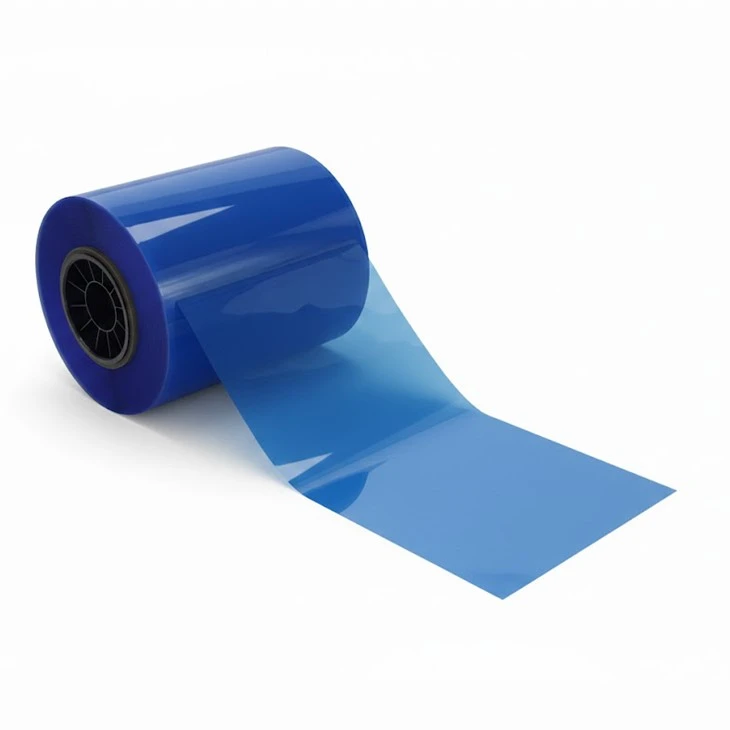
OEM Bulk Conductive Hydrogel Roll Stock | Jumbos for Converters | TOP-RANK
Medical-grade bulk conductive hydrogel master rolls for high-speed rotary converting. Features zero-cold-flow cohesion, tunable volume resistivity (10–120 Ω·cm), calibrated differential PET liners, and sub-50 ppm residual monomer purity.
Polymer Rheology & High-Speed Converting Profile
Supplying conductive hydrogel roll stock to global medical converters and contract die-cutting facilities requires reconciling opposing physical demands: balancing wet electrochemical conductivity and gentle skin adhesion against the mechanical shear of high-speed rotary web converting (30 - 45 m/min). In downstream converting plants, master rolls are laminated to conductive carbon vinyl, silver-printed substrates, or closed-cell foams before passing through multi-station rotary tooling to punch out finished TENS pads, ECG electrodes, or electrosurgical grounding plates.
Generic commercial hydrogel rolls fail during continuous rotary die-cutting: low cohesive polymer networks suffer from "cold flow" (viscous creep under compression), causing adhesive to bleed outward past cut borders. This oozing residue gums up rotary dies, glues adjacent layers together on take-up spindles, and contaminates slitting knives within hours. Furthermore, inconsistent thickness tolerances across wide webs (± 0.1mm caliper drift) produce severe electrical variance across finished electrodes, causing intermittent impedance spikes that fail downstream quality control. Compounding these issues, uncalibrated release liners create flutter during high-speed stripping, stretching the elastic gel web and causing dimensional distortion.
This industrial conductive hydrogel roll stock platform is synthesized for converting efficiency and clinical stability. Formulated from high-cohesion, UV-polymerized acrylic acid and polyacrylamide copolymers cross-linked with pharmaceutical polyols, the gel maintains an elastic storage modulus (G' > 4.5 kPa) that prevents cold flow and blade gumming. Web caliper is held within ± 0.03mm across widths up to 600mm. Supported by calibrated differential fluorosilicone and siliconized PET liners, the stock delaminates cleanly at high web speeds without stretching or tearing. We supply master rolls (jumbo rolls up to 1,000 meters) and precision-slit continuous bobbins to medical die-cutters, electrode manufacturers, and wearable biosensor packagers worldwide.
Continuous Photopolymerization & Slot-Die Coating
Industrial synthesis of conductive hydrogel roll stock takes place on closed-loop, automated continuous coating lines housed inside ISO 13485-certified Class 8 cleanrooms. The chemical base is prepared inside 316L stainless steel jacketed reactors: ultra-pure deionized water (EC < 0.8μS/cm), functional acrylic monomers, cross-linking agents, photoinitiators, and pharmaceutical-grade polyols are compounded under continuous vacuum degassing (-0.096MPa) to pull out micro-bubbles before polymerization.
The degassed, homogeneous monomer syrup is pumped via positive-displacement gear pumps into a temperature-controlled, ultra-wide slot-die extrusion head. The fluid is cast onto a moving web of optical-grade polyester (PET) carrier film pre-treated with a cured fluorosilicone release system. The fluid layer thickness is maintained at the target caliper (0.50mm to 1.50mm) using inline radioactive beta-gauge or multi-point confocal laser thickness scanners that interface with automated slot-die lip micro-actuators, correcting transverse thickness variations in real time.
The moving liquid film enters an enclosed, nitrogen-purged UV photopolymerization tunnel (O2 < 200 ppm). High-intensity, multi-wavelength ultraviolet lamp arrays (UV-A and UV-LED systems delivering 365nm peak irradiance) trigger free-radical cross-linking polymerization. The controlled UV exposure profile drives monomer conversion rates beyond 99.8% in seconds without boiling the bound water phase.
At the tunnel exit, a secondary siliconized PET protective release liner is laminated over the top face of the solid elastic hydrogel matrix using pneumatic nip rollers with calibrated pressure. The finished laminate web passes through rotary slitting stations and rewinds onto 76mm (3 inch) heavy-wall ABS plastic cores using closed-loop constant-tension turret winders. Master rolls are sealed into zero-MVTR foil barrier wraps inside the cleanroom. The minimum contract order threshold for customized roll stock is 1,500 linear meters.
Core Engineering Assets
-
Anti-Cold-Flow High-Cohesion Polymer Lattice (Zero Blade Gumming on 45m/min Rotary Dies)
In high-speed rotary die-cutting, hydrogels face intense mechanical compression and transverse shear as circular cutting dies compress the web against hardened anvil rolls. Gels with inadequate cohesive strength or low cross-linking density experience "cold flow" (dynamic viscous creep): the gel oozes sideways away from the blade edge, forming sticky resin beads that coat the cutting cavity, foul vacuum ejector pins, and transfer to subsequent packaging layers. We resolve this by tailoring the stoichiometric ratio of multifunctional cross-linkers, engineering an elastic-dominant polymer network characterized by a high storage modulus (G' > 4.5 kPa) and a low loss factor (tan ζ < 0.35). The hydrogel acts as an elastic solid under sharp shear forces, yielding clean cuts with perpendicular sidewalls, zero blade gumming, and zero edge-bleed throughout continuous 45-meter-per-minute converting runs.
-
Tunable Ionic Percolation & Volume Resistivity (Application-Matched Impedance for TENS, Return Plates & ECG)
Downstream medical electrodes demand fundamentally different electrical parameters. TENS pads require a moderate volume resistivity (80 -- 120Ω·cm) to disperse charge and avoid localized current crowding; electrosurgical grounding plates need low resistivity (30 - 60Ω·cm) paired with high heat capacity to safely dissipate up to 1A of radiofrequency return current; diagnostic ECG monitoring demands ultra-low volume resistivity (15 - 35Ω·cm) for immediate signal pick-up. We provide application-tuned ionic formulation profiles: by modulating electrolyte buffer concentrations, hydration equilibrium (35% to 45% bound water), and polyol plasticizers, we lock the hydrogel's volume resistivity into exact target windows without compromising physical tack, allowing converters to produce compliant electrodes under ISO 13485 standards.
-
Calibrated Differential Release Liner Mechanics (Tension-Balanced Delamination for High-Speed Web Converting)
When unwinding a dual-liner master roll on high-speed converting machinery, if the release values of the top and bottom liners are too close together, converters experience "liner locking" or "inverted release"-where the hydrogel sticks to the wrong liner and tears the moving web, jamming the converting line. We engineer our master rolls with a calibrated 1:3 differential release profile. The primary carrier liner uses a fluorosilicone release system cured onto a 75μm high-tensile PET substrate (45 - 65 g/25mm release force), while the protective top liner uses a light-release siliconized PET film (15 - 25 g/25mm). This differential allows the top liner to strip away smoothly at steep peel angles without stretching the elastic hydrogel or causing web flutter, while the heavy base liner holds the cut parts flat through downstream punching, printing, and automated blister packaging.
Industrial Converting & Downstream Applications
High-Volume TENS & NMES Electrode Converters
Continuous raw material master rolls supplied to contract medical converters for rotary laminating to carbon-vinyl backings and non-woven carriers, producing standard 50× 50mm and 50× 90mm pads at tens of thousands of units per hour.
Electrosurgical Grounding Plate Assembly Plants
Heavy-viscosity, low-resistivity (30 - 50Ω·cm) hydrogel webs laminated directly onto split aluminum foil electrodes to manufacture adult and pediatric electrosurgical return plates compliant with ANSI/AAMI HF18.
Diagnostic ECG & Continuous Telemetry Wearables
Ultra-thin (0.5mm to 0.8mm) roll stock slit into narrow bobbins (25mm to 50mm), used by medical sensor foundries to fabricate disposable resting tab electrodes, stress-test pads, and long-wear ECG smart patches.
Master Roll Packaging & Transnational Logistics
-
Suspended-Core Hermetic Crate Packaging : Conductive hydrogel master rolls cannot rest flat on their outer circumference during ocean transport; static weight causes the elastic gel to undergo cold flow, producing flat-spots and edge creasing that destroy converting precision. Every roll is wound on a heavy-wall 76mm (3 inch) ABS core, suspended horizontally via core chucks inside reinforced wooden crates, and wrapped inside heat-sealed multi-layer zero-MVTR foil barrier bags with desiccant canisters. This keeps the roll floating without contact pressure, preserving circularity and moisture content over long transit routes.
-
Transnational Logistics Resilience : Monomer formulation, multi-stage vacuum degassing, continuous precision slot-die extrusion, and high-intensity UV curing execute natively inside our primary China facility. Master roll inventory staging, automated continuous shear slitting into custom bobbin widths, cleanroom vacuum packaging, and palletized container consolidation route through our Vietnam hub, shielding international medical converters and B2B buyers from regional chemical and medical material import tariffs.
Quality, Regulatory & Biocompatibility Safeguards
-
ISO 10993 Dermal Biocompatibility Profile : Cured roll stock batches undergo testing in accredited independent clinical testing laboratories against ISO 10993-5 (In Vitro Cytotoxicity Grade 0), ISO 10993-10 (Sensitization: 0% allergic response), and ISO 10993-23 (Primary Dermal Irritation Index = 0.0). The matrix is 100% natural rubber latex-free, phthalate-free, and contains zero solvent-based tackifiers.
-
Sub-50 ppm Residual Monomer Purity : Unreacted chemical monomers in hydrogels cause chemical burns and dermal sensitization. Our UV curing process combines controlled wavelength profiles and high monomer conversion, holding residual free acrylic acid and acrylamide monomers strictly below 50 ppm via headspace Gas Chromatography-Mass Spectrometry (GC-MS) verification.
-
MDSAP & ISO 13485 Manufacturing Oversight : Synthesis reactors, automated slot-die lines, and slitting cleanrooms operate strictly within facilities certified to ISO 13485:2016 and MDSAP regulatory frameworks, delivering unbroken lot-serialization from raw chemical intake to palletized master roll shipment.
Technical FAQ
Q: How does the rheological design of this hydrogel physically prevent cold-flow edge ooze during high-speed rotary die-cutting and prolonged roll storage?
A: Cold flow is driven by excessive viscous relaxation in under-crosslinked hydrogels. When subjected to the compression of rotary dies or the static wound-in tension of a master roll, polymer chains disentangle, allowing fluid to ooze laterally out of the cut edge. We resolve this by tuning the dynamic viscoelastic properties of the network during UV cross-linking: the formulation is balanced to achieve an elastic storage modulus (G' > 4.5kPa) that significantly exceeds its viscous loss modulus (G''), driving the loss tangent (tan ζ = G''/G') below 0.35. Furthermore, the cross-linked network establishes an internal yield stress threshold (τ0 > 120 Pa). Under the rapid shear stress of rotary die blades (>1,000 sˉ¹), the gel snaps with a clean fracture plane rather than drawing into sticky strings. During subsequent storage, the internal yield stress resists gravitational and compressive forces, preventing edges from creeping together on finished electrode sheets.
Q: Why is a precise differential release force ratio between Liner A and Liner B critical for automated high-speed roll-to-roll electrode converting lines?
A: In roll-to-roll medical converting, the master roll passes through continuous automated delamination stages. First, the protective top liner (Liner A) must be stripped away to expose the hydrogel, which is then laminated onto the conductive carbon film web; later, the bottom carrier liner (Liner B) is die-cut into finished release cards. If the release values between Liner A and Liner B are improperly balanced (e.g., both falling around 30 g/25mm), the moving web experiences "release confusion." At production speeds above 30 m/min, minor web flutter causes the hydrogel to detach unpredictably from Liner B and cling to Liner A, pulling the sticky gel web into the waste liner rewind and instantly breaking the production run. We calibrate our master rolls to a 1:3 differential: Liner A uses a light-release siliconized PET film calibrated to 15 - 25 g/25mm, while Liner B uses a heavy fluorosilicone release system holding 45 - 65 g/25mm. This ensures that Liner A peels away smoothly at high angles with near-zero peel tension, leaving the hydrogel flat and firmly anchored to Liner B through multi-station rotary cutting, vacuum transfer, and final slitting.
Medical contract die-cutters, electrode assembly plant managers, and wearable biosensor procurement heads can request sample master roll trial bobbins, continuous inline thickness telemetry logs, and lot-specific Certificates of Analysis (COA) confirming volume resistivity, peel tack, and GC-MS residual monomer clearance.
👉 [Request Bulk Hydrogel Master Roll Trial Bobbins]
Hot Tags: bulk conductive hydrogel roll stock, China bulk conductive hydrogel roll stock manufacturers, suppliers, factory, Hydrogel, Medical Hydrogel
Technical Specifications
| Analytical Parameter | Engineering Baseline | Testing Standard |
| Polymer Backbone | UV-Polymerized Acrylic/Polyacrylamide Matrix | High-cohesion hydrophilic network |
| Master Roll Width | 200mm - 600mm (Slit to Order down to 25mm) | Precision shear slitting |
| Roll Length Capacity | 200m - 1,000m on 76mm (3'') Plastic Core | Heavy-duty ABS core |
| Caliper (Thickness) | 0.50mm - 1.50mm (± 0.03mm Continuous Gauge) | Inline beta-gauge radiometric scan |
| Shear Storage Modulus (G') | G' > 4.5 kPa at 1.0Hz (25°C) | Dynamic Mechanical Rheometry |
| Loss Factor (tan ζ = G''/G') | tan ζ < 0.35 (High Elasticity Domain) | Controlled viscous dissipation |
| Volume Resistivity | 15.0 - 120.0Ω·cm (Formulation-Tuned) | ASTM D257 four-probe array |
| Dynamic Peel Tack | 3.5N - 6.5N / 25mm (Tunable Modulus) | ASTM D3330 stainless steel |
| Differential Liner Release Forces | Liner A: 15 - 25 g/25mm; Liner B: 45 - 65 g/25mm | Calibrated 180° peel test |
| Residual Free Monomer | Acrylic Acid / Acrylamide < 50 ppm | Headspace Gas Chromatography (GC-MS) |


