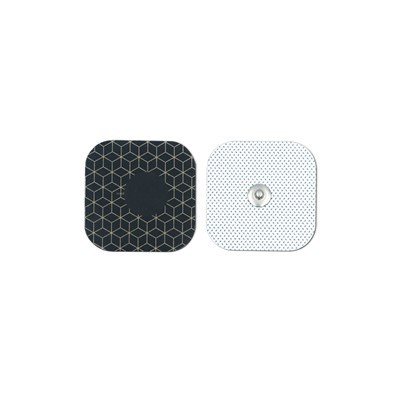

OEM Pediatric Defibrillator Pads | AED Infant Electrodes
B2B pediatric defibrillator pads for patients <25kg. Engineered with specific connector hardware to trigger AED energy attenuation (50J) and formulated with low-avulsion hydrogels to protect fragile infant stratum corneum.
Product Overview
Pediatric defibrillator pads are strictly regulated transdermal interfaces designed for the resuscitation of infants and children (typically under 8 years of age or weighing less than 25kg). The physiological requirements for pediatric defibrillation drastically contradict adult protocols. A standard adult shock of up to 360 Joules will cause catastrophic myocardial damage to a pediatric heart. These specific electrodes act not just as conductive conduits, but as hardware-level communication keys. They physically or electronically instruct the host AED to step down its energy output to a safe 50-Joule pediatric threshold. We manufacture these Class III equivalent rescue consumables for public-access AED networks and hospital pediatric intensive care units (PICU).
Technical/Engineering Description
The pediatric matrix utilizes a scaled-down Ag/AgCl (Silver/Silver Chloride) trace printed onto an insulating PET carrier. The critical engineering variation lies in the connector and the hydrogel rheology. The terminal plug of a pediatric pad frequently incorporates an internal resistor or a specific pin-out geometry. When inserted into a universal AED, this hardware immediately alters the machine's internal circuit impedance, forcing the software to lock out adult energy levels. The skin-facing polymer is a heavily cross-linked, low-tack polyacrylamide gel. It provides absolute 50J dielectric transmission while drastically lowering the mechanical shear force required for removal. Standard wholesale operations dictate absolute sterile-equivalent cleanroom packaging with heavy-gauge AL/PE foil barriers to ensure a 24-month field readiness.
Key Features
-
Hardware-Level Energy Attenuation Triggering
In a panic-driven rescue, a bystander may forget to press the "Child Mode" button on an AED. To eliminate human error, our pediatric pads utilize physical hardware logic. The terminal connector contains either a shorting bar or a specific bridged resistor. When plugged into the AED, the host machine measures this specific terminal impedance. It instantly recognizes the attached consumable as a pediatric unit, automatically dampening the biphasic waveform from an adult 150J-360J shock down to a pediatric 50J curve. This closed-loop hardware communication prevents lethal voltage overdoses regardless of operator oversight.
-
Low-Avulsion Epidermal Protection
Adult pads are designed to stick aggressively through body hair and sweat, requiring extreme cohesive tack. If an adult pad is applied to an infant, peeling it off post-resuscitation will physically tear the infant's underdeveloped stratum corneum (epidermal avulsion). We engineer the pediatric hydrogel matrix with a lowered storage modulus and elevated water content. This guarantees the peel force remains under 2.0N. The gel removes cleanly as a cohesive block, preventing traumatic skin tearing on fragile pediatric patients while maintaining the zero-void electrical bridge required to stop the 50J current from burning the chest.
-
Anterior-Posterior Dielectric Geometry
A critical electrical hazard in pediatric defibrillation is pad overlap. The thoracic surface area of an infant is extremely small. If two standard pads are placed on the front of the chest, their edges may touch. When the machine fires, the electricity will arc directly between the two pads (a dead short) rather than traveling down through the heart. Our pediatric pads are strictly dimensioned to support Anterior-Posterior (A-P) placement-one pad on the center of the chest, one on the back. The dielectric PE foam backing completely insulates the outward-facing surfaces, forcing the energy vector to travel straight through the chest cavity on a Z-axis, ensuring zero surface arcing.
Applications
School & Daycare AED Networks
Mandatory co-consumable for all public-access defibrillators installed in primary education and early childhood development centers.
Pediatric Intensive Care (PICU)
Manual defibrillator substrates used by neonatal clinicians for synchronized cardioversion on infants with congenital heart defects.
EMS Jump Bags
Crucial hardware-override pads carried by paramedics to ensure their universal monitors can safely output attenuated shocks for pediatric emergencies.
OEM & Private Label
-
Panic-Proof Visual Tooling : A panicked teacher cannot read small text. We utilize massive, high-contrast flexographic printing directly onto the closed-cell foam backing of the pads. The graphics explicitly show a pink/blue infant torso demonstrating the precise Anterior-Posterior (front and back) placement, instantly bypassing the language barrier during a high-stress deployment.
-
Logistics Routing : High-voltage Ag/AgCl coating and attenuator pin-crimping operate in our precision China facilities. Final pad pairing, rigid MVTR foil sealing, and global export palletization route through our Vietnam hub, protecting international AED manufacturers from volatile medical hardware tariffs.
Certifications
-
Pediatric Cytotoxicity Clearance : Hydrogel extracts are stringently audited against ISO 10993-5 (Cytotoxicity) and ISO 10993-10 limits, mathematically confirming zero chemical burn risk on highly permeable neonatal skin.
-
Defibrillation Recovery Systems : Complete assemblies are locked into ISO 13485:2016 audited frameworks, providing full traceability and data logs for AC impedance and defibrillation overload recovery limits to support global regulatory filings.
FAQ
A: Absolutely not. Cutting an adult pad severs the internal Ag/AgCl conductive trace, causing massive resistance spikes and guaranteeing a lethal plasma arc (fire) at the cut edge. Furthermore, the AED will not recognize the pad as pediatric; it will still deliver a lethal 360-Joule adult shock, which will cause irreversible cardiac tissue destruction in an infant.
A: The pediatric pads will signal the AED to attenuate the shock down to 50 Joules. This energy level is mathematically insufficient to depolarize the massive myocardium of an adult. The shock will fail to stop the adult's fibrillation. Pediatric pads must strictly be used on patients under 8 years old or weighing less than 25kg (55 lbs).
👉[Request Silver Electrode Prototypes]
Hot Tags: pediatric defibrillator pads, China pediatric defibrillator pads manufacturers, suppliers, factory, Electrodes for Defibrillation, defib electrodes, Defibrillator Pads, Defibrillator Electrode Pads, Adhesive Defibrillator Pads, defibrillator electrodes
Specifications
| Products name | Defibrillation electrode pads | Products model | AEDT-01 |
| Impedance | ≤25 Ohm | Wire length | 1.2±0.1m |
| Connector | Adaptation to AED main unit |
pediatric defibrillator pads size |
120 mm x 190 mm |
|
pediatric defib pads weight |
100G | Storage Temperature | -20℃~70℃ |
| Working temperature | 0℃~45℃ | Bag Size | 200*130*10mm |